Embraer’s flying car completes the most difficult stage of the flight in a new test
The transition between vertical and horizontal flight is the test that separates eVTOL from certification; Eve has taken the first step and wants to reach 92 km/h
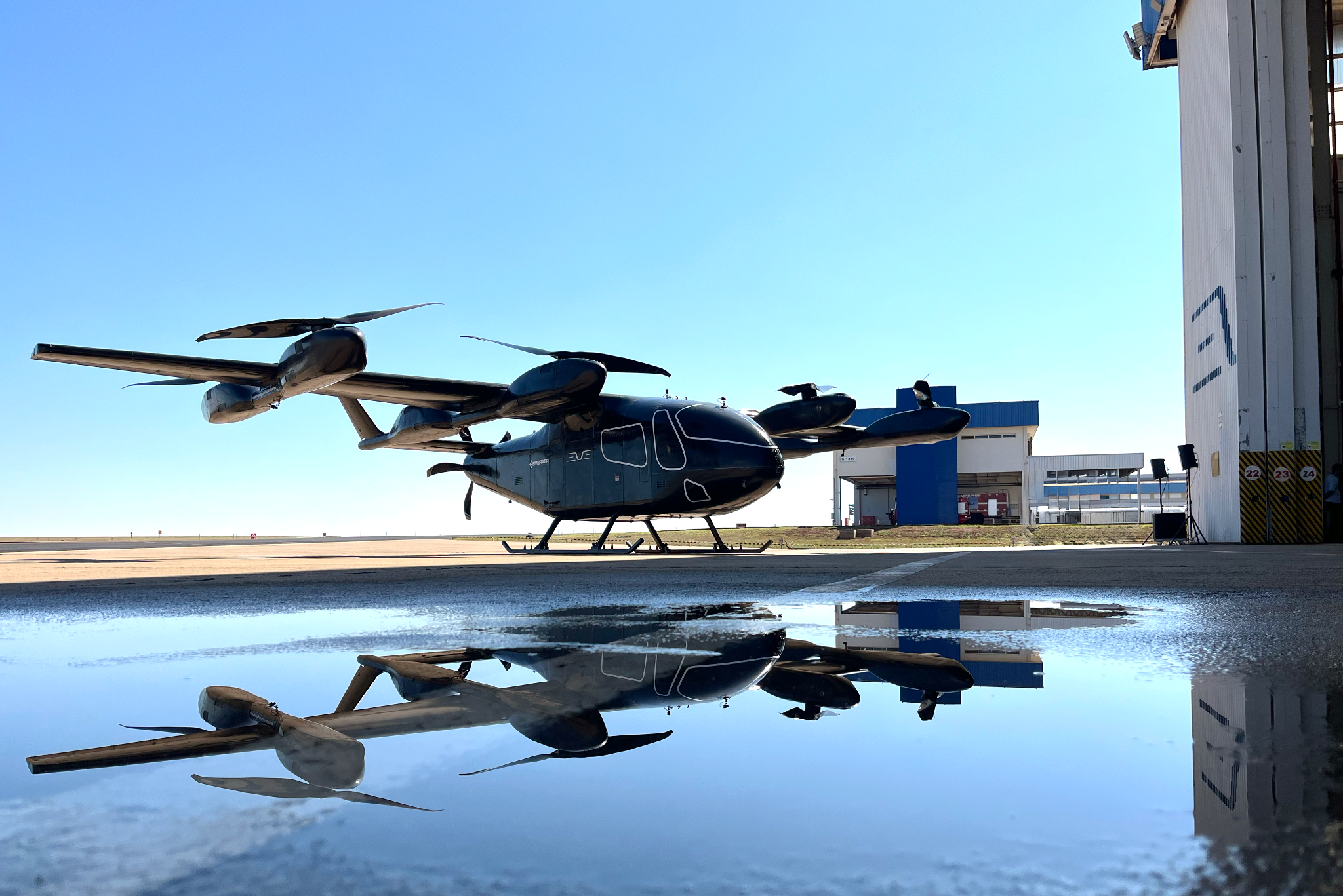
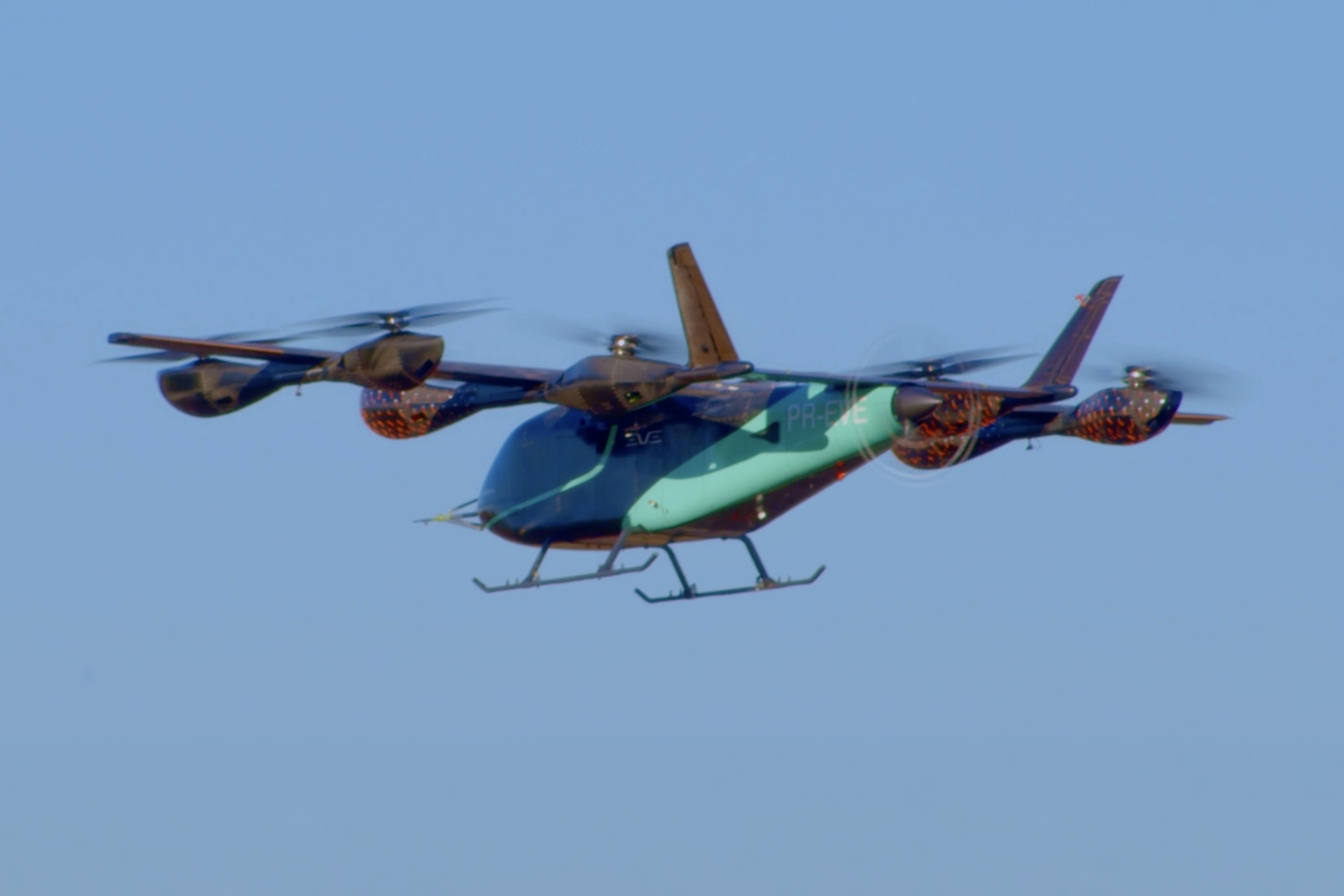
Embraer's flying car activated the rear propeller in flight and begins the most difficult phase of testing (Photo: Eve | Disclosure)
The eVTOL prototype of Eve Air Mobility, a subsidiary of Embraer, made its first flight of the transition phase, the most complex stage in the development of this type of aircraft: the one in which the device is no longer supported by the rotors, like a helicopter, and starts to fly supported by the wings, like an airplane. The company released the result on Monday (3).
It was a partial transition. The test, carried out at Embraer’s flight test unit in Gavião Peixoto, in the interior of São Paulo, marked the first in-flight activation of the rear propeller, the device that pushes the aircraft forward after vertical takeoff. The prototype, unmanned and full-scale, reached a stabilized speed of 27 knots (50 km/h) and a maximum of 30 knots (55 km/h), with the propeller rotating at up to 1,200 rpm. The flight lasted 3 minutes and 9 seconds, covered about 1.55 km and reached 27 meters above the ground.
Why Transition Is the Hardest Test
Embraer prototype during its transition flight in Gavião Peixoto (SP) (Photo: Eve | Disclosure)
It is in this maneuver that the eVTOL exchanges the lift of the rotors for that of the wings without losing altitude or control. Validating the ticket is a condition for advancing in certification and, later, in commercial operation. “This first partial transition flight is an important milestone,” said Johann Bordais, CEO of Eve, in a statement.
According to Marcelo Basile, the company’s director of engineering, the test confirmed the main performance goals planned for the beginning of the phase, and the data collected will support the gradual expansion of the flight envelope, the set of speed, altitude and behavior limits within which the aircraft is authorized to operate.
Next steps
The engineering team follows up with load and structural analyses before raising these limits. Next, Eve foresees data link tests, to validate radio communication and support operations of up to 50 knots (92 km/h). In the coming weeks, the expectation is to progressively expand the speed range.
The prototype has been flying since December 19, 2025, when it made its first hovering flight. In March, the aircraft was presented in flight to President Luiz Inácio Lula da Silva and authorities in the sector. Created in 2020 from EmbraerX, Embraer’s innovation arm, Eve has accumulated about 2.7 thousand letters of intent to purchase and aims at type certification and entry into service between 2027 and 2028. Since 2022, it has received R$ 1.4 billion in financing from BNDES.
Comments are the sole responsibility of their authors and do not represent the opinion of this site. Comments containing profanity or offensive language will not be published. If you identify anything that violates the terms of use, please report it.