


100,000 km test reveals health of high-mileage electric cars
Analysis of almost 10,000 tests in the Swedish market shows less wear than expected, but does not include Chinese brands
By
Eduardo Passos
Published on 2026-07-22 at 12:00 PM
Published on 2026-07-22 at 12:00 PM
Be the first to comment.
Summarize with:
Those who turn up their noses at electric cars often repeat the same fear: what about when the battery “gets addicted”? A new Swedish study has weakened that fear by analyzing nearly 10,000 battery health tests of different vehicles of the type. According to the Carla. The best-placed electric cars in the survey still retain more than 95% of their original charging capacity after 100 thousand km driven.
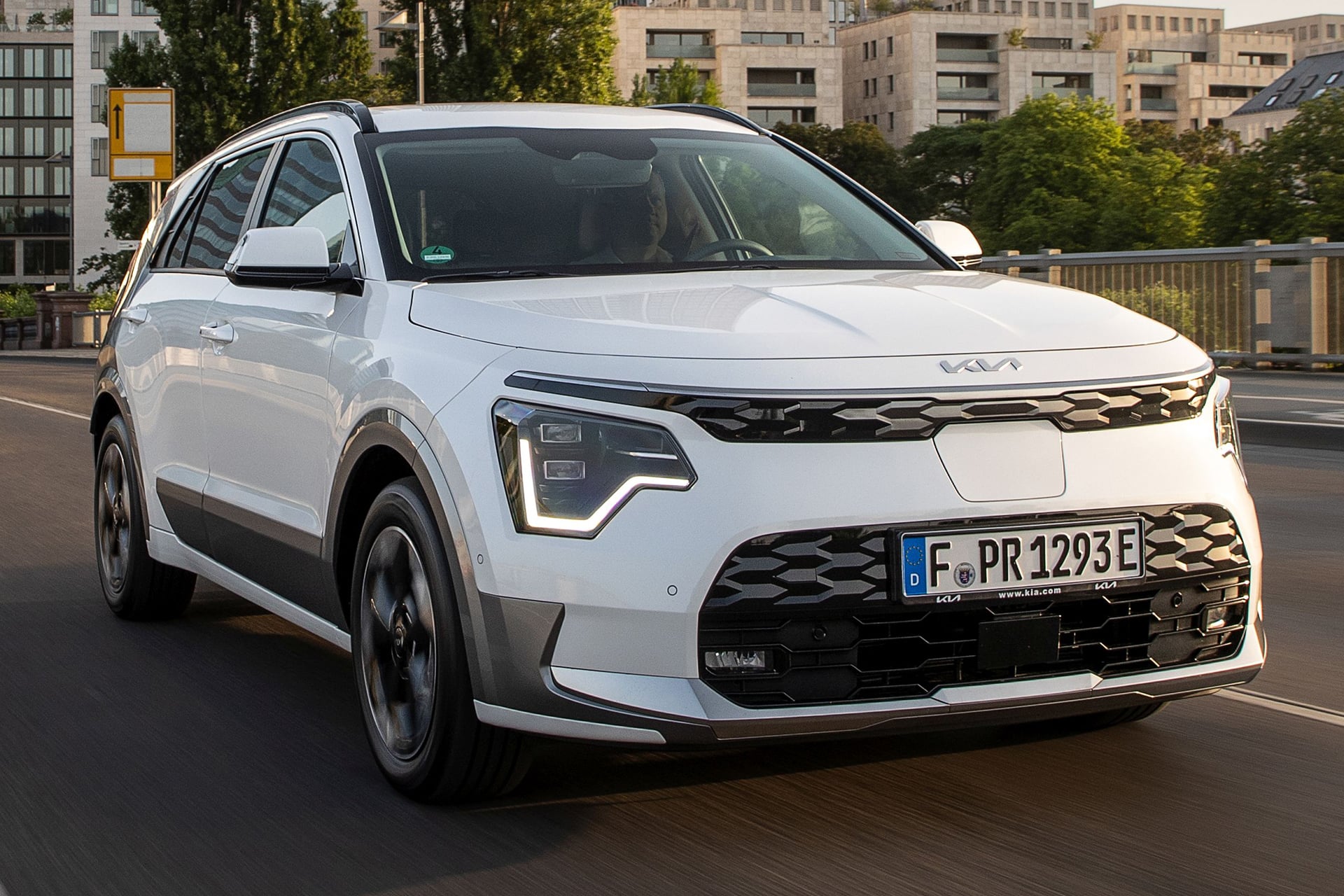
The data was collected between 2022 and 2026 in Sweden’s used market, with a diagnosis by the Austrian company Aviloo. At the top appear two Korean models: the Kia e-Niro (64 kWh), with 97.25% health, and the Hyundai Kona Electric (64 kWh), with 97.18%.
Even the worst placed in the top 20, the Volkswagen ID.3, maintained 91.79%. The study did not include Chinese automakers — precisely the brands that currently lead electric sales in Brazil.
The survey showed, however, that the chemistry and supplier of the cells weigh as much as the model. In the Tesla Model 3, versions with a cell from the Chinese CATL preserved 93.3%, against 88.2% of those equipped with batteries from the Japanese Panasonic.
Why the battery loses capacity
Every lithium-ion battery ages in two ways, according to scientific reviews published in journals such as the Journal of the Electrochemical Society. The first is the passage of time: an insulating layer called SEI grows on the electrode and “traps” lithium, which reduces the available charge. The second comes from use: each recharge causes micro-cracks in the electrodes and, in cold or fast recharging, can deposit metallic lithium. And heat accelerates all these reactions — the hotter it is, the faster the wear.
To alleviate the problem, almost every battery pack hides a capacity reserve: what the panel shows as 100% is never the physical limit of the cells. There is also thermal management, often with liquid cooling, software that limits current and temperature, and the recommendation to maintain the charge between 20% and 80% in nickel chemistries. LFP batteries, on the other hand, are more stable, and accept 100% charge without the same stress. No wonder, the law in the USA requires a warranty of at least 8 years or 160 thousand km (100 thousand miles) for the set.
For those thinking of buying a used electric car, the message of the study is straightforward: a battery health test is worth as much as looking at the mileage and year of the car.
Check out the top-20:
| Rank | Model | Battery | Health after 100 thousand km |
|---|---|---|---|
| 1st | Kia e-Niro | 64 kWh | 97.25% |
| 2nd | Hyundai Kona Electric | 64 kWh | 97.18% |
| 3rd | Kia EV6 | 77.4 kWh | 95.95% |
| 4th | Volvo XC40 Recharge | 69 kWh (CATL) | 94.70% |
| 5th | Polestar 2 | 78 kWh (CATL) | 94.35% |
| 6th | BMW i3 | 120 Ah | 93.77% |
| 7th | Polestar 2 | 78 kWh (LG Chem) | 93.53% |
| 8th | Tesla Model 3 | 60.5 kWh (CATL, LFP) | 93.34% |
| 9th | Audi e-tron 50 | 71 kWh | 93.02% |
| 10th | Audi e-tron 55 | 95 kWh | 92.93% |
| 11th | Skoda Enyaq iV | 77 kWh (SW 3.x) | 92.88% |
| 12th | Tesla Model 3 | 78.8 kWh (LG Chem) | 92.83% |
| 13th | Tesla Model S | 96 cells | 92.80% |
| 14th | Volkswagen ID.4 | 77 kWh | 92.77% |
| 15th | Skoda Enyaq iV | 77 kWh | 92.60% |
| 16th | Tesla Model X | 96 cells | 92.52% |
| 17th | Volkswagen ID.4 | 77 kWh (SW 3.x) | 92.27% |
| 18th | Tesla Model Y | 78.8 kWh (LG Chem) | 92.18% |
| 19th | Audi Q4 e-tron | 77 kWh | 92.18% |
| 20th | Volkswagen ID.3 | 58 kWh | 91.79% |
SEE MORE ABOUT

0 Comments
Comments are the sole responsibility of their authors and do not represent the opinion of this site. Comments containing profanity or offensive language will not be published. If you identify anything that violates the terms of use, please report it.