Chinese automakers are advancing at a fast pace in the Brazilian car market, but they still face important barriers when it comes to heavy trucks. Although Asian brands already represent almost 17% of sales in the passenger car segment in Brazil in 2026. On the other hand, the presence in the transport of continuous cargo is limited by a factor considered decisive in the sector: after-sales. That’s why the Chinese truck doesn’t gear up here.
In 2016, Chinese manufacturers accounted for only 0.5% of the national light vehicle market. Ten years later, they reached 12% share and continued to grow rapidly. The movement transformed the scenario of the Brazilian automotive industry and opened space for new brands in the country.
After-sales is the thorn in the side of the Chinese truck
In the truck segment, however, the reality is different. Road transport depends on a wide network of technical assistance and parts availability, since the vehicle is treated as a work tool, which has become a challenge for the Chinese truck. A vehicle stopped due to lack of maintenance means immediate damage to carriers and self-employed drivers.
Previous attempts by Chinese brands, such as Sinotruk and Shacman, have encountered difficulties precisely because of the limitation of the after-sales structure. Unlike passenger cars, trucks require national coverage of workshops and efficient distribution of parts, something that European manufacturers have built over decades in Brazil.
Today, traditional automakers increasingly profit from maintenance services, connectivity and support contracts than just from selling the vehicle. The truck was no longer serviced in independent workshops to return to dealerships, a move that was well accepted by both large fleet owners and self-employed people.
The logistical challenge still weighs against the Chinese. A truck sold in São Paulo also needs support in remote regions, such as the interior of Mato Grosso. Without a wide service network, the customer’s operation is compromised.
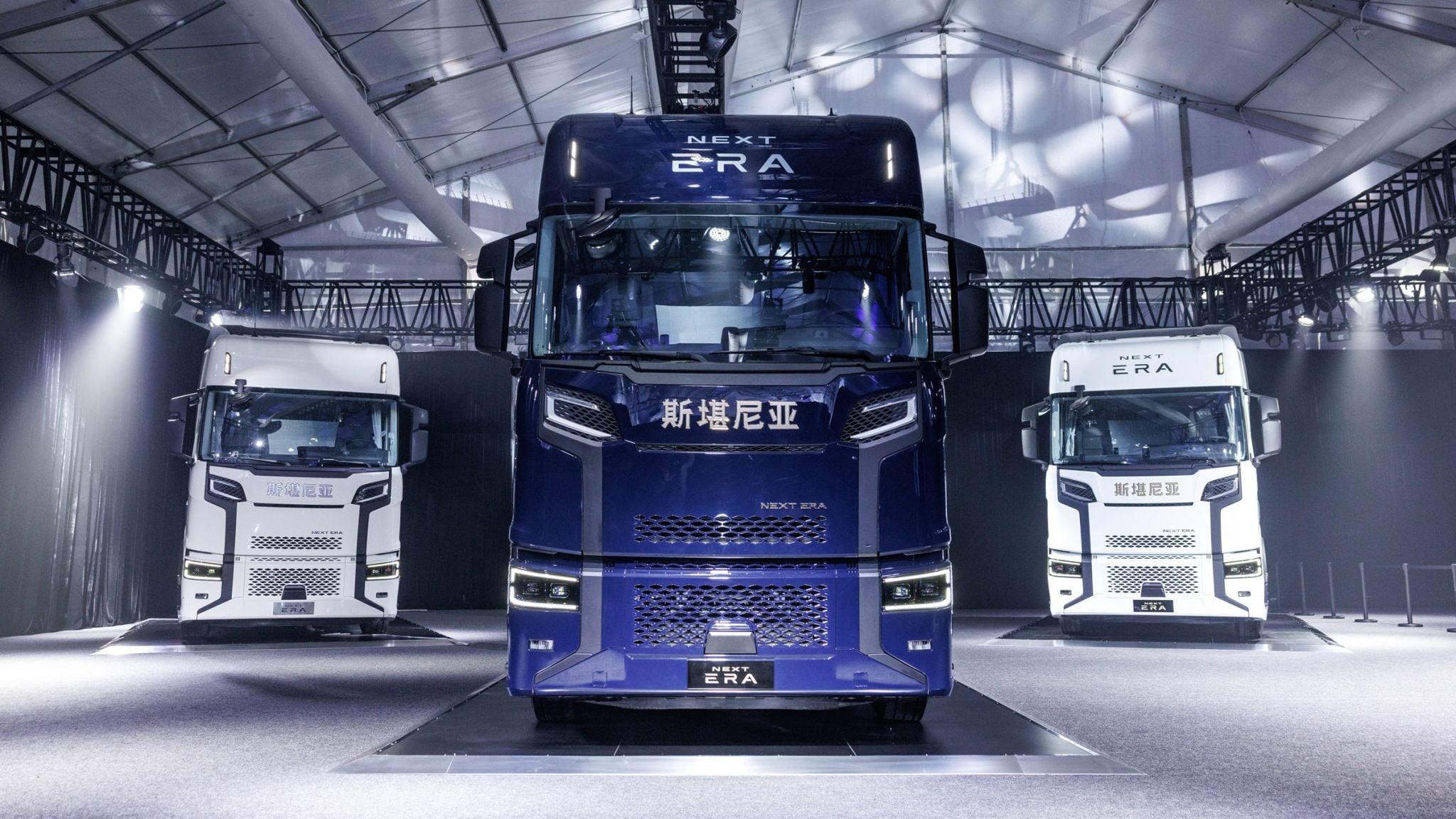
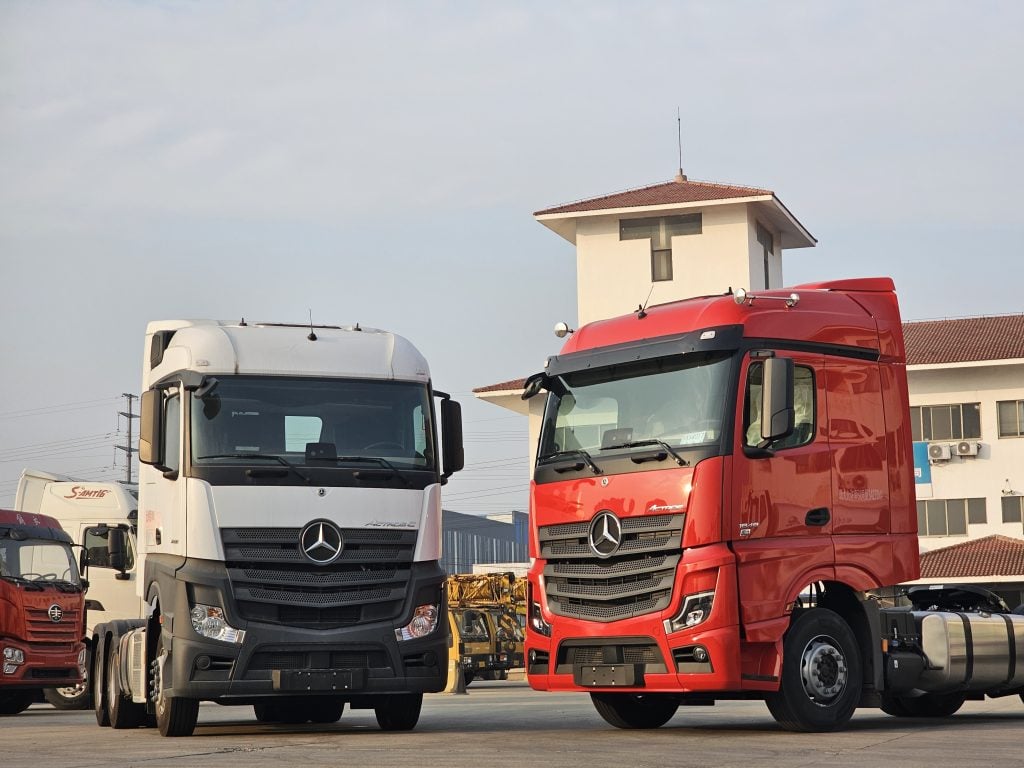
While Chinese cars continue to land in Brazil, European truck manufacturers follow the opposite path and adapt products to face competition in the Asian market. Scania launched the Next Era line in China, derived from the NTG platform, with simplified configuration to compete on price. Mercedes-Benz presented the Actros C, developed specifically for that market.
Mercedes-Benz Actros C was developed for the Chinese market, with adjustments to be more competitive there (Photo: Mercedes-Benz | Disclosure)
The Chinese companies, in turn, are gradually advancing in Brazil. Foton started operations with light trucks, between 3.5 and 17 tons, as well as urban electric models. The strategy seeks to consolidate the brand in smaller segments before entering heavy vehicles.
Other manufacturers are also expanding their presence in specific niches. XCMG and Sany are betting on electric trucks powered by liquefied natural gas. JAC Motors, on the other hand, separated its truck operation from the automobile division and offers models of up to 25 tons.
The heavy truck market represents about half of the sector’s sales in Brazil and is considered the most profitable segment of road transport. Brands such as Sitrak, Shacman and Foton itself can gain space with more competitive prices, benefiting carriers and self-employed truck drivers.
In addition to the price, electrification also emerges as a differential. According to data from the International Council on Clean Transportation, in the first half of 2025 trucks with alternative engines accounted for 48% of sales in China, while diesel models accounted for 52%. The expectation for 2026 is that electric and gas-powered vehicles will surpass diesel-powered ones in the Asian country.
Comments are the sole responsibility of their authors and do not represent the opinion of this site. Comments containing profanity or offensive language will not be published. If you identify anything that violates the terms of use, please report it.