


Why does each road have a different speed limit?
Understand what the different types of roads are, the limits established for each one and what to do if there are no signs
By
Julia Vargas
Published on 2026-07-16 at 07:00 AM
Published on 2026-07-16 at 07:00 AM
Be the first to comment.
Summarize with:
In cities and on roads there are different types of streets, avenues and highways that fulfill different functions in traffic. But, do you know why the speed limit is different for each of them? Or even how to identify the maximum speed without any sign with this information?
The key point is that the speed limit set by legislation is not a matter of number and goes far beyond that. Each type of road has an objective, a flow of vehicles and different traffic conditions that must be taken into account, both by the authorities and by drivers, so that traffic is safer.
SEE ALSO:
- How to know the speed limit of the road even without signs
- Does average speed camera go against Traffic Code? Understand!
- Inclusion of municipality on the plaque serves no purpose, only to cause damage to the owner
Speed limits on urban roads
Urban roads are divided into:
Rapid transit lane
Rapid transit lanes are popularly known as expressways. They have free flow, access without level intersections and do not have a pedestrian crossing or direct passage through properties. If there are no signs, you should consider the limit of 80 km/h.
Arterial route
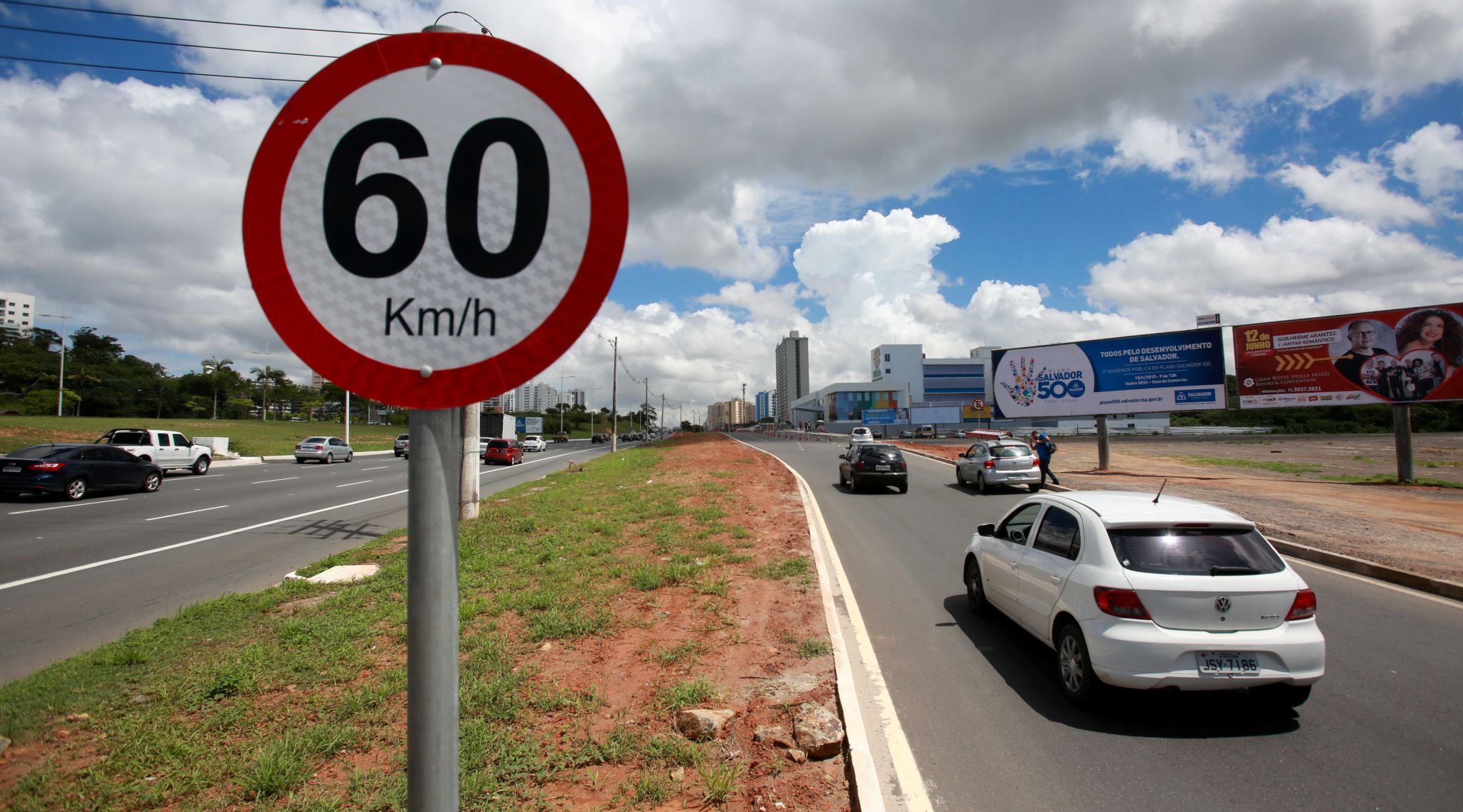
This is the technical name given to the avenues. Arterial roads have a more intense flow of vehicles through cities and are usually controlled by traffic lights. In them, the maximum speed established is 60 km/h.
Collector track
The collectors are streets that connect local roads to the main ones, such as avenues and expressways, with the function of redirecting traffic. You can consider that their limit is 40 km/h in the absence of signage.
Local route
Simple streets, already within the neighborhoods, are called local roads by the CTB. The speed limit is lower, 30 km/h, as they can have intersections without traffic lights, entrances to homes, schools, pedestrian circulation and other elements that require the driver’s attention.
Speed limits on rural roads
The CTB treats roads outside urban areas as rural, being divided into two types: highways and roads.
Dual-lane highways
Highways are paved rural roads. In the double lanes, which have the opposite directions separated by a median or by a physical barrier, the limit is higher: 110 km/h for light vehicles and 90 km/h for heavy vehicles.
Single-lane highways
These are the paved highways without a division between the directions. If there are no signs, you should consider that the speed limit is 100 km/h for light vehicles, while for heavy vehicles it is 90 km/h.
Roads
For the CTB, unpaved lanes are called roads. The speed limit on them is 60 km/h, even if there is no license plate.
The signaling is in charge
The second paragraph of article 61 of the CTB includes that the traffic agency or entity with jurisdiction over the road may regulate speed limits different from those previously suggested. For this, he will have to apply appropriate signage to inform drivers.
In theory, the limits should take into account factors such as traffic flow, topography, curves and local accesses. A double-lane highway in a mountain range, with descents and strong curves, can have a limit below 110 km/h for safety.
SEE MORE ABOUT

0 Comments
Comments are the sole responsibility of their authors and do not represent the opinion of this site. Comments containing profanity or offensive language will not be published. If you identify anything that violates the terms of use, please report it.