VW seeks speed from the Chinese and wants to sell half a million cars
Ciro Possobom, president of Volkswagen, recognizes the agility of the Asians, talks about hybrids and believes that a purely ethanol car is an interesting solution
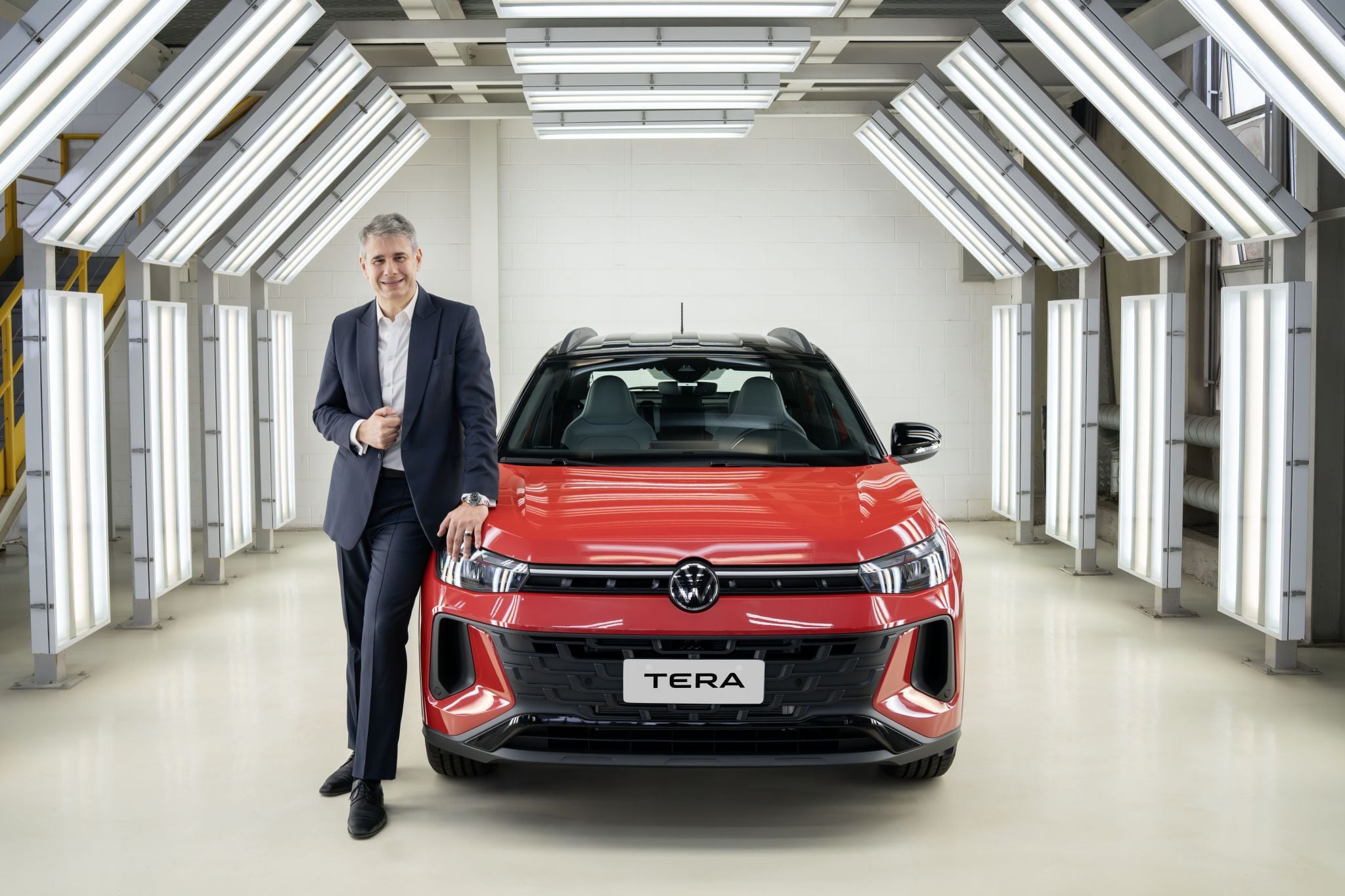
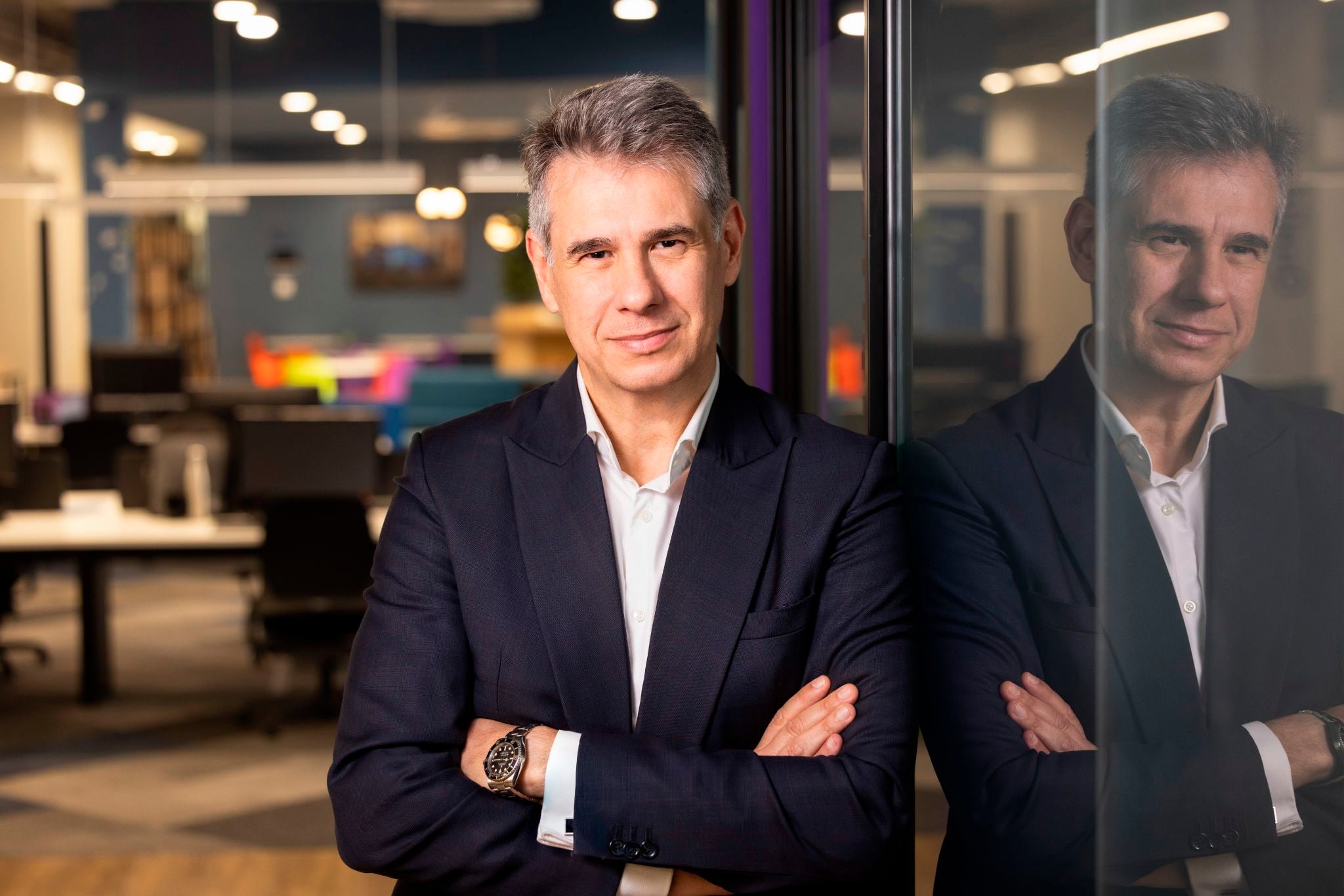
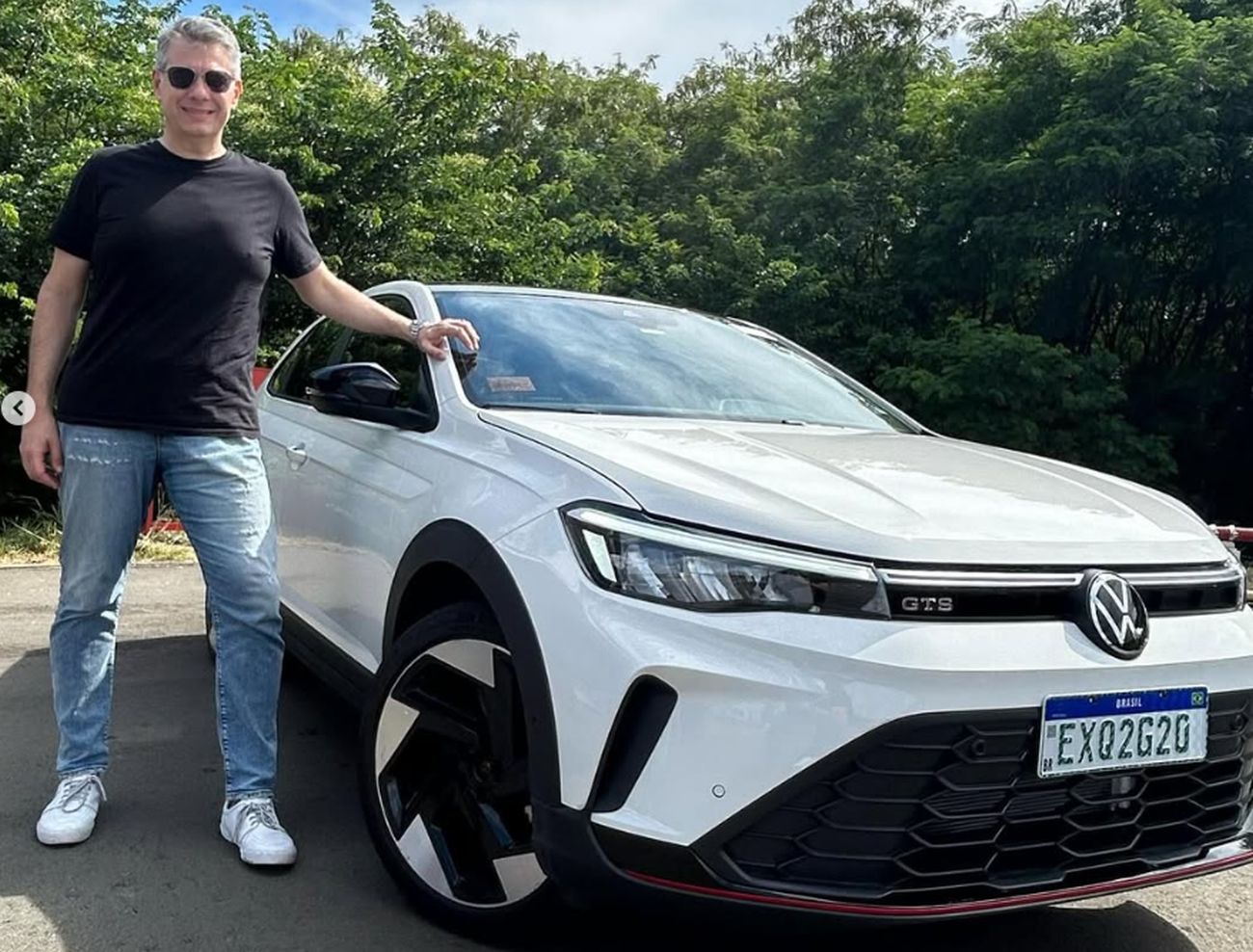
Ciro Possobom leads Volkswagen's operations in Brazil and is attentive to market movements (Photos: VW | Disclosure)
Chinese, electrification, geopolitical instability. All this under the pressure for cost reduction and agility in processes in search of productivity and profitability. If you think that the life of an automaker president is easy, here is a summary of what an executive in the sector, such as Ciro Possobom, CEO of Volkswagen, has to deal with.
The president of the second largest automaker in sales in the country gave an interview in which he spoke a little about the frenetic moment of the automotive market. Of course, starting with the Chinese and how traditional brands were – to a certain extent – surprised by the voracity and speed of Asian manufacturers.
“I don’t think anyone expected such a great speed as now. There is a new wave coming, with very interesting cars, with quality. And we have to adapt to that,” admits the executive.
This adaptation involves better competing with the cost-benefit of Chinese vehicles. But this is not only about the final price, but also about the agile process of developing and producing cars, at a lower cost.
At this point, Volkswagen even sees a competitive advantage. Because it can and wants to take advantage of the decades-long partnerships it has in China.
“Volkswagen has 36 factories in China and we are also adapting all the German technology, what we know how to do best, and looking for this speed from the Chinese. Wait for there to be many good things from us too”, he promises.
Broad, general, and unrestricted hybridization
The CEO, obviously, does not detail such news. In the brand’s medium-term launch plan, compact SUVs with the long-awaited mild hybrid engine in the coming weeks, the Tukan intermediate pickup – which is already in its “homeopathic presentation” phase – and the second generation of the Amarok – by the way, a Chinese project – in 2027.
Speaking of news and hybrids, all these debuts will have some kind of electrification, as Volkswagen itself had already confirmed. At this early stage, the expectation is for a mild hybrid system for SUVs and Tukan.
Possobom makes it clear that, in Brazil, a car can never be treated with a disposable device
However, Ciro Possobom makes it clear that the automaker will attack on all possible electrification fronts.
“We will have the mild hybrid, the normal hybrid and the plug-in hybrid. Depending on the pocket, depending on the mobility that that customer needs, we will offer a car. And we will also have electric cars”, he guarantees.
In this Volkswagen strategy, the level of electrification of the brand’s portfolio will vary according to the positioning of the car.
“Am I going to take a PHEV and put it in Tera, for example? It doesn’t make much sense for the pocket of that consumer looking for an entry-level car. So, we will offer various types of solutions for various types of customers”, he reinforces.
In this sense, the president of Volkswagen joins the other manufacturers in the country and sees the flex hybrid as the most natural and viable bridge in this phase of energy transition in the country. And it misses VW’s goal of wanting to produce more than half a million cars in Brazil.
“We are a mass automaker, we will make more than 500 thousand cars here in Brazil this year. We have a very big deficiency in terms of charging, so I think the flex hybrid, for the mass market, can be a great solution.”
Ethanol-only car on the radar
But some competitors are also moving in relation to purely ethanol cars. General Motors develops a “cachaça” Onix, Stellantis presented a purely ethanol engine some time ago and even Volkswagen has a biofuel research laboratory at its plant in Anchieta (SP).
Asked if the German brand could have a model with a 100% ethanol-powered engine, Ciro Possobom was receptive to the idea.
It can be interesting for the customer, why not? Ethanol is a fuel of the future, which helps nature, which you can fuel in any corner, so why not? Thinking about the planet, thinking about a sustainable solution, it’s a beautiful solution.”
Especially because paths such as the flex engine and ethanol are Brazilian technologies with scale. Deeper electrification, on the other hand, implies localization challenges.
Although Volkswagen has, on average, 85% nationalization in its cars, geopolitical inclement weather forces a greater concern with the location of components.
“We import a lot of things from Asia, but there is a tendency, of course, to concentrate a lot here, because to survive in countries like ours, you have to be very careful with the exchange rate variation,” he explains.
“We have more than 850 direct suppliers, who help in this protection and to make our car increasingly robust to these market volatilities”.
This vision of localization of other components concerns everything from equipment such as automatic transmission – which Brazil did not start to produce even with the increase in demand for this type of gearbox – to components for electrified products.
“The question is to prioritize investments. I think it will be inevitable in Brazil that you enter into all types of investments. The country growing, the industry growing and having more and more electrification, it is inevitable that you will produce here”.
After all, is Chinese car all the same?
Speaking of growth, the executive highlights Volkswagen’s gain in share and volume in recent years. Before the pandemic, in 2018, the brand had a 14% share. In 2025, it closed with more than 17% in second place, behind only Fiat.
“We doubled, from 2023 to now, we have increased sales by 90%. No automaker has done this. Even though the market is growing and with the arrival of new entrants, we continue to grow”.
Speaking of new entrants, we return to Chinese brands. And at the Beijing Motor Show, the president of Volks do Brasil caused some controversy by stating that Chinese cars were all the same. He defends himself.
“There was a mess, I’ll explain it to you better. When we see the Chinese market, the Beijing Motor Show, there are a hundred and so brands. So, many of them are very equal, but there are many manufacturers that are excellent, have a super good product”, he justifies.
For the executive, it is essential that the brand has an identity to strengthen its relationship with the public
“I’m not saying that everyone is the same, there really are players who are doing the right job. So, that was a little bit of my observation,” he adds.
Even so, Ciro Possobom believes that differentiation is essential for brand building. And not only in terms of design.
“The car for Brazil is not a gadget that you buy tomorrow and exchange in two months, a year from now. I strongly believe in building a company, a brand”, he defends.
“For Brazilians, this is very important. To know the brand and to know how I’m going to sell that car later. This is a little bit of the doubt that I put and distorted it a little bit there in the hall.”
In the executive’s opinion, for Chinese manufacturers, this brand building in the Brazilian market involves understanding this consumer logic.
“How are they going to build this brand to be sustainable in the future? Knowing that in Brazil cars are an important asset, it’s not a cell phone that you discard in two or three years.”
Comments are the sole responsibility of their authors and do not represent the opinion of this site. Comments containing profanity or offensive language will not be published. If you identify anything that violates the terms of use, please report it.