High price and IPVA make it difficult to buy a brand new car in Brazil
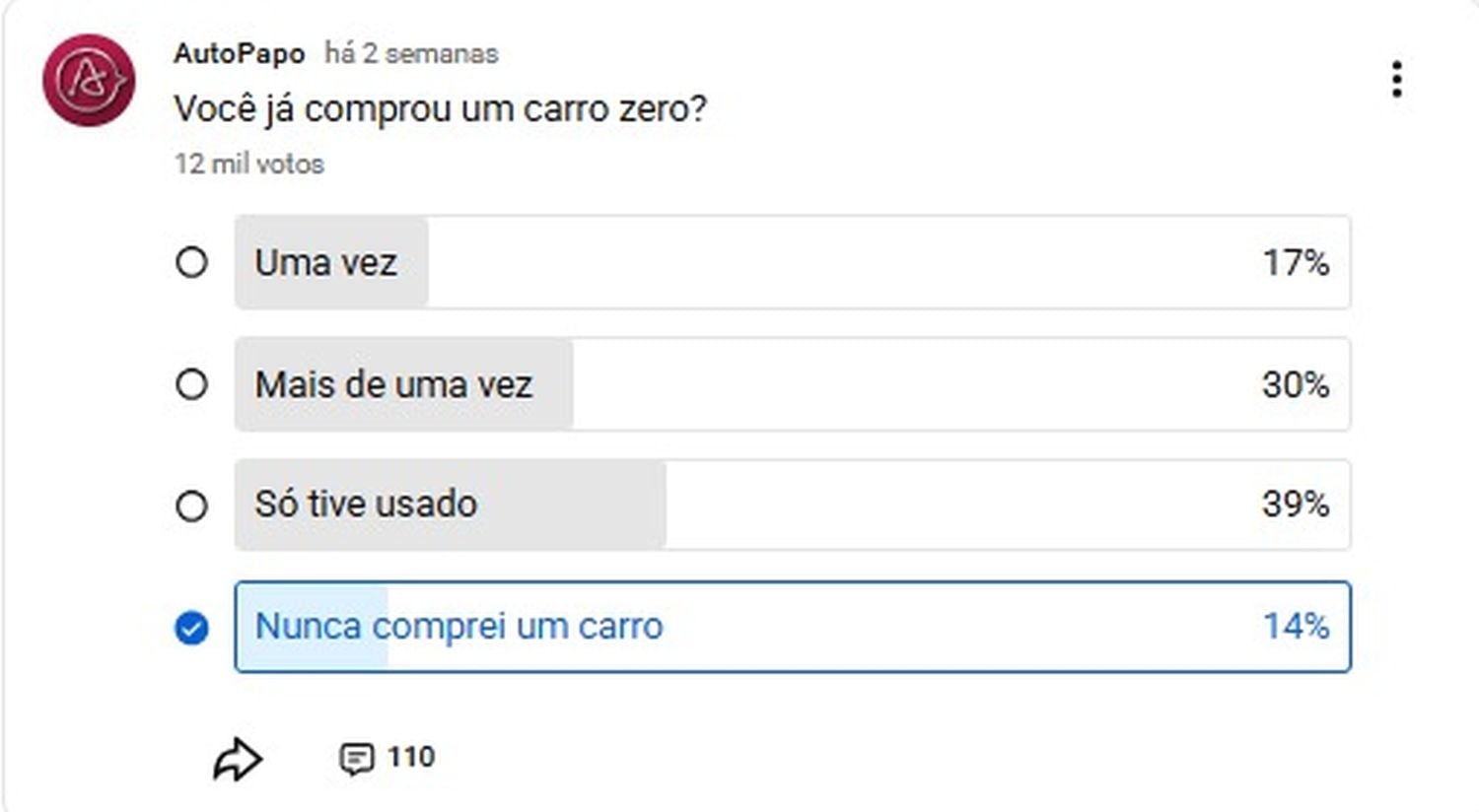
Survey with the AutoPapo community, with 12.5 thousand votes, reveals that less than a third of the participants managed to buy a new car more than once
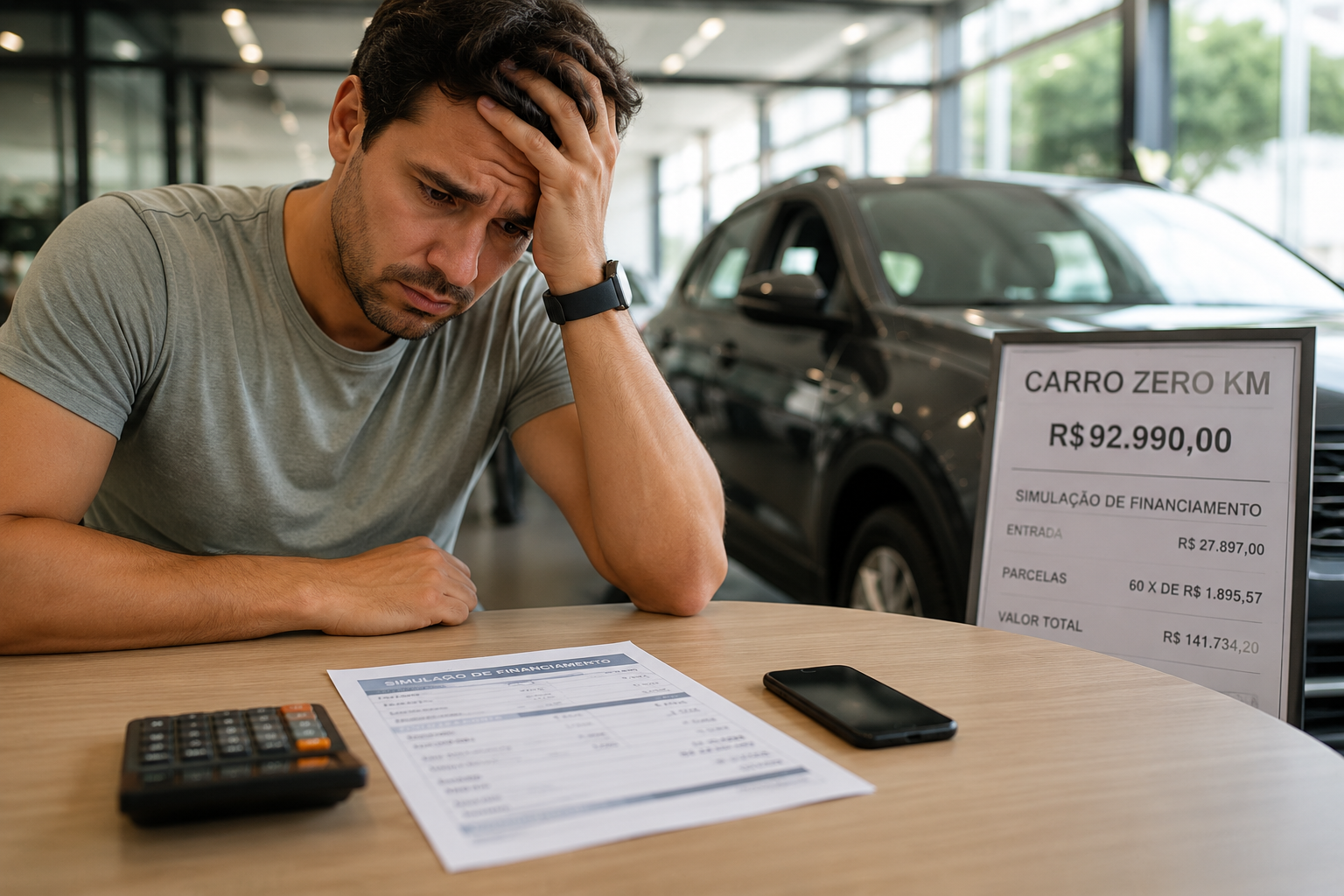
Buying a new car is increasingly distant from the majority of the population (Photo: Image generated by artificial intelligence ChatGPT | OpenAI)
By
Marcelo Jabulas Published on 2026-06-13 at 09:00 AM
Updated on 2026-06-14 at 04:53 PM
The Brazilian car market has already surpassed the mark of 1 million units registered in 2026. From January to May, 1,098,691 passenger cars and light commercial vehicles were licensed, according to the National Federation of Motor Vehicle Distribution. The number corresponds to an increase of 18.2% over the same period in 2025. If the market keeps the pace, sales could exceed the mark of 3 million units, a volume that has not been reached since 2013. But the question that remains is: have Brazilians bought new cars again?
According to Fenabrave, 49.1% of all registrations in 2026 were in the Direct Sales modality, that is, negotiated directly with the manufacturer. It is a transaction between CNPJs, but it is also allowed for rural producers, taxi drivers and the PwD public. But the overwhelming majority of sales are to fleet owners and rental companies.
The retail of used cars, in turn, is seven times larger than that of new cars, as pointed out by the National Federation of Automobile Dealers Associations (Fenauto). From January to May, 7.4 million units were traded. In May alone, 1.5 million used cars changed owners.
Brand new car has become a privilege for few Brazilians (Photo: Shutterstock)
And, to try to better understand whether Brazilians buy a new car or not, we launched a survey in our community on YouTube, which has almost 1.2 million subscribers. Of the 12.5 thousand voters, more than half have never bought a brand new car in their lives. They add up to 53% of the votes. Of this group, 39% only had used cars and 14% had never bought a car.
In the portion that had a new car, 17% were able to buy a 0 km unit only once. 30% of the participants say they have bought a brand new vehicle more than once.
The voice of the people against the zero car
The survey counted 110 comments, in which most opinions are against allocating large sums of money to a new car. Price is one of the factors that most scare away the consumer.
“This is Brazil, friend, the popular class only has a car because it is used, it is impossible to buy a brand new car under conditions of popular citizenship”, observes one of the applicants.
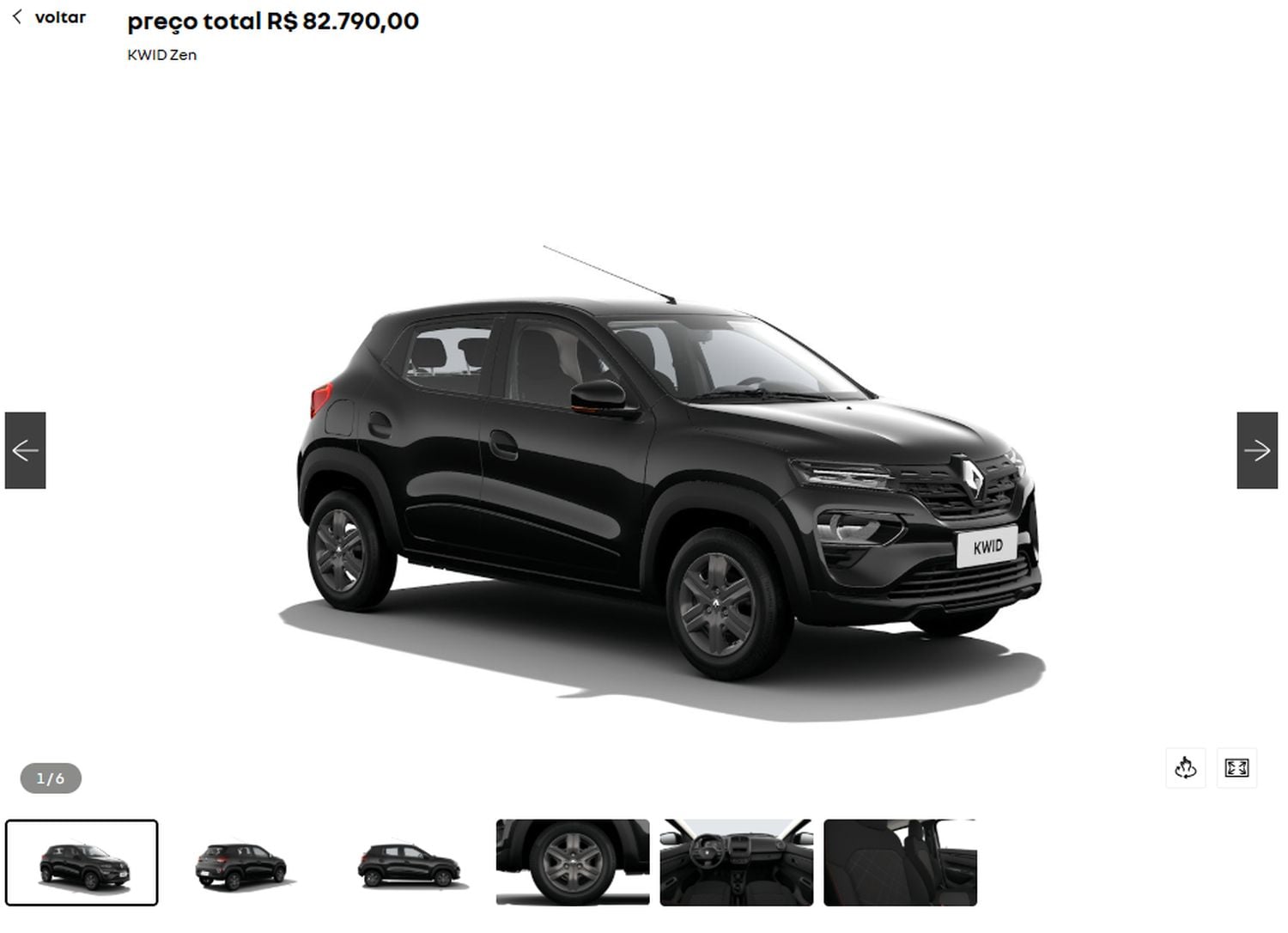
In fact, today, the “cheapest” car on the market is the Renault Kwid. The subcompact has a starting suggested price of R$ 82.790 and can reach R$ 91.190 in the top-of-the-line version, Outsider.
In addition to the Kwid, in June 2026, only Citroën C3, Fiat Mobi, Fiat Argo, Hyundai HB20 and Volkswagen Polo Track have options below R$ 100 thousand. It is worth remembering that we are talking about the suggested price announced on the manufacturers’ website, without considering promotional actions and other discount options.
Renault Kwid is the cheapest car in Brazil and has already exceeded R$ 80 thousand (Photo: Renault | Reproduction)
Thus, the scenario justifies part of the complaints of the survey participants, who claim that it is practically impossible to buy a brand new car and that, with the price of entry-level models, it is possible to purchase a used car of a higher category.
“Once I fell into this and bought a brand new car. Today I learned that a used car with two or three years of use is the best deal”, says one of the participants.
Salty IPVA
Another factor that discourages Brazilians from buying a new car is the weight of taxes. The IPVA weighs in the decision. The tax rate varies in each state, with percentages ranging from 1.9% to 4% of the reference value, according to Fipe. São Paulo (4%), Minas Gerais (3% to 4%) and Rio de Janeiro (3% to 4%) are the federative units with the highest charges.
That is, a new car valued at R$ 100 thousand can pay up to R$ 4,000 in IPVA to obtain licensing. A used car valued at a third of the value would have to collect R$ 1,400, considering the higher rate. And, assuming that the new car and the used car fulfill the same function, paying less tax is a logical argument.
Interest rates are one of the villains that keep Brazilians away from new cars (Photo: Shutterstock)
In addition, there are factors that help to further distance Brazilians from the dealership. One of them is the interest rate on financing, which is linked to the Selic Rate, which is at 14.5% per year. It is a kind of inflation control valve, which the Central Bank uses to help hold back consumption to control price escalation. And a high rate translates into more expensive installments in the booklet.
Even so, there is a lack of capital to buy a car in cash. In 2025, 2.6 million of the 4.7 million licensed vehicles (in an account that includes passenger cars, light commercial vehicles, motorcycles, trucks, buses and road implements) had a part of the amount financed, according to the balance sheet released by B3 in January. In other words, more than half of the new vehicles depended on bank money to complete the purchase.
In the used segment, the percentage is lower. In the same B3 balance sheet, 4.6 million semi-new or used vehicles needed financing. But the universe of used vehicles sold in the period was 18.5 million units. In other words, the dependence on financing among used vehicles fell to 24.8%.
When is the zero car a good deal?
And the reason is obvious, with cheaper prices, the effort to buy a used car is much less than a new car. But there are those who defend the zero car from the perspective of long durability.
According to the survey participants, who bet on the new car, the main advantage is to eliminate the risk of bad origin, history of defects and collisions. “I bought my last brand new car in 2012 and I have it to this day,” exemplifies one of the channel’s subscribers. Several other comments follow the same tone.
In fact, the brand new car has never suffered wear or been exposed to scratches. This tranquility is difficult to find in a used car, even if it is possible to find “whiteflies” rested in some garages. Thus, there are those who prefer to spend more so as not to run the risk of being surprised buying a pig in a poke.
However, many participants even argue that the purchase of the new model is only valid if the owner keeps it for a long time. Buying zero and then changing is considered a bad deal, due to immediate devaluation, as soon as you take the car out of the store.
And you, have you already bought, or are you interested in buying a brand new car?
Comments are the sole responsibility of their authors and do not represent the opinion of this site. Comments containing profanity or offensive language will not be published. If you identify anything that violates the terms of use, please report it.