Brands realized that spending tens of millions of reais for the public to see a car that would be at the dealership the following week was nonsense. Worse: it was a passive model. The customer saw it, thought it was beautiful and left. There was no emotional click that only the sensory experience provides. The Automobile Show, in essence, was a temporary museum of new cars. And museums are places of contemplation, not experience.
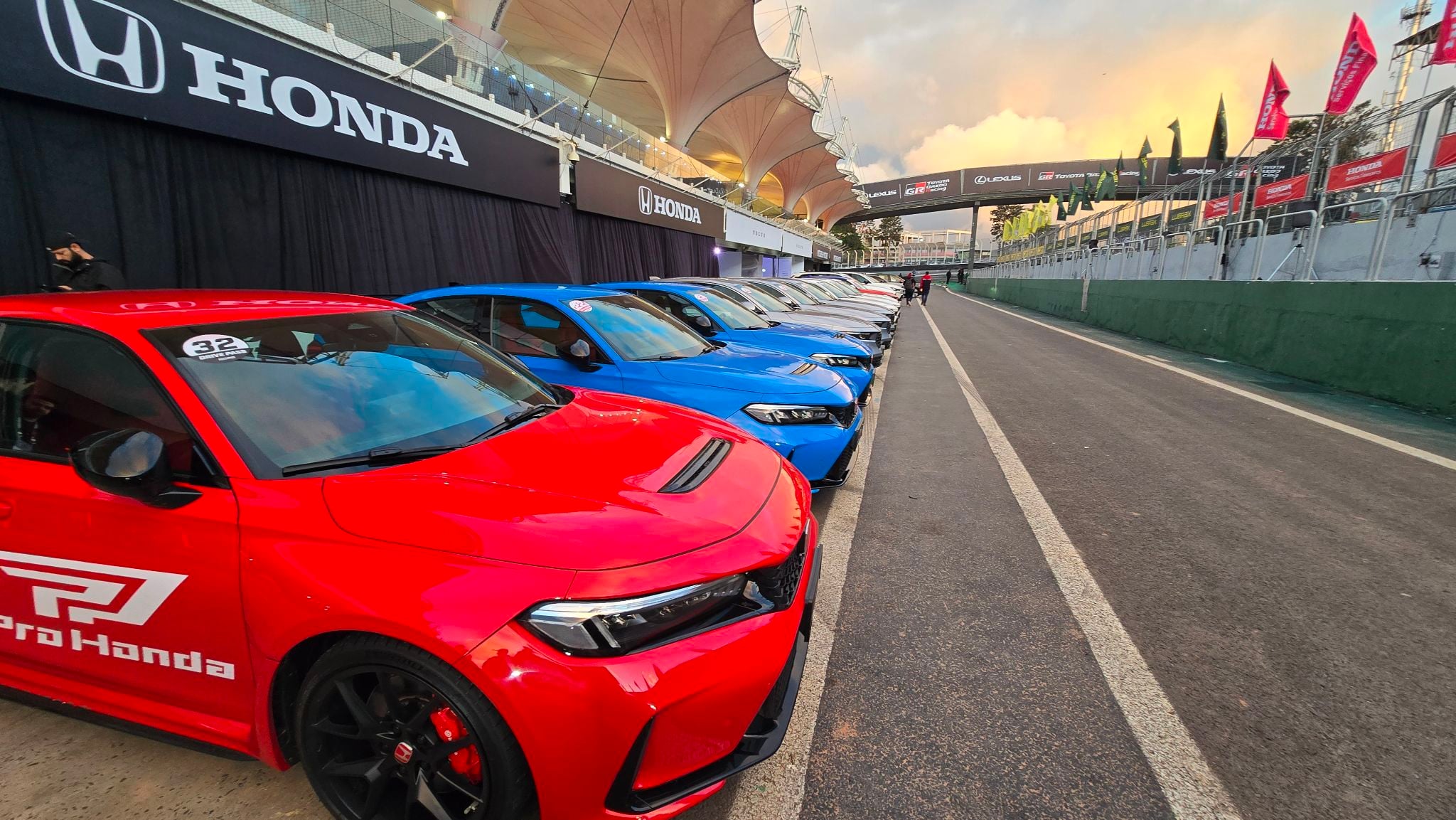
It is in this scenario of saturation that the Interlagos Festival arises. The proposal is radically different, much more accessible to the pockets of manufacturers and indisputably more adjusted to bring the public and the brand closer together. By transferring the stage to the Autódromo José Carlos Pace, the organization not only changed the event’s zip code; it changed its soul.
The fundamental difference between a static hall and an experience festival is dynamism. At the Interlagos Festival, the car ceases to be a metal sculpture under artificial lights to become what it really is: a machine of sensations.
There, the visitor doesn’t want to know if the plastic of the dashboard is soft touch just by looking out the window. He wants to feel the immediate torque delivery of an electric motor on the way up the Café. He wants to hear the roar of a sports car’s exhaust on the opposite straight. He wants to feel the suspension working in the Dive.
The experience of driving — or even hitchhiking in a hot lap — creates an emotional bond that no booth, no matter how luxurious, is able to replicate. The Interlagos Festival transformed the “forbidden to touch” into “let’s accelerate?”
The Automobile Show itself that took place in 2025, back at Anhembi, accused the coup and tried to revitalize itself. It made its test-drive track there, inside the pavilion itself, where the visitor went around. As well as standardizing the stands in one size, in order to rationalize costs. It was already an advance, so much so that the organizers guarantee that the show will be back in 2027.
Another crucial point in this comparison is the breaking of the barrier between dream and reality. In the old Show, the supercars were on pedestals, surrounded by isolation cordons and security guards in suits. They were distant deities. In the festival format, proximity is the rule. Of course, not everyone will drive a Ferrari or a Porsche – although this possibility exists for those who can afford this type of ticket – but the simple fact of seeing these cars passing a few meters away, feeling the displacement of air and the smell of burnt rubber, humanizes the machine. The event is no longer a product exhibition and becomes a celebration of automotive culture.
And more: the Interlagos Festival understood that the concept of “experience” is not limited to driving a car, although this fact alone counts for a lot. There you will find music, gastronomy, simulators, accessories exhibition, drifting shows, acrobatics teams with motorcycles. It is an environment where the owner of a popular car and the collector of rarities share the same space with the same smile on their faces. The Salon was institutional; the Festival is social.
The “lead” (the potential customer) generated in an experience event is much hotter. Anyone who leaves a test at Interlagos is one step away from buying. He has already cleared up doubts about visibility, comfort and performance. He no longer needs to imagine how the car drives; he knows. Even for that type of consumer who is not at the decisive moment of his purchase journey: the experience on the fi-de-li-za track. The pamphlet distributed at the Show, in turn, is discarded in the first trash can towards the parking lot.
As a journalist who has followed decades of launches in closed pavilions and racetracks around the world, the conclusion is inevitable: the smell of tires is much more seductive than that of carpet. The Motor Show gave me incredible memories, it’s true. It was the stage for many of my childhood dreams. I haven’t missed one since the 80s.
But the Interlagos Festival provides me with the adrenaline of the present. I’ve driven dozens of cars at the Autodromo in the last 35 years. And I’ll tell you that I remember each one of them, working as a reporter, riding in races or even as a consumer. It was at the Festival (Motos Edition), in 2024, that I rode a motorcycle on a racetrack for the first time, a Triumph Trident 660. I would never forget the first pendulum in Pinheirinho.
But what about China?
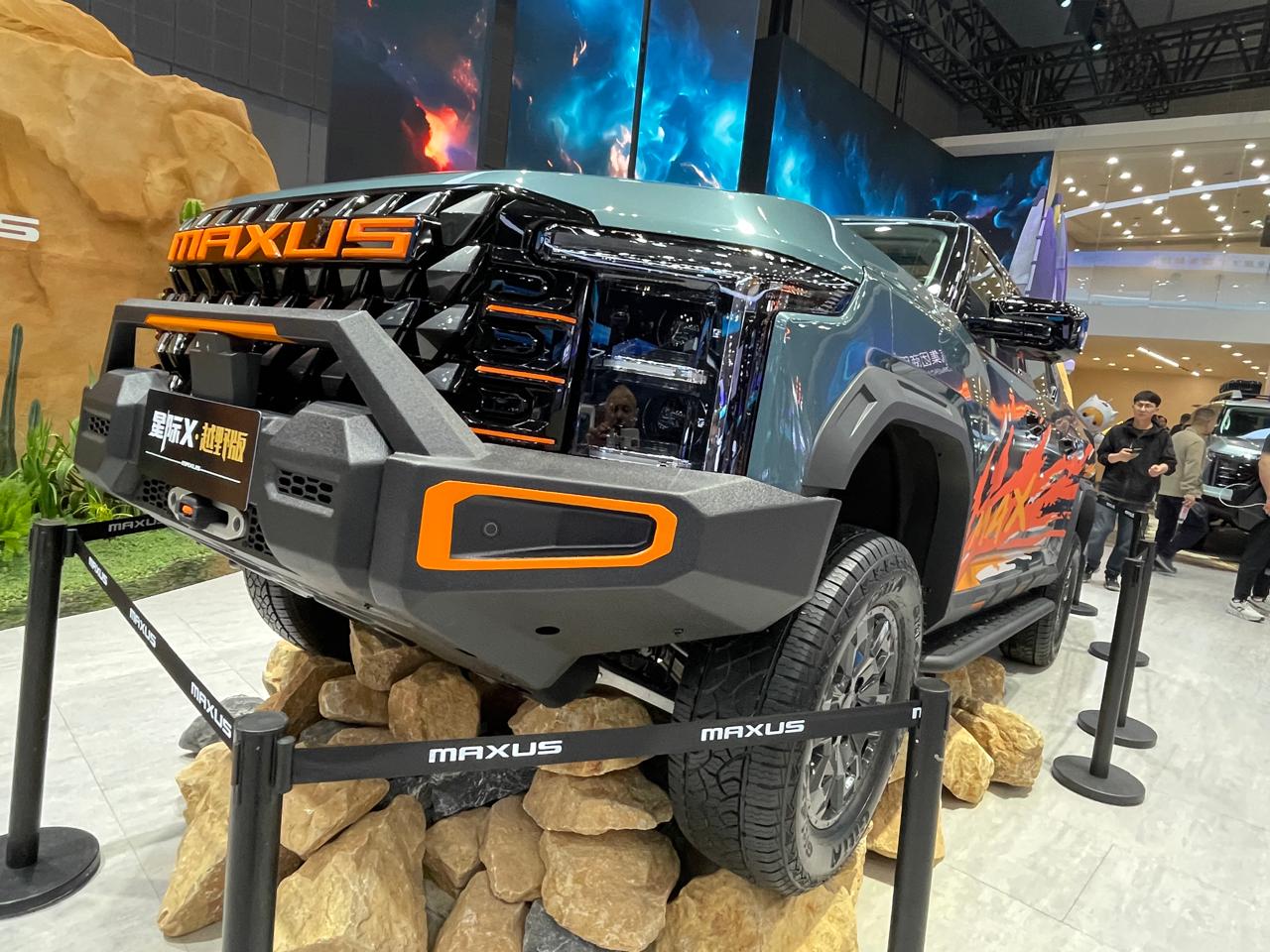
The format of the Salon is still strong in China (Photo: Marcelo Jabulas | AutoPapo)
Everything is different there, friend. To begin with, we are talking about a country with about 130 car manufacturers (not counting Western manufacturers) – I don’t think this would fit in any racetrack. It’s true that the overwhelming majority operates regionally, like those buggy manufacturers who only militate in the Northeast of Brazil, you know? Here in the southern cone of the country, we don’t even know it. It’s the same there. There are dozens and dozens of small companies, which produce less than 50 thousand units per year… but which use the Chinese show as their main stage to expand their business.
In addition to journalists and consumers, let’s not forget that an event like this is also attended by businessmen who work in the dealership business. And all that one of these small manufacturers wants most is precisely to expand the authorized network and try to have national coverage, which is why they invade these exhibitions with will.
I remember, in previous years, an uncomfortable feeling, which never happened to me anywhere in the world: I entered some pavilions of these Chinese salons and I didn’t know any of the 50 or so cars in that building – there are several pavilions, by the way. And the small brands are all brought together. But it was even worse: not only did I not identify the cars… but I didn’t even know the names of the manufacturers themselves, since few of them translated their names from Mandarin to our alphabet.
I’ll tell you everything on the way back.
(I’m thinking better here: is no one building a giant racetrack in China to accommodate a Festival?) As you read this column, written today, Wednesday 22nd, I’ll be crossing Asia towards China. I took a flight from São Paulo yesterday at dawn and made a connection in Dubai, in the United Arab Emirates. It’s the eighth or ninth time I’m going to China, especially in April to work at the auto shows they organize. Every even-numbered year, the show takes place in Beijing; in odd-numbered ones, it moves to Shanghai. I’ll see more than 1,500 cars and about 150 launches there.
“Ah, Edu, but don’t you defend that the salons died? How can China organize exhibitions with all this strength?”
To begin with, it wasn’t me who decreed the death of salons in the traditional format of how we knew them. It was the public. And this happened all over the world. Several traditional shows, such as Paris and Frankfurt, succumbed to the visitor’s demand to associate “event” with “experience”. And you can’t put a game in your booth… and say that it’s “experience for the public”. No, it’s not.
In the past, there was a time when the São Paulo Motor Show contained a sacred ritual for car lovers. You crossed the gates of Anhembi — and later of the São Paulo Expo —, faced kilometer lines and walked miles on shag carpets just to, lo and behold, look at cars.
The Salon was a glass showcase. Beautiful, imposing, billionaire, but untouchable. And it is precisely here that the decline of this business model lies and the explanation for the phenomenon of experience events, such as the SEMA Show, in Las Vegas, and the Interlagos Festival.
The industry has changed, the consumer has changed and, above all, our relationship with the object of desire on wheels has undergone an irreversible metamorphosis. Today, no one wants to be just a spectator anymore. The public is tired of being extras at the party of brands; they want to be the protagonist. And the protagonist does not watch the show from the audience: he goes on stage. Or rather, he takes the wheel.
To understand the success of the new formats, we need to look at the open wounds of the old salons. The traditional model collapsed under the weight of its own cost. Setting up a 2,000-square-meter booth, with state-of-the-art LED screens, a designer buffet and hundreds of receptionists cost automakers tens of millions of reais. It was an image investment, a kind of “who has more power”, but with a return on investment (ROI) that was increasingly difficult to justify.
Comments are the sole responsibility of their authors and do not represent the opinion of this site. Comments containing profanity or offensive language will not be published. If you identify anything that violates the terms of use, please report it.