The traffic problem is a reality in large cities all over the globe. London, Dublin, Toronto and several other metropolises face daily traffic jams that take drivers more than 30 minutes to travel 10 kilometers. In Brazil it is no different, and today large capitals such as São Paulo and Belo Horizonte are already among the worst ranked in terms of congestion.
The solution to solve the excess of vehicles on public roads has been sought for years. Increase in lanes, bus and subway lines. In 1997, São Paulo implemented the well-known rotation, which determines that, during business hours, only certain signs can run in the city. But no situation has yet been able to be so efficient as to remedy the recurring traffic jams.
The search to understand this complexity in the streets of Brazil and the world led AutoPapo to a conversation with Osias Baptista Neto, a transport specialist engineer assigned by Crea in transport system, former president of the Belo Horizonte Transport and Transit Company (BHTrans) and currently a consultant in the area of transport and traffic.
Osias was very sincere in clarifying to us that traffic really is a very complex issue. When asked what the problems and solutions are for him, he categorically replied that:
That’s the billion-dollar question. Whoever knows how to answer this objectively solves the problem.”
The expert said that Brazil is a particularity in relation to other countries. According to him, sometimes it is a little United States, sometimes Europe and sometimes India and Vietnam. All this talking about traffic.
“You have the United States with wide roads, highways and a vision totally focused on the automobile. There is Europe with historic cities, complicated layouts and historical heritage that prevents major interventions. In many European centres, it is practically necessary to exclude the car for the city to survive. And you also have something similar to Vietnam, India and Pakistan: widespread mess, millions of motorcycles, winding roads and unplanned peripheries.”
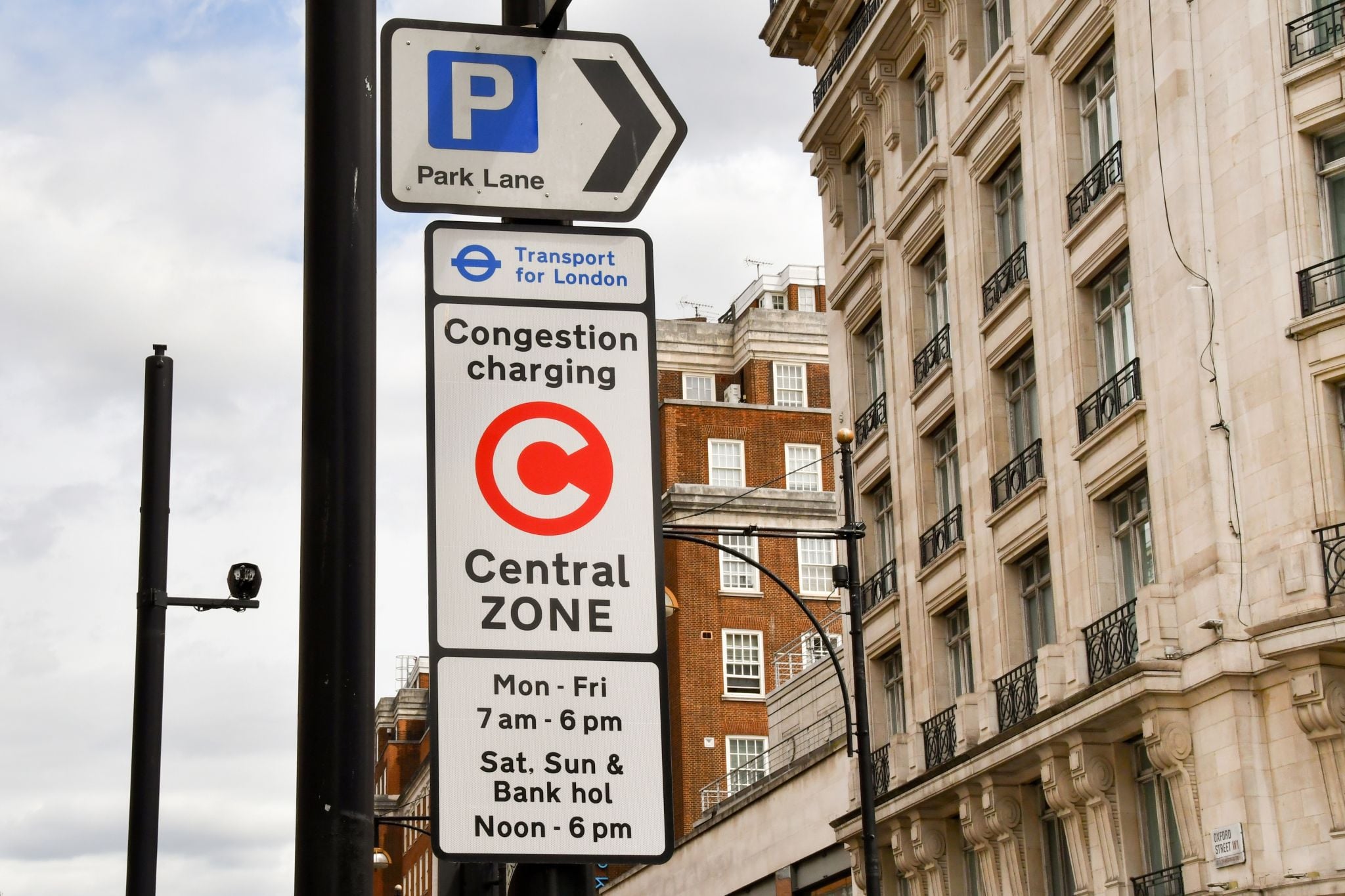
To deal with traffic in the center, London applies the congestion charge from Monday to Friday between 7 am and 6 pm (Photo: Shutterstock)
For him, this is due to the different topographies, urban planning and the uniqueness of the various forms of civil construction that exist throughout the country.
“When we focus on Belo Horizonte, we have a historical problem: the center was planned and the periphery was ‘unplanned’ as it grew. Originally, it was thought of farms around the central area to supply the city. But the city went beyond this planning. You see situations like Rua da Bahia: it arrives 20 meters wide and then becomes a narrow lane. This is repeated throughout the city. Another very serious problem is that many allotments were made without talking to each other. You see completely bonkers because one neighborhood was planned separate from the other. This road configuration of the city makes solutions extremely difficult.”
In other cities in the world that also have traffic problems, the situation is different, and all the geography added to investments can mitigate the situation.
“New York has Manhattan, which is practically a board [with symmetrical streets that cut each other], as well as a very efficient subway system. London, for example, has reached such a congested point that it has created an urban toll to enter the center. They also widened subway tunnels to allow for larger trains. So, yes, problems exist all over the world. But in these cities the problem is not restricted to road transport. There are very strong rail alternatives. In the United States, there are cities so focused on the automobile that there are practically no buses.”
Even so, the expert says that not even these exits are effective, after all, as said, these cities are among the ones with the worst traffic in the world.
“Los Angeles has one of the largest road systems in the world and remains one of the most congested cities.”
The more tracks, the more cars
Osias highlights an important concept cited in a lecture by social scientist and urban architecture scholar Lewis Mumford: “Solving congestion by widening roads is like solving obesity by loosening the belt.”
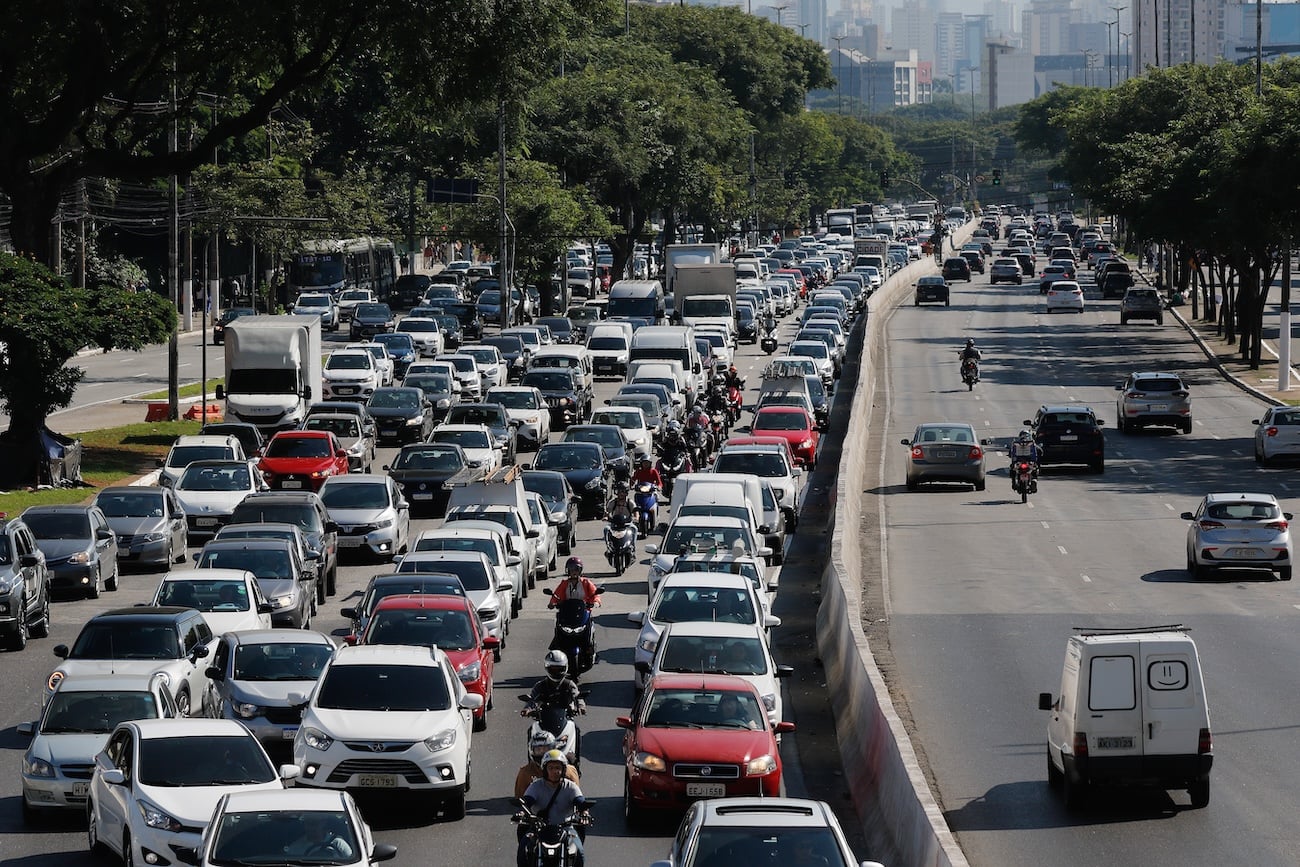
In São Paulo, citizens waste about 135 hours a year stuck in traffic (Photo: Fernando Frazão | Agência Brasil)
Both agree that traffic follows the logic of supply and demand. If there is an expansion of roads to facilitate travel, soon drivers will start to transit them and the novelty will also be a focus of congestion.
“When you make it easier to travel, more people start to do it. A clear example: the Green Line in Belo Horizonte. When it was created, Lagoa Santa and Vespasiano grew, because the time [of commuting] dropped from 40 to 20 minutes. Then the traffic got worse again.”
With this statement, the expert makes it clear that increasing the number of roads, streets or lanes is not capable, in isolation, of being the only solution to the traffic problem.
The fleet of cars that “clogs” the streets only grows
“If people continue to drive around in two-ton SUVs on their own, the problem continues.”
Baptista Neto continues his reasoning by explaining that the increase in the fleet of cars speaks to this insurmountable trend of increasing the number of roads. He says that just one person can occupy about 25 m³ when using a car, which takes up a lot of space in traffic. The solution to this would be the “compaction” of these people with public transport.
According to the ANTP – National Association of Public Transport – the use of any public transport vehicle brings advantages in the occupation of the available road space. This is related to the ability of public transport vehicles to accommodate a much larger number of people.
The association points out in a survey that a conventional bus holds between 40 and 50 passengers, which would drastically reduce the number of cars and the volume of vehicles on the roads, considering that each citizen would be in a private car.
“If you take people out of the car and put them on the bus, the street improves, the bus flows better and everything becomes more efficient.”
An aggravating factor in the use of private cars is still the reduction of emissions into the atmosphere.
“A 70 kg person riding in a 2 thousand kg car consumes fuel basically to transport his own car,” Neto pointed out when stating that the bus, even polluting more than one car, is more environmentally friendly than several cars.
The other side of the same coin
“But there is a tricky balance: if traffic improves too much, a lot of people go back to the car.”
Osias said that public transport could even be a solution for the traffic of most Brazilian cities, but the social factor would prevent this.
According to him, for example, if a large part of the population abandons the car to ride the bus, train or subway, traffic will flow better. However, when citizens realize this, there will be an opposite movement, after all it will become more advantageous to return to the car, since the street will be free of traffic jams and a private vehicle is more comfortable in many ways.
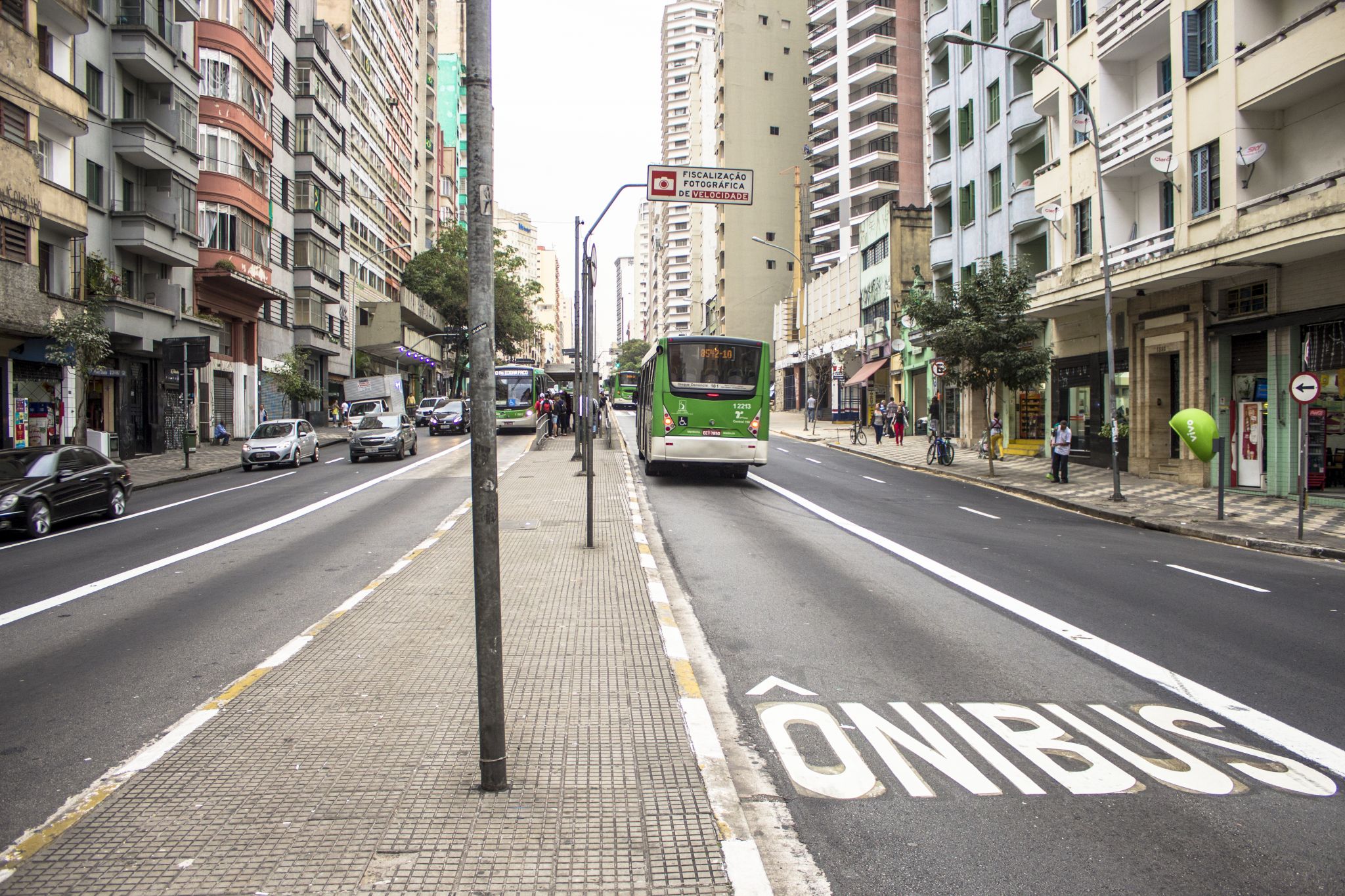
The exclusive bus lane could be a solution
The expert’s statement about encouraging the use of public transport, as well as the increase in the number of lanes, also clarifies that more buses, subways or trains could not solve the traffic problem in Brazil, after all the tendency of citizens is always to return to cars.
For Osias, an effective solution that would spend few resources would be the implementation of more exclusive bus lanes.
“If you have an exclusive lane, with synchronized traffic lights, in which it leaves the destination and, in a few minutes, is reaching the city center without congestion. In summary, when you give regularity and speed to transport, it becomes more convenient. You can have a Mercedes, a BMW, with sound, air conditioning and whatever. Still, it’s better to stay 11 minutes on the bus than to spend 60 minutes every day in traffic, taking risks and facing stress. So, it is necessary to transform [public] transport into convenience.”
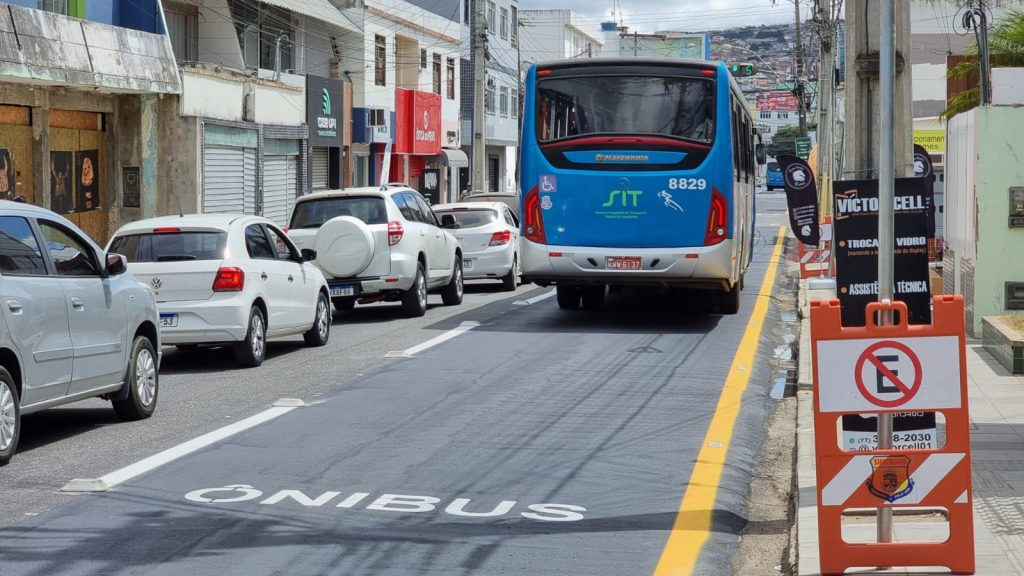
There is the preferential lane and also the exclusive lane (Photo: Vitória da Conquista City Hall | Disclosure)
The expert says that an action in this sense can speed up public transport considerably without directly interfering with the citizen’s preference for cars. The situation would be beneficial for the bus user and even for those who circulate in a private vehicle, as the predilection for public transport would naturally increase.
“A few years ago I participated in an interview at Pampulha Station [Belo Horizonte] and a doctor said that before she had to leave home at 6:15 am to get to the office at 8 am. After he found out that he could leave his car at the station and take the MOVE [line that runs in exclusive and express lanes], he said that in 11 minutes he was in the center. She said: ‘Now I can have coffee with my daughter before leaving’. This is priceless.”
However, there would still be contradictions
The first obstacle to a vast implementation of exclusive bus lanes en masse may be the geography of the place, in addition to popular indignation.
“You can’t do that in Belo Horizonte, because there is no priority system for buses. How do you put priority for the bus on Raja Gabaglia, which only has two lanes? How do you give priority to the bus in Amazonas, Platina, Padre Eustáquio, Campos Sales? At Pedro II it was already difficult, because there was a huge fight with the merchants, but today there is an exclusive bus lane there. There was a CDL director who turned to me and said: ‘I left the car. I live in Castelo and I get there much faster by bus now, because of the exclusive lane, than if it were in my car’. And we are talking about a director of the CDL, that is, a person with a high standard of living, who has a free garage in the Center, and even so prefers to go by bus. The problem is that Belo Horizonte does not have enough road space to create efficient priority for buses in many corridors.”
Although the city in question allows this increase in exclusive lanes, Osias says that, like the merchants of Belo Horizonte, the population of drivers in general is usually opposed to such measures.
“When you remove a traffic lane to put the bus, you bring against you all the hatred of the population that was ‘trapped’ in fewer traffic lanes. And currently there are still other problems, such as bicycle and motorcycle lanes. All of this is increasingly ‘taking’ the layer of cars. The mayor would need a lot of ‘energy.'”
For Osias, political interference in this process (fundamental for effectiveness) is impacted by this fear of popular displeasure. The notion of Brazilian individual ascension is linked to the conquest of one’s own vehicle and not to the use of public transport.
“Many mayors end up making decisions based more on social networks than on technical criteria. Haddad, in São Paulo, was massacred by the bike lanes, although many work very well.”
What about other modes of transport?
During the interview, we questioned Osias about other types of transportation, in addition to the public and cars (which take up a lot of space). For the specialist, each one has its function, pros and cons, but none of them can present an effective solution that contributes to the reduction of traffic.
Not even motorcycles have been able to mitigate the situation of traffic jams. The fleet, which is only increasing in the country, today represents about 28% of national vehicles, which have created a particular “congestion”.
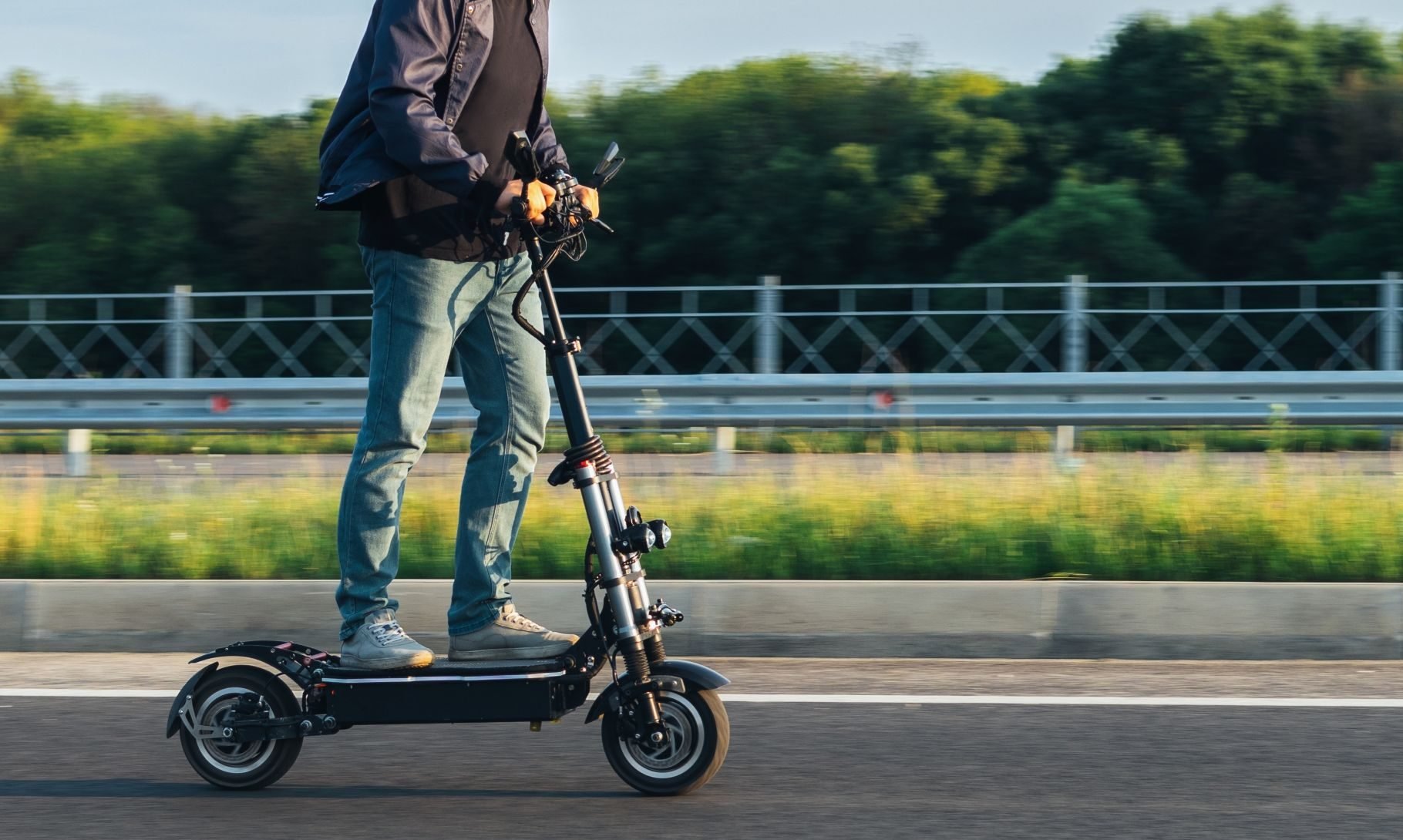
The electric scooter is a fever that generates other disorders such as health risks, indirectly linked to traffic (Photo: Shutterstock)
“Motorcycles have grown a lot and the government has completely abandoned this issue. And it is these motorcyclists who are living in traffic today.”
Osias also said that micromobility measures, such as scooters, self-propelled and electric bicycles, which have grown considerably in recent times, have existed for a long time and have also not been able to solve the clogging of the roads.
Finally, respect for laws and speed
“There is another interesting issue: speed. The roads reach maximum flow capacity around 60 km/h. Above that, the cars need to increase the distance between themselves, so the number of vehicles per hour starts to drop.”
Osias ended by stating that, while nothing is done by the public authorities and there are more and more incentives for the acquisition of private vehicles and their use at all times, the most important thing is to respect traffic laws.
The expert says that if people respected traffic rules more, we could have fewer traffic jams.
“I flew over the Marginal Tietê with the São Paulo traffic commander. A truck changed lanes. The car behind braked a little. The next one braked more. The next one slowed down even more. In a few seconds there was an entire traffic jam because of a single braking. People think that changing lanes all the time does something, but many times you walk 15 minutes and continue next to the same car.”
Comments are the sole responsibility of their authors and do not represent the opinion of this site. Comments containing profanity or offensive language will not be published. If you identify anything that violates the terms of use, please report it.