


Alcohol car is back, but in the Brazilian way
Federal government stimulates in a precarious way – and subject to fraud – the car fueled exclusively by ethanol
By
Boris Feldman
Published on 2026-09-26 at 09:00 AM
Published on 2026-09-26 at 09:00 AM
Be the first to comment.
Summarize with:
A car that only runs on alcohol? It’s nothing new! For those who don’t remember, at the end of the 1980s, more than 95% of the national production was automobiles that only burned sugarcane fuel (by the way, today corn too…). Not least because of the need to reduce oil imports due to the international crisis that reduced its world production.
But the lack of alcohol, in 1989, generated lines of cars at gas stations and the collapse of Pró-Álcool, a plan created in 1975 to stimulate its consumption. Which only returned triumphant in 2003 when electronics allowed the launch of the flex engine, which burned any proportion of gasoline or ethanol. Drivers no longer felt hostage to the alcohol mills.
SEE ALSO:
- Brazilian Mercedes disobeys matrix and denies extended
- More drivers using ethanol: planning or ‘down the throat’?
- Why is the electric car inevitable? (or the ‘sad end of the heat machine’)
warranty
Current statistics indicate 70% of flex-fuel car drivers filling up with gasoline. And the government, within the Mover plan, launched the Sustainable Car with a reduction in the IPI due to the motorization (electric, flex hybrids or alcohol). And zeroed for engines that run exclusively on ethanol, as they emit a maximum of 83 grams of CO2 per km. Flex with gasoline reaches 100 g/km.
The factories are running after this discount and the first of them to take advantage of this tax reduction was GM, which launched the Onix with a 1.0 turbo engine of 115 hp to be fueled exclusively by alcohol. And it reduced its list price thanks to the zero IPI. The next is Volkswagen, which will repeat the maneuver with the Polo. And Stellantis has already been storing an ethanol engine on the shelf for a long time to be launched at the most appropriate time. All legally correct and strictly following what is established by the government.
Applause for the idea that is great, as it reduces emissions and replaces fossil fuel with vegetable fuel. But it fails because it does not make use of the high octane rating of ethanol to compensate for its lower energy value in relation to gasoline. Furthermore, it is also a good solution to increase ethanol consumption without shoving it down the throats of drivers by raising its mixture in gasoline.
Virtual
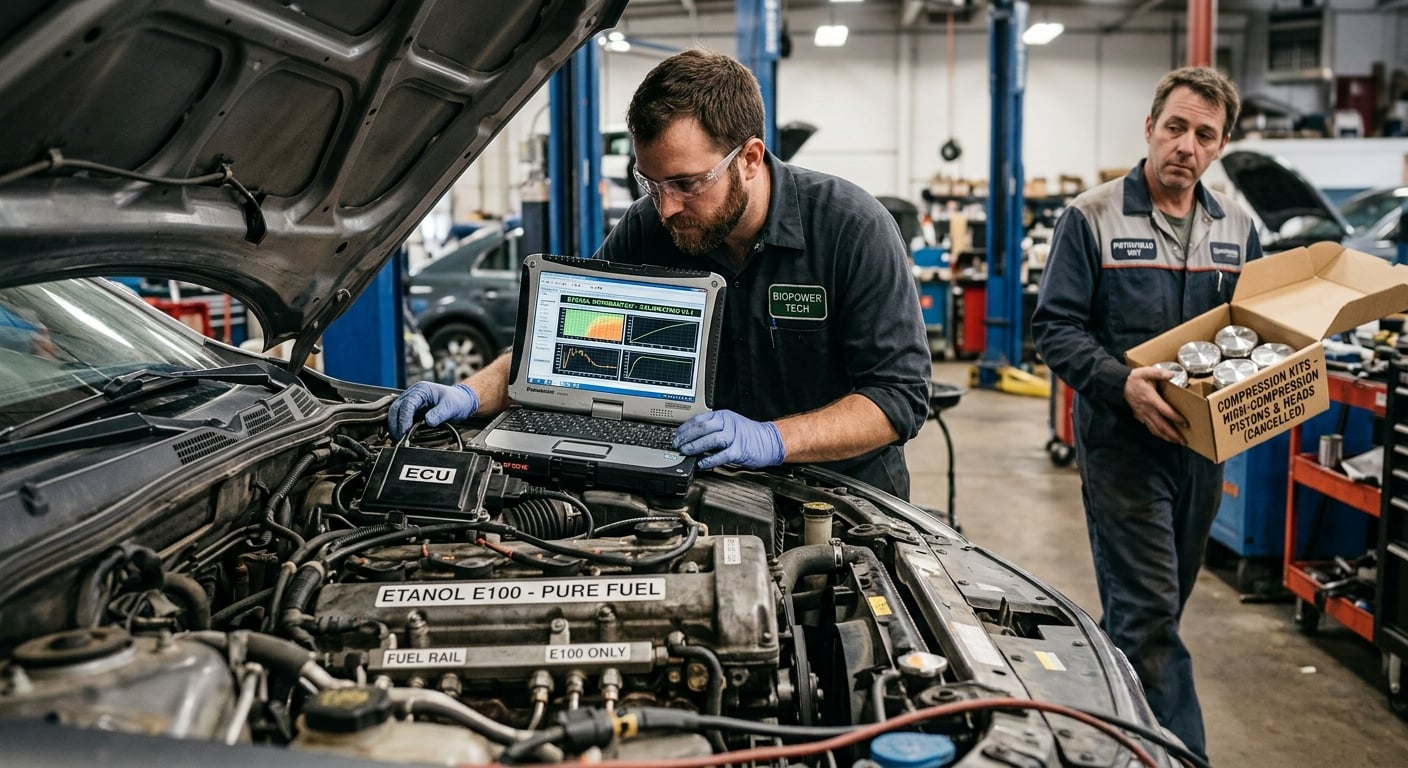
alcohol car Unfortunately, to live up to the tax reduction of up to 7.8%, the factories are only modifying the flex engine software to require 100% ethanol in the tank. They change the ignition (spark) and injection settings to better adapt to vegetable fuel and work poorly with gasoline. With negligible results in reducing consumption and emissions. On the highway, from 10.9 to 11.1 km/liter. And how would better results be obtained?
By raising the engine’s compression ratio. In flex, it cannot be higher to contemplate ethanol because the engine also has to burn gasoline. But increasing the rate would require substantial mechanical changes involving the cylinder head, pistons, etc. Possible, but it would require time and investments.
In addition to not maximizing fuel efficiency, this “alcohol” engine (which is nothing more than a flex with changes in adjustments) raises a doubt: the car is sold with a cost reduction to burn only ethanol, but it would not be complicated at all for a workshop to interfere with the chip of the electronic center and return it to its origins. That is, to return to flex and burn both fuels again.
If the federal government were really interested in stimulating the consumption of ethanol, it should establish a tax reduction for these engines, requiring, however, that they be effectively designed for vegetable fuel with explicit, visible and verifiable results.

SEE MORE ABOUT

0 Comments
Comments are the sole responsibility of their authors and do not represent the opinion of this site. Comments containing profanity or offensive language will not be published. If you identify anything that violates the terms of use, please report it.