If a manufacturer lets its engineers work unsupervised, the result can be something very cool and impractical. When it comes to the engines of top-of-the-line or sports cars, some insanities leave the drawing boards and almost reach the streets.
Today this happens less frequently, as the order is to share components and the turbo is almost mandatory. Any engine that does not have 500 cm³ per cylinder and a hybrid system, even if light, deviates from the standard in luxury or sports cars.
Here we will remember some of the most insane car engines that were designed and almost launched. Most here even had versions almost ready for serial production.
1. BMW Goldfisch V16
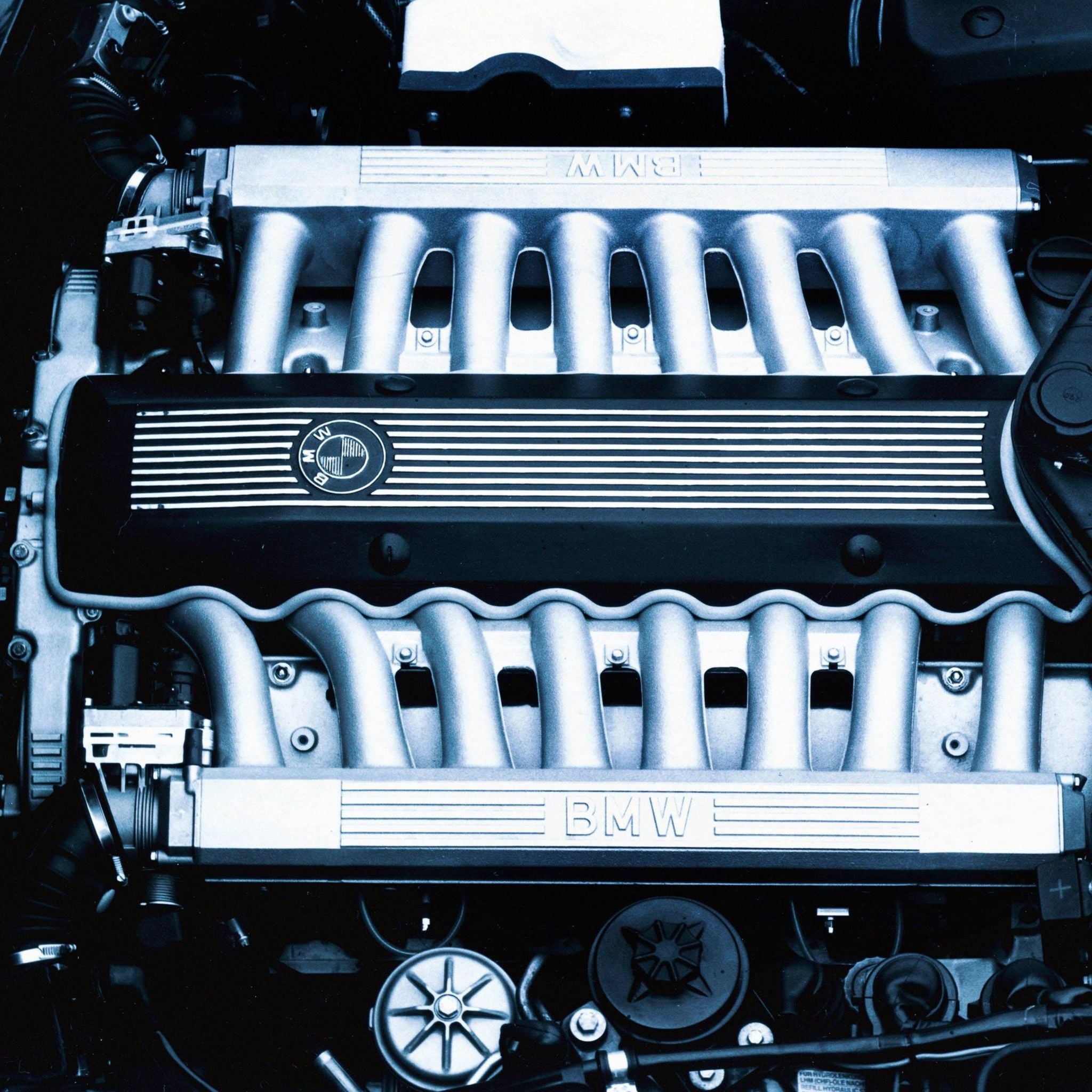
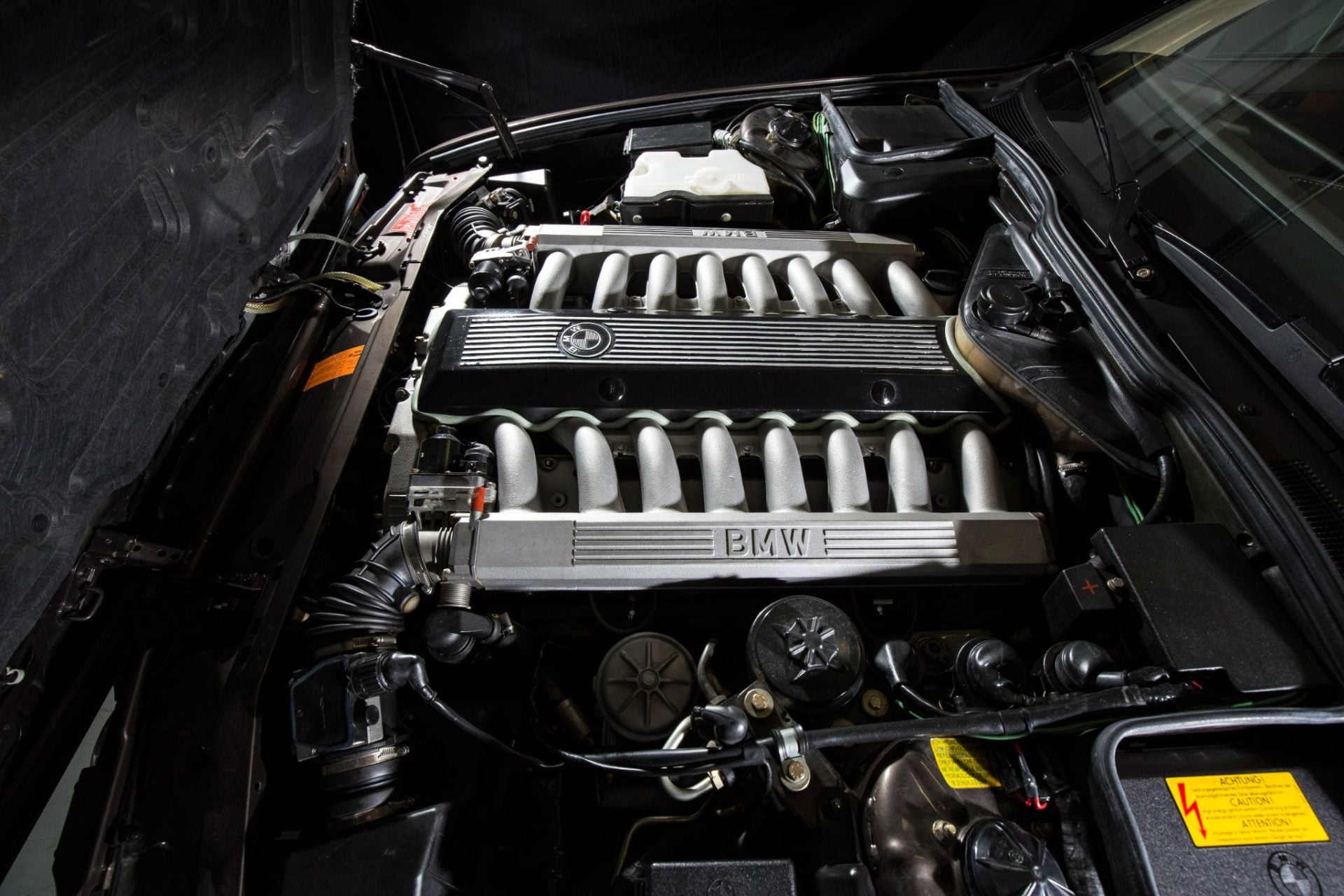
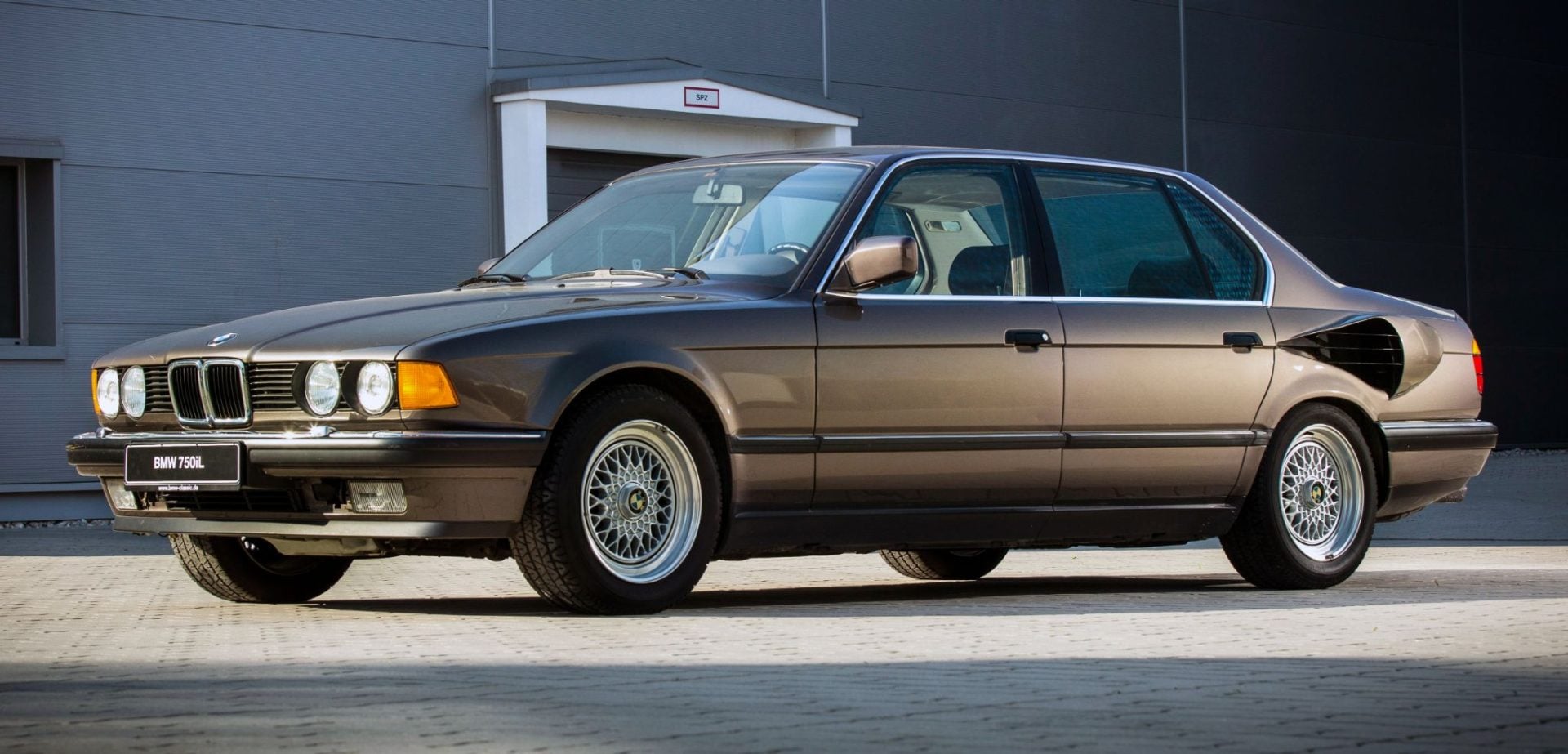
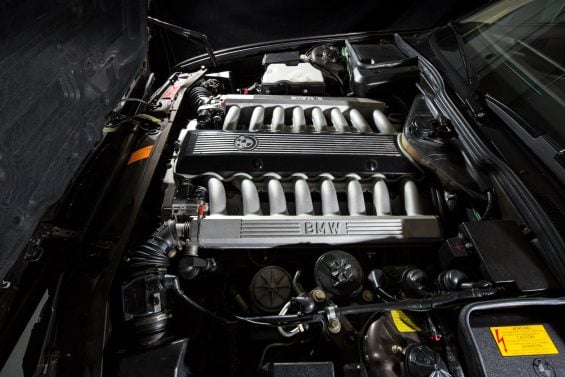
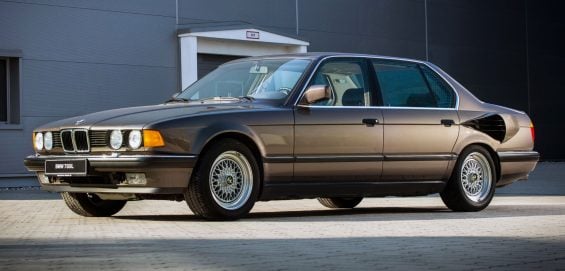
The V16 was derived from the V12 and yielded 414 hp and 62,5 kgfm (Photo: BMW | Disclosure)As it was 30 cm longer, there was no room left for the radiator and it was mounted in the trunk of the prototype (Photo: BMW | Disclosure)
BMW has not always been a luxury brand comparable to Mercedes-Benz. Its current image was born in 1962 with the Neue Klasse. From this series of models, the Bavarian company began to make sophisticated sedans with a sporty flavor.
The first 7 Series appeared in 1977 as a more enthusiastic alternative to the Mercedes S-Class. Its second generation launched in 1986 came with a V12 engine in the 750i model, the first produced in post-war Germany.
This alone has already generated concerns at the rival brand, but BMW wanted to go beyond the 12-cylinder. A prototype with a V16 engine derived from the V12 was made in the late 80s.
As the block was 30 cm longer, there was no room left for the radiator in the vault and the cooling system was mounted at the rear. The engine yielded 414 hp and 62,5 kgfm. The sedan was capable of reaching 282 km/h.
Despite being functional and meeting performance expectations, BMW thought it prudent not to produce the V16. This engine was also tested by Bentley at Mulsanne as an alternative to the brand’s old turbocharged V8, it even fit in the vault next to the cooling system, but the project did not go ahead.
2. Mercedes-Benz W18
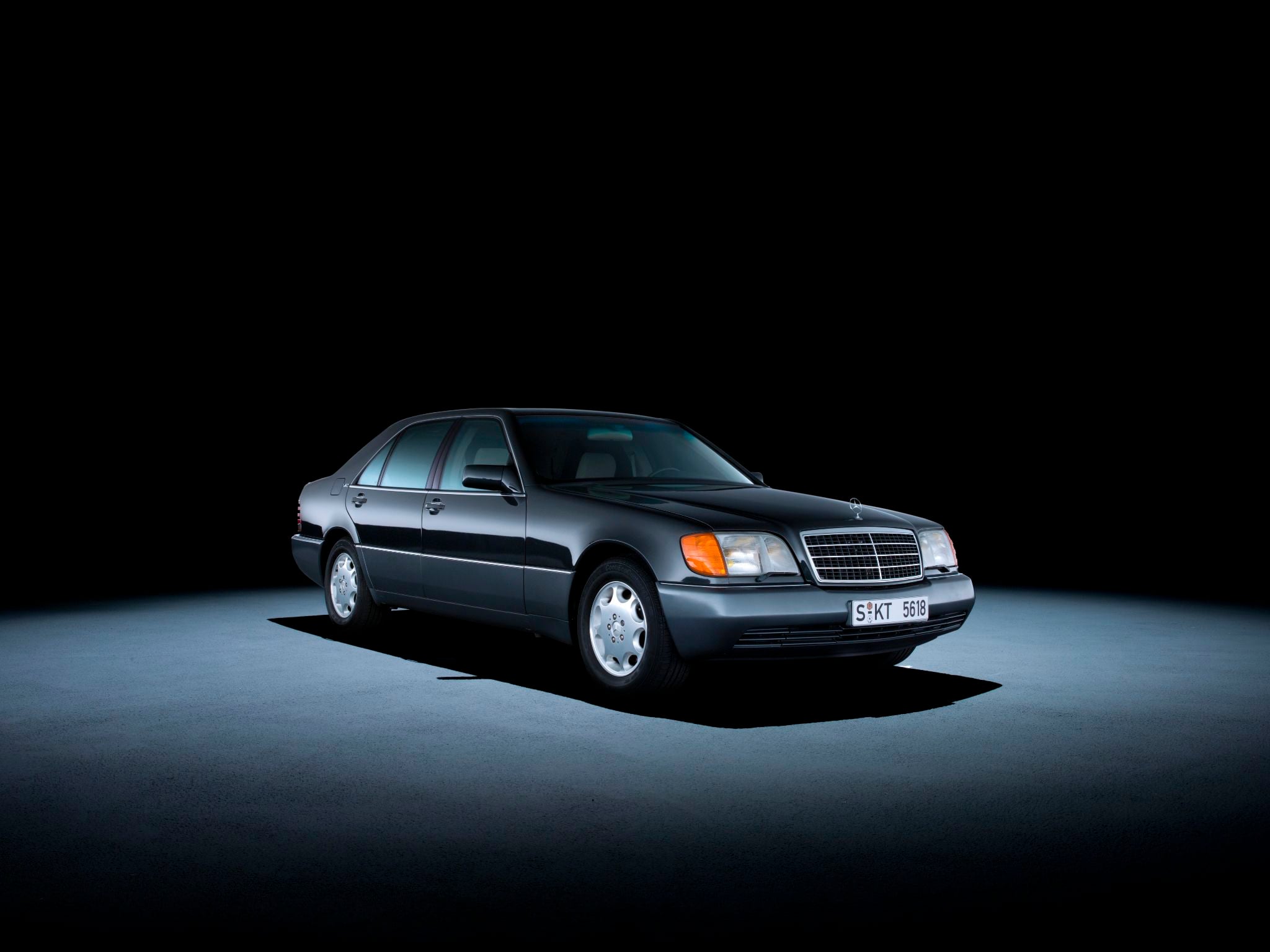
The W140 was postponed to receive a V12 and respond to the BMW 7 Series, but in the plans there was also a V16 and a W18 (Photo: Mercedes-Benz | Disclosure)
Mercedes-Benz began designing the W140 S-Class in 1981 with the intention of it being the most advanced car ever made. The launch of the BMW 750i took the brand by surprise and delayed the launch of the car so that a V12 could be developed.
Not only did these additional costs fail, Toyota launched the Lexus LS400 with a high quality standard at lower prices. This forced Mercedes to postpone the new S-Class once again to try to reduce production costs.
In Mercedes-Benz’s plans were two larger engines to fight with BMW. The first was a V16 that went into testing with 85 prototypes.
The other was even more extreme, a W18. This engine had three benches with six cylinders each and 8 liters of displacement. It would be a hypothetical 800 SEL.
The search for lower costs to face Lexus and the growth of concerns about the environment forced Mercedes to shelve these projects. The alternative for those who considered the V12 6.0 insufficient ended up being the 7.0 versions. 7.1 and 7.3 of the V12 made by AMG to order.
3. Rolls-Royce V16
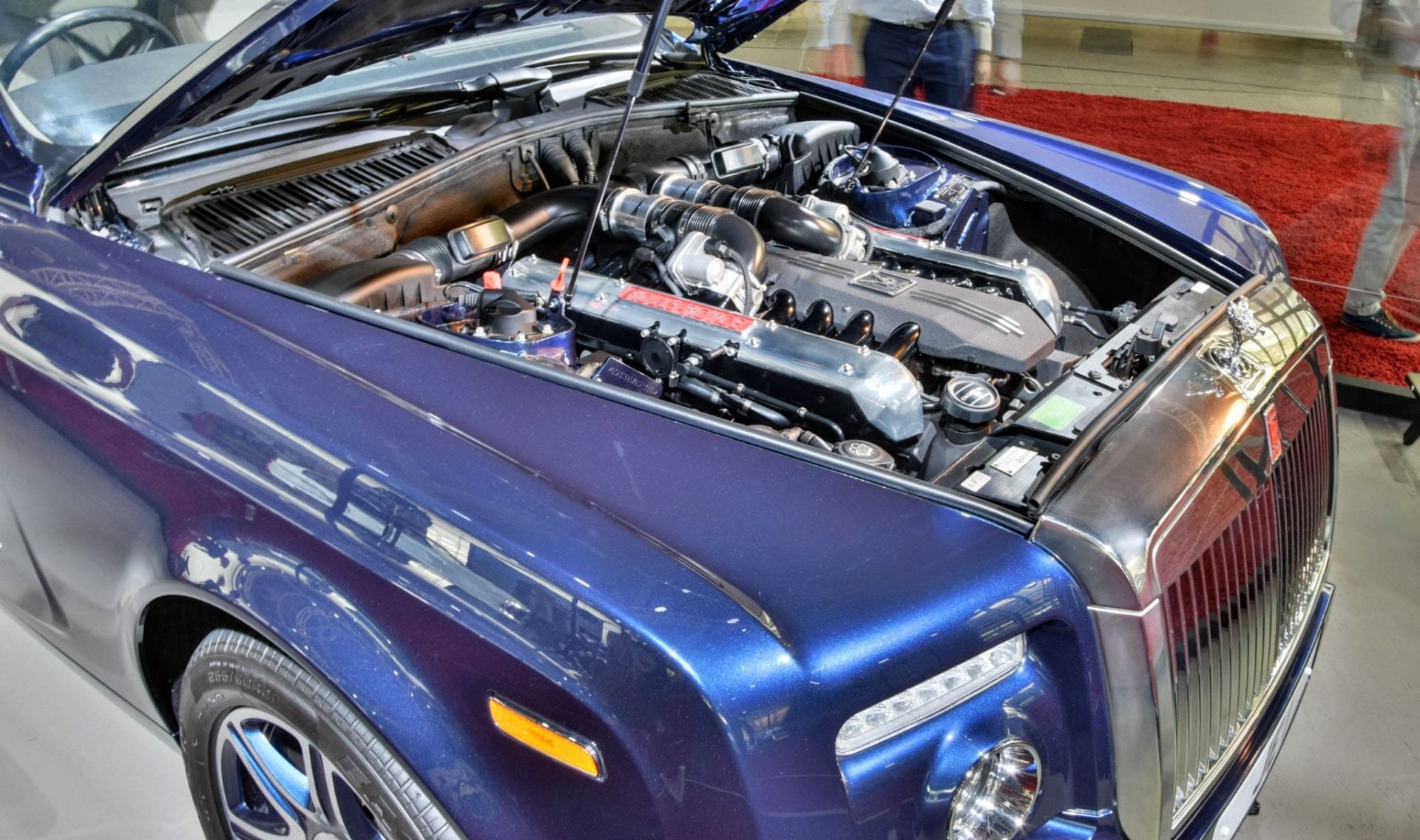
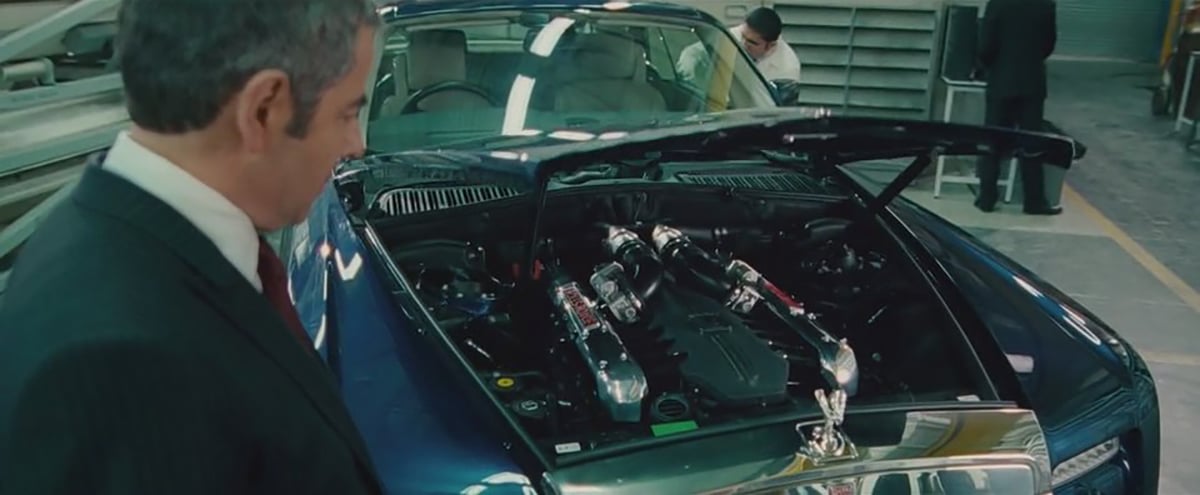
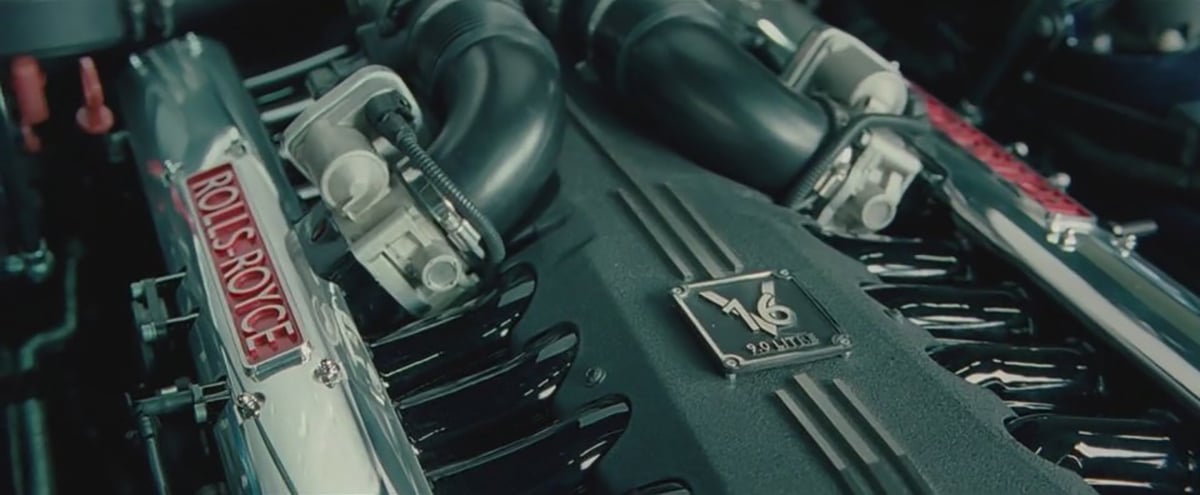
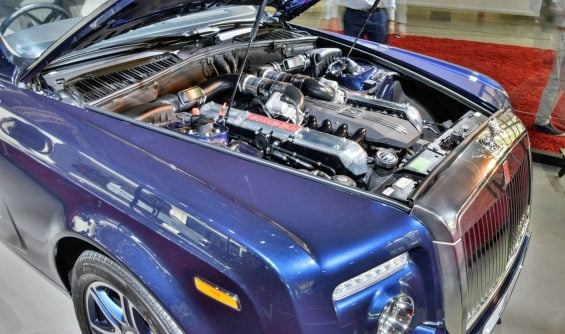
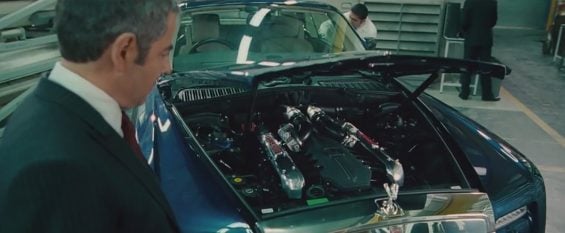
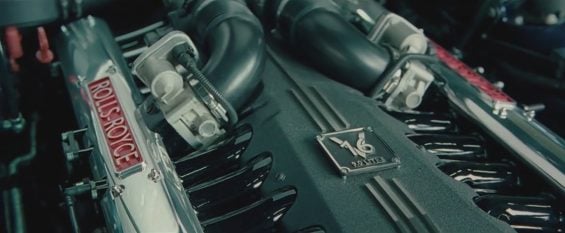
Some units of the V16 were made for customers to evaluate (Photo: Rolls-Royce | Disclosure)Comedian Rowan Atkinson knew about the existence of this V16 and asked the brand to make a coupe with it for a movie (Photo: Universal) The request was not only granted, but the car was functional (Photo: Universal)
Already under BMW’s control, Rolls-Royce showed the 100EX concept to anticipate the convertible version of the Phantom. It featured a 9.0 V16 engine that was functional, there were real plans to produce this engine.
This engine was not related to the Goldfisch of the 80s, it was derived from the V12 N73 used at the time. The power was 710 hp and the torque was an impressive 96,7 kgfm.
Rolls-Royce loaned some cars with this engine for customers to evaluate, but it was never produced. In 2008, British comedian Rowan Atkinson asked the brand to make a Phantom Coupé with this V16 for the film Johnny English Returns.
According to the actor, BMW made a car to be used in the recordings, completely functional. Once again the reason for the engine not going into production was the environmental issue.
4. Cadillac V12 OHC
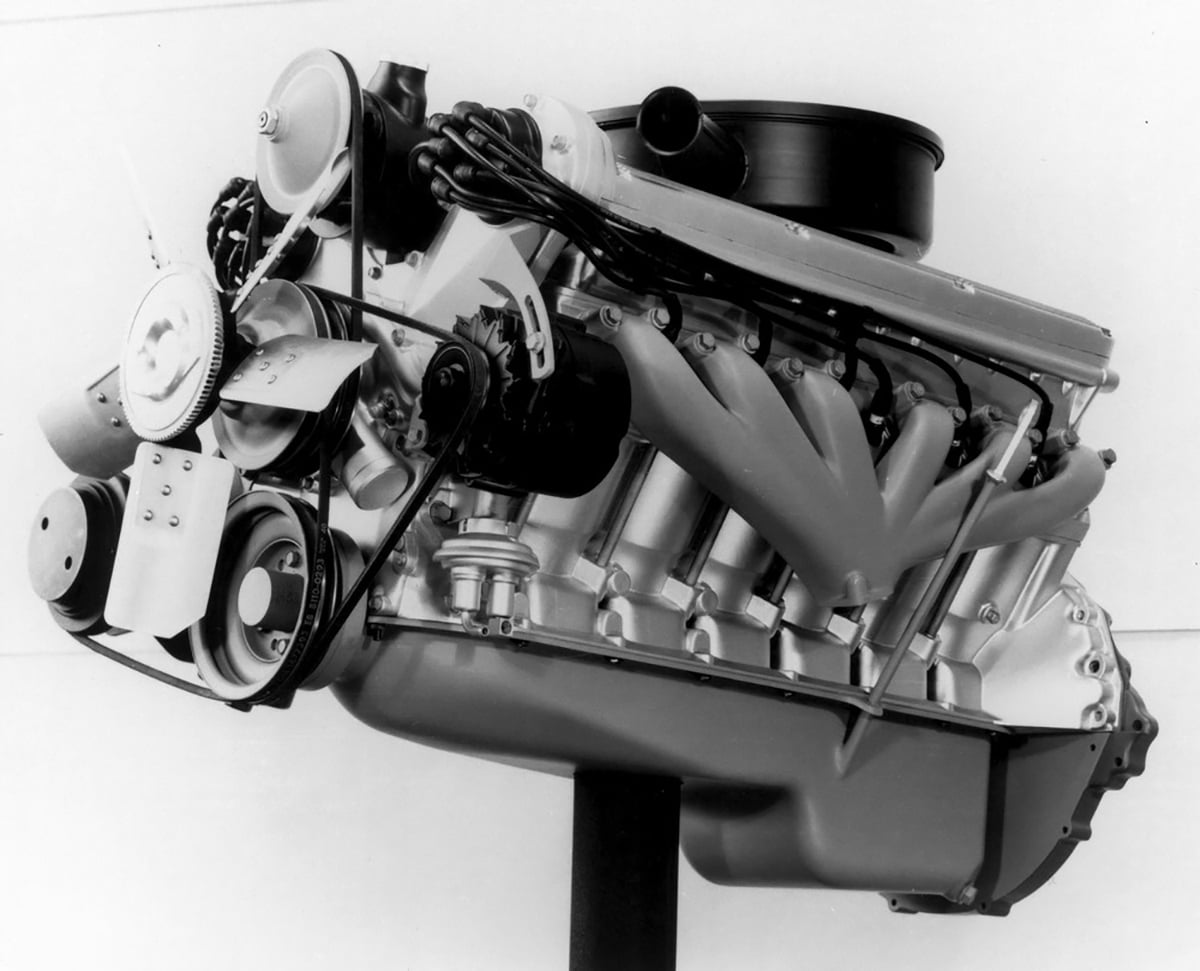
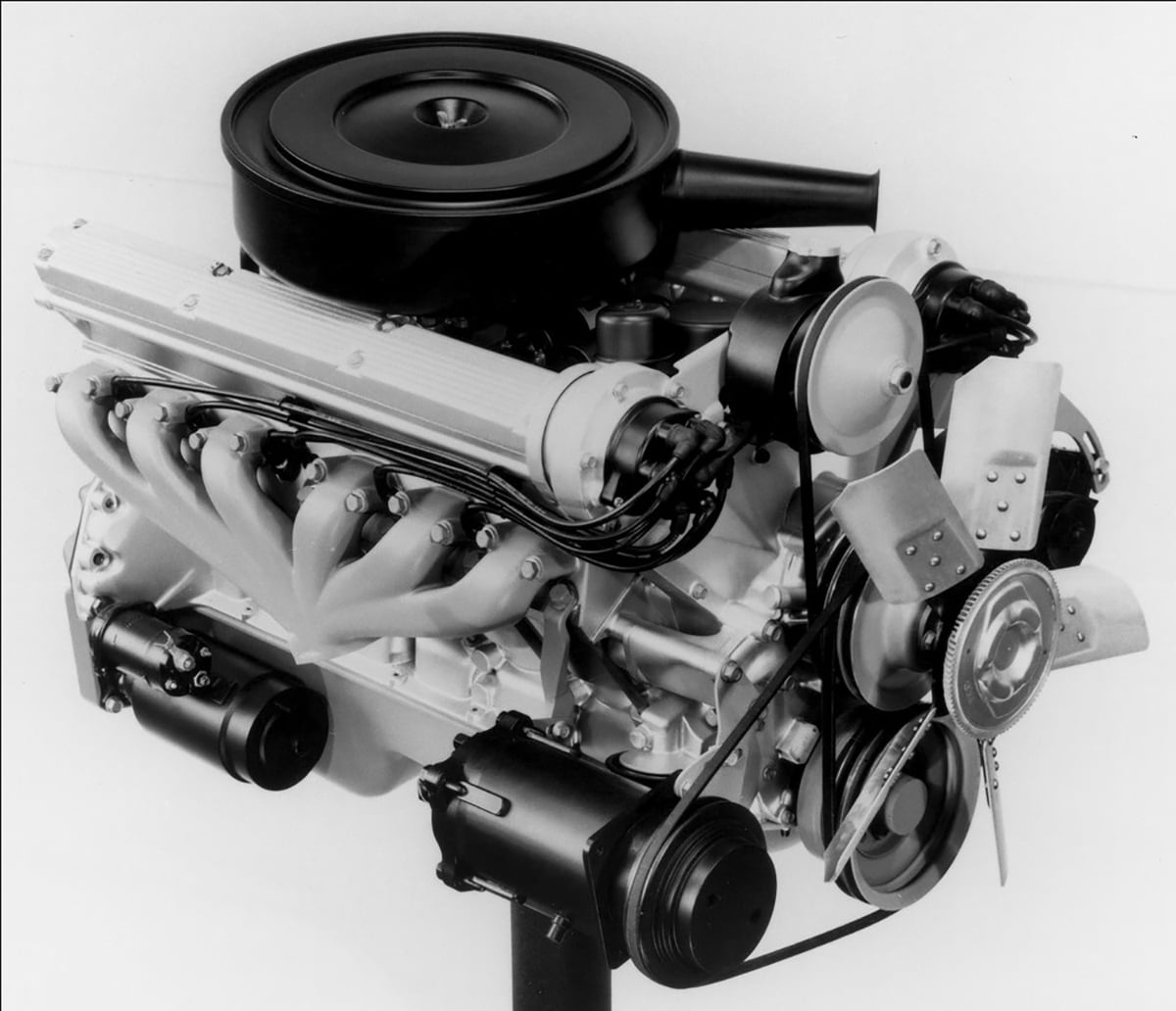
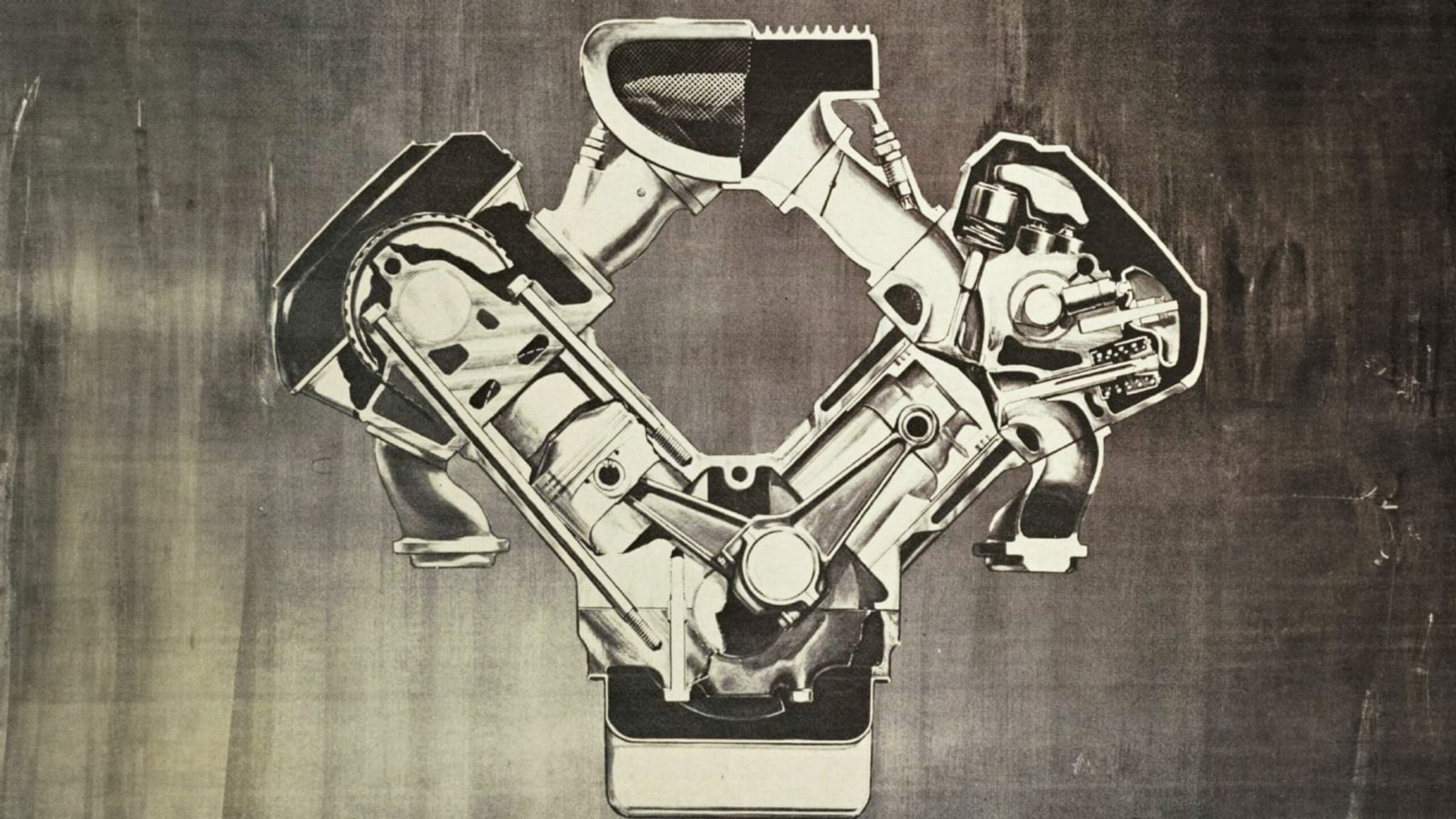
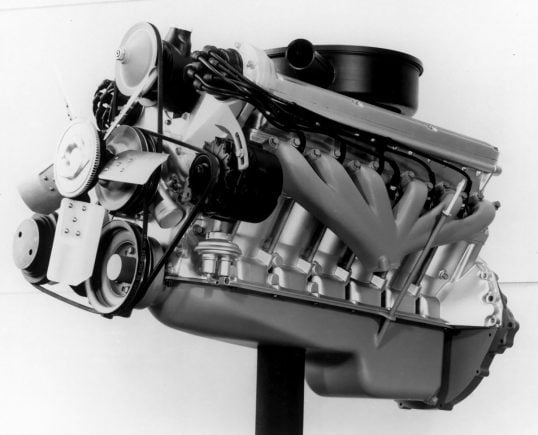
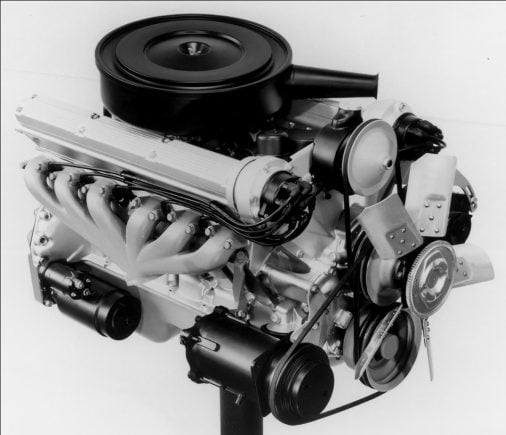
The idea of the V12 was to succeed a V8, it would have versions of up to 8,2 liters and overhead camshafts (Photo: GM | Disclosure)The project was canceled because it was not reliable, Cadillac chose to make a new V8 larger than the old one (Photo: GM | Disclosure)
Cadillac was established as a luxury reference in the USA during the 60s. The most famous artists, businessmen and even criminals used the brand’s cars.
At that time, North American brands offered V8 engines with very large displacements. Cadillac’s reached its limit with the 7-liter version, while Chrysler used a 7.2 and Lincoln had a 7.5.
One proposal that was developed was a V12 made of aluminum and with overhead camshaft (OHC). Versions 7.4 and 8.2 of it were made, to debut at the 1967 Eldorado.
This project did not go ahead because the V12 did not deliver the expected performance during testing. Instead, Cadillac developed a larger V8 than the previous one, which even had an 8.2 version and was the largest engine ever used by a passenger car until the second-generation Dodge Viper was launched in 2003 with its V10 8.3.
5. Pontiac 427 Hemi SOHC
This V8 was capable of reaching 8 rpm and producing almost 650 hp, impressive numbers for the time (Photo: Hot Rod Magazine | Reproduction)
The 60s were marked by innovations on the Nascar tracks. Chrysler bet on aerodynamics and the Hemi engine to get victories, while Ford made a V8 with overhead camshaft called Cammer to have an advantage.
Pontiac tried to combine the two solutions of competitors to have the strongest engine of the ovals. It used its V8 as a starting point, which was already more compact than the big block of its rivals, made the block in aluminum and put control in the heads.
The GM division already had in its range a version with overhead camshaft of Chevrolet’s in-line six-cylinder, called Sprint. It was highly praised and, therefore, tried to apply the same solution to the V8.
To complement this, she asked for help from Chrysler engineers to make hemispherical combustion chambers in this engine. Surprisingly, the response was positive.
The end result was a 7-liter V8 that weighed only 249 kg and capable of reaching 8 thousand rpm. Power was estimated at 649 hp at 7,500 rpm. As a comparison, Chrysler’s 426 Hemi delivered 430 hp.
Who killed this project was Nascar, which banned engines with overhead camshafts in December 1965. The justification was that the competition should reflect road cars.
Comments are the sole responsibility of their authors and do not represent the opinion of this site. Comments containing profanity or offensive language will not be published. If you identify anything that violates the terms of use, please report it.