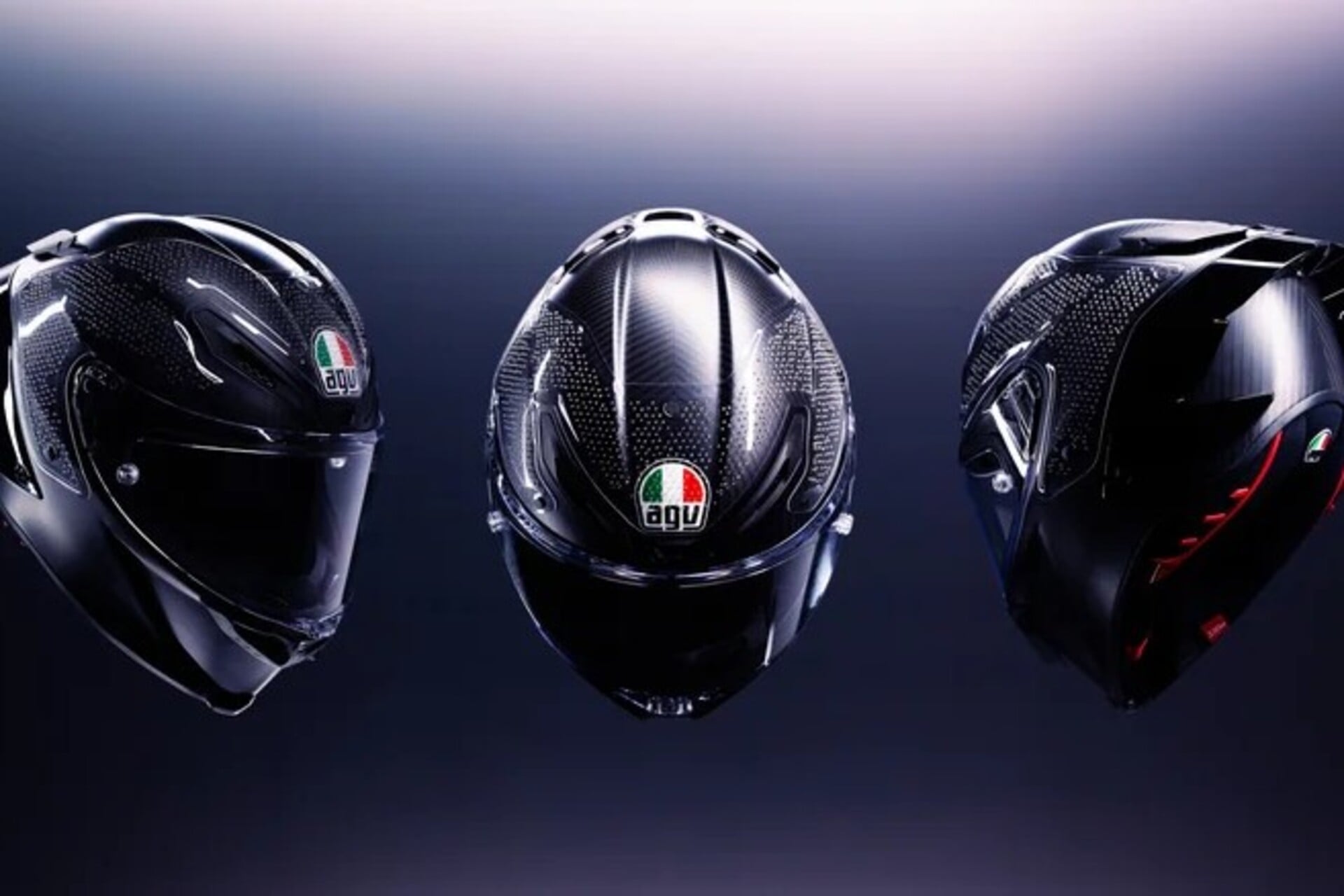
AGV has presented the Pista GP R3, a top-of-the-line helmet for MotoGP designed to fall apart in part during certain crashes. According to the Italian manufacturer, the outer layer loosens in a controlled manner in angular impacts and reduces the calculated risk of concussion in laboratory tests by six times, compared to the conventional configuration.
The model debuted in free practice at the San Marino and Riviera di Rimini GP at Misano on September 11, used by riders sponsored by the brand in MotoGP, Moto2 and Moto3. It is the biggest change to the Pista GP platform since the line’s debut in 2011 and succeeds the Pista GP RR in 2020.
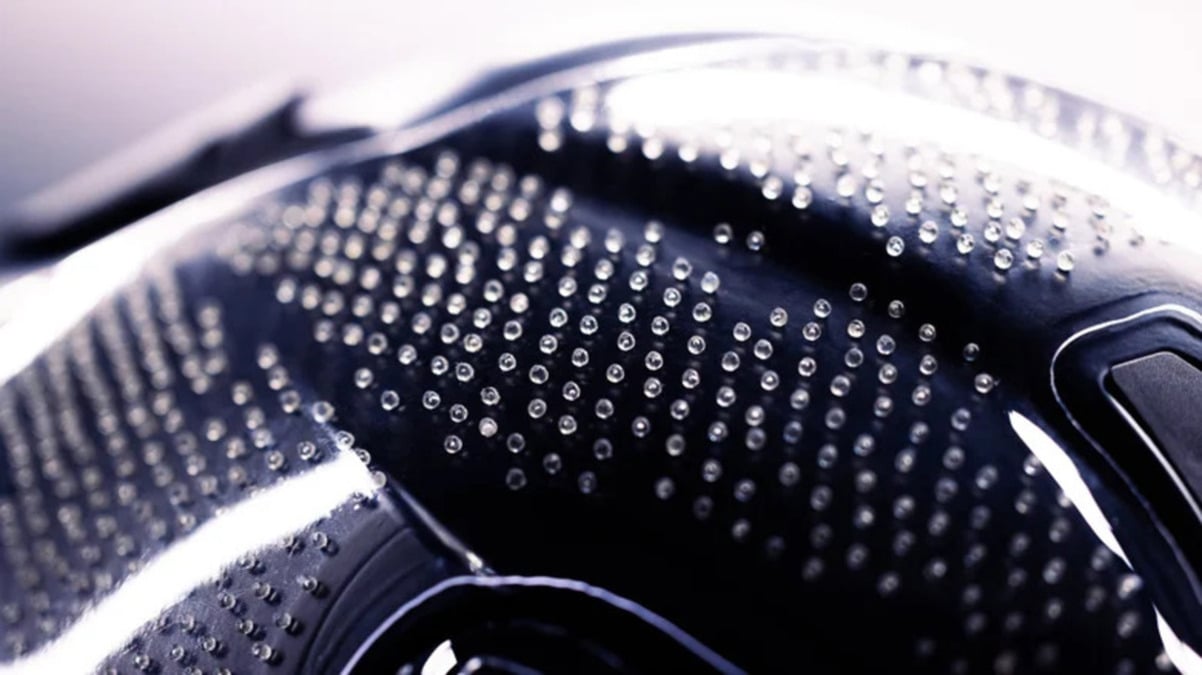
The hull is entirely made of carbon fiber, but has gained a second outer layer supported by an array of hundreds of microspheres: the Sphera AGV system, based on RLS (Release Layer System) technology, developed with a British start-up of the same name. These floating panels slide in the direction of the applied force and, when the stress is intense, they completely detach from the structure.
Photo: AGV | Disclosure
Why dismantling protects more
Logic contradicts the intuition of those who buy a helmet approved by Inmetro and expect it to withstand the crash in one piece. Traditional tests favor frontal impacts against flat surfaces, but heads are rounded and fall at an angle. In these oblique shocks, the helmet and skull rotate while the brain, suspended in the cerebrospinal fluid, follows the movement with delay. It is this relative rotation that generates the tensions responsible for the most serious injuries.
When escaping from the shell, the sacrificial panels dissipate part of the rotational energy before it reaches the head. The project complies with FRHPhe-02, the most recent protocol of the FIM (International Motorcycling Federation) for competition helmets, which started to charge manufacturers precisely for performance in angular impacts.
When technology hits the streets
AGV is not the first brand to adopt sacrificial parts: the Japanese Arai has been making air intakes and spoilers come loose on impact for years. The difference is in the scale. On the Pista GP R3, the area designed to detach covers a good part of the helmet and works almost like a second shell, which enlarges the available surface to dissipate rotational forces.
The manufacturer has not yet released a price or date of sale to the public, scheduled for 2027. Today the Pista GP RR starts at around US$ 1.500 (approximately R$ 7.700) abroad and usually exceeds R$ 10 thousand in Brazilian stores, a level that should serve as a floor for the new generation.
Comments are the sole responsibility of their authors and do not represent the opinion of this site. Comments containing profanity or offensive language will not be published. If you identify anything that violates the terms of use, please report it.