

Honda reaches 10 million flex motorcycles produced in Brazil
Manufacturer reaches new milestone 17 years after launching the CG 150 Titan Mix, the world's first series-production bi-fuel motorcycle
By
Júlia Haddad
Published on 2026-07-01 at 10:00 PM
Published on 2026-07-01 at 10:00 PM
Be the first to comment.
Summarize with:
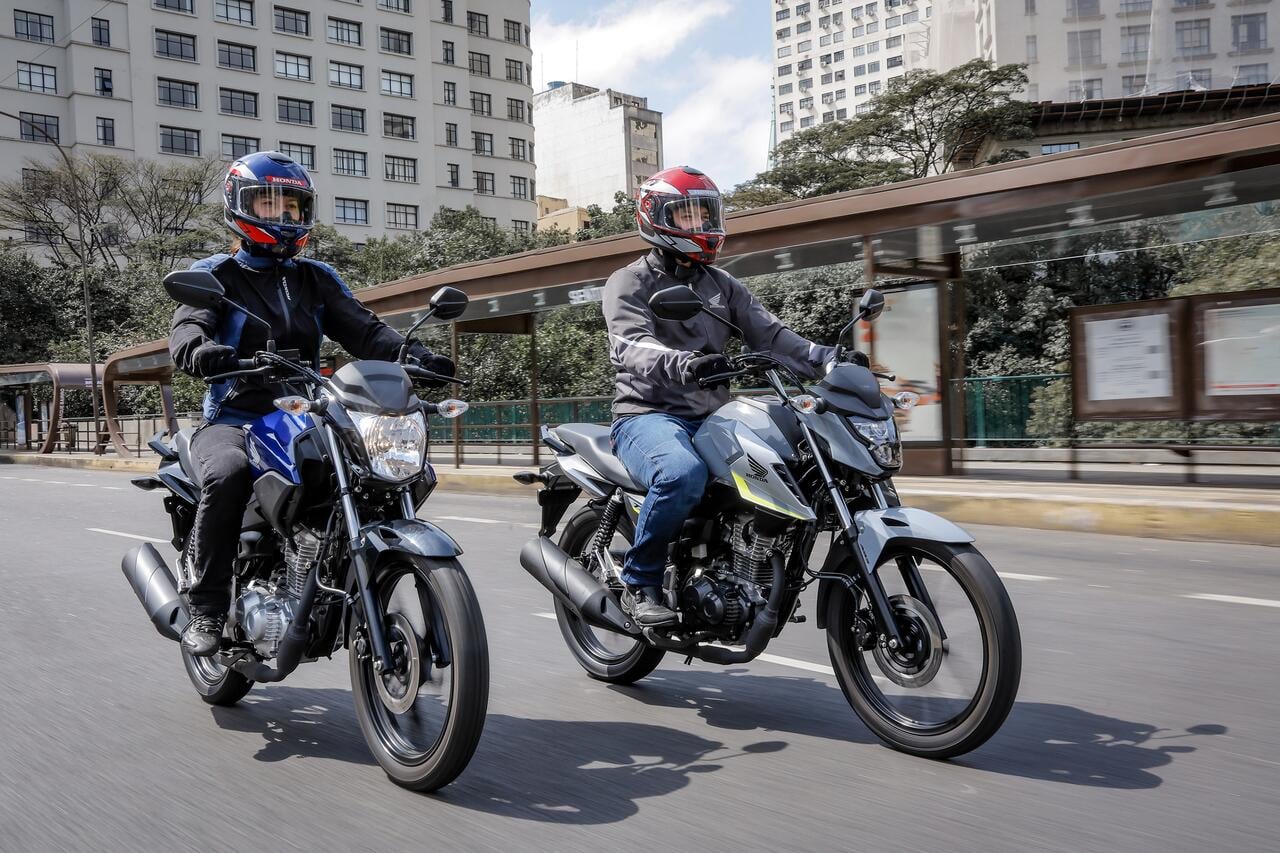
Honda surpassed the mark of 10 million motorcycles equipped with flex technology produced in Brazil. The milestone was reached in mid-2026 at the brand’s factory in the Manaus Industrial Pole (AM), where all motorcycles sold in the country come from. The company was a world pioneer in bringing the bi-fuel engine to large-scale production motorcycles.
The technology debuted in 2009, with the CG 150 Titan Mix — the first motorcycle in the world capable of running on gasoline, ethanol or any mixture of the two in series. At the time, the feat required a specific engineering solution: unlike cars, motorcycles have little space for the subtank, the pump and the sensors that solve the cold start, which forced Honda to create a compact injection and electronic management system.
Since then, the flex set has consolidated itself as one of the main differentials of the brand, leader in the Brazilian two-wheel market. Currently, about 65% of the line manufactured in Brazil uses the FlexOne, present in nine models: Biz 125, CB300F Twister, CG 160 Titan, CG 160 Fan, CG 160 Cargo, NXR 160 Bros, XRE 190, XRE 300 Sahara and XR300L Tornado.
The widespread adoption reflects a particularity of the Brazilian market: while much of the world is moving straight towards the electrification of motorcycles, Brazil has ethanol as a renewable alternative, capable of reducing emissions without requiring changes in the supply network. The country also has one of the largest fleets of motorcycles on the planet, which expands the scale of the technology.
In practice, the system automatically identifies the proportion of ethanol and gasoline in the tank and adjusts the injection and ignition timing. This allows the rider to fill up according to the price or availability of fuel, without compromising the performance or reliability of the engine.
For Marcos Bento, commercial head of Honda Motos, the 10 million mark reflects the “ability of the Brazilian industry to innovate with a focus on the customer”. The system has also become an export product: since 2023, Honda has taken the technology to India, the largest motorcycle market in the world. The bet is part of the company’s global strategy to seek carbon neutrality throughout the 2040s, supported by both electrification and the evolution of combustion engines powered by renewable fuels.
SEE MORE ABOUT

0 Comments
Comments are the sole responsibility of their authors and do not represent the opinion of this site. Comments containing profanity or offensive language will not be published. If you identify anything that violates the terms of use, please report it.