

World’s Largest ‘Stork Ship’ Departs China Loaded with Stork… 7,738 Tesla cars
Lined up, the 7,738 cars would occupy 67,600 square meters; The ship has a capacity of 10,800 units and was not even fully booked
By
João Paulo Profeta
Published on 2026-08-05 at 08:00 AM
Published on 2026-08-05 at 08:00 AM
Be the first to comment.
Summarize with:
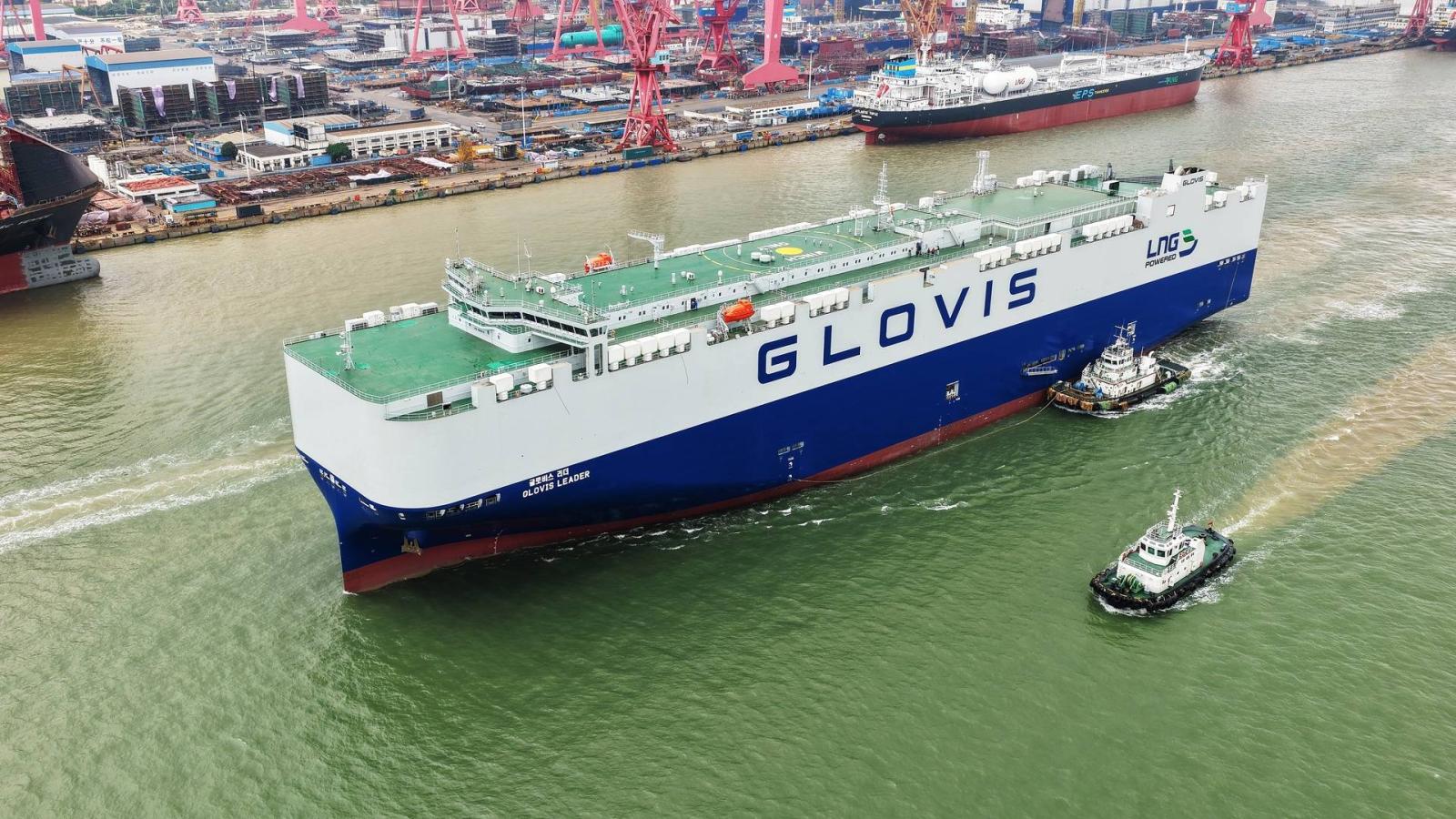
A single ship left the port of Shanghai loaded with 7,738 electric cars — all Tesla Model 3 and Model Y from the automaker’s Gigafactory in the Chinese city. It is the largest electric shipment ever shipped in a single trip from a port in China. The Glovis Nova ship departed on Sunday, July 26 from Tesla’s South Terminal in Shanghai, bound for Zeebrugge, Belgium, one of the main logistics centers of the North American brand in Europe, from where the cars will be distributed throughout the continent’s markets.
Interestingly, the record was obtained without the ship being full: the declared capacity is 10,800 vehicles. What allowed the number was the composition of the cargo, made up only of passenger cars, which occupy less space in the holds than buses, trucks or heavy machinery — the type of cargo that usually shares space at these crossings.
Enough cars for 36 kilometers of queue
Lined up bumper by bumper, the 7,738 Tesla would form a line of about 36 kilometers and occupy approximately 67,600 square meters, the equivalent of 9.5 football fields.
On its maiden voyage, the Glovis Nova is the third in a series of car carriers built by Chinese shipyard Guangzhou Shipyard International. It measures 230 meters long by 40 meters wide, distributes the cargo over 14 floors, sails under the Maltese flag and uses dual-fuel propulsion, powered by liquefied natural gas or conventional fuel. It is operated by Hyundai Glovis, the logistics arm of the South Korean group Hyundai, and is among the largest ships of its kind in operation in the world.
Geography helps: Tesla’s Shanghai factory is about 10 kilometers from the South Terminal, which is used for vehicle exports, which allows cars to be shipped within hours of leaving the assembly line.
The same ships are already unloading in Brazil
While Tesla chartered a third-party vessel, BYD followed another path and set up its own fleet. The Chinese company put Explorer No. 1 into operation in early 2024 and has since added seven other ships, now used to export electric and plug-in hybrids to different markets.
Including the Brazilian. In June, the BYD Changsha docked at the Port of Itajaí (SC) with 7,216 vehicles, a volume close to Tesla’s record and the largest automotive operation at the Santa Catarina terminal in the year. In the first half of the year alone, Itajaí handled 15,496 cars in Ro-Ro operations, in which cars enter and leave the ship running. Suape (PE), Vila Velha (ES) and Itapoá (SC) are also vying for the status of gateway to the Chinese automotive wave in the country.
SEE MORE ABOUT

0 Comments
Comments are the sole responsibility of their authors and do not represent the opinion of this site. Comments containing profanity or offensive language will not be published. If you identify anything that violates the terms of use, please report it.