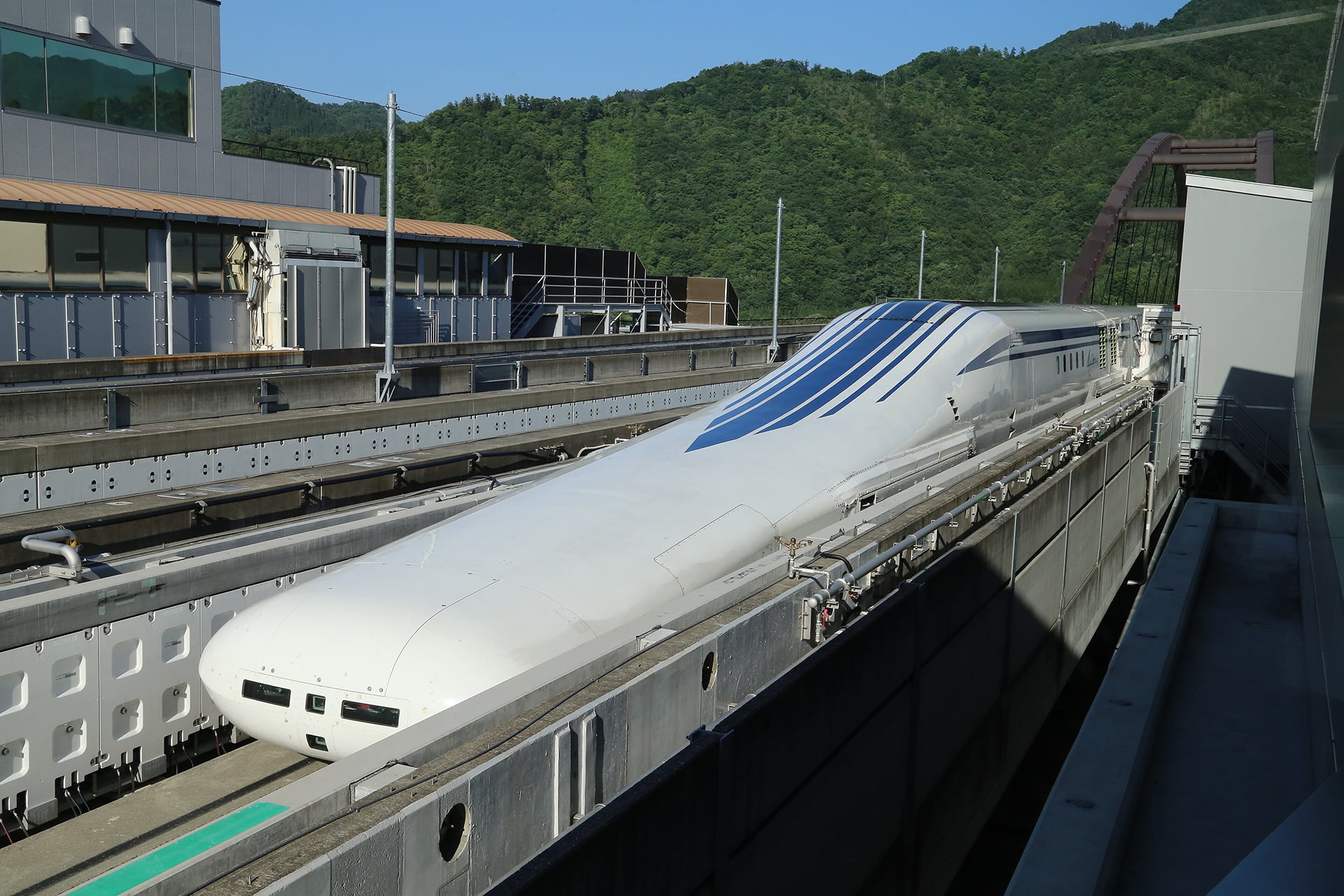
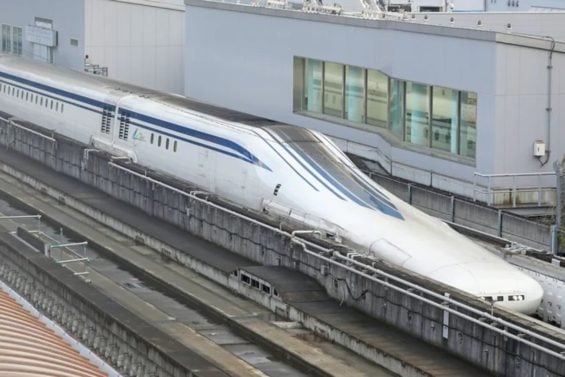
Since 2015, the Central Japan Railway Company’s L0 series train has held the title of the fastest train in the world. That year, the magnetic levitation train (maglev) clocked 603 km/h on the Yamanashi test line and entered the Guinness Book of Records. The number, however, came from trials: the Chuo Shinkansen commercial line, which will connect Tokyo to Nagoya, accumulates delays and should only open in 2037. Still, those who want to don’t have to wait so long to ride the L0 — there is a “shortcut” open to the public.
Photo: Photonetwork
The record holder in regular operation is the maglev from Shanghai, China, which reaches 431 km/h on the short journey between the airport and the Pudong district. The secret of the technology lies in the absence of physical contact: the train literally floats on a magnetic guide, which eliminates friction. In the Japanese case, the L0 uses wheels only below 150 km/h; Above that mark, the magnetic field lifts it about 10 centimeters off the ground. It flies higher than the Chinese train on purpose, as a safety margin against deformations on the tracks in the event of an earthquake — something recurrent in Japan.
A constant technical challenge is the overheating of electromagnets. To get around it, the Japanese project resorts to a cooling system with liquid helium and nitrogen. Sophisticated engineering, however, comes at a price: The cost of the work jumped from 5.52 trillion yen ($34 billion) to about 11 trillion yen ($68 billion) because of rising materials and the difficulties of building on rough terrain.
Photo: Digipub
While the commercial line does not get off the ground, railway lovers – the “densha otaku”, as they are called in Japan – have such a shortcut: JR Central promotes sporadic demonstration races, without a fixed calendar, with places distributed by lottery. For about 4,400 yen (approximately R$ 140), it is possible to board and feel speeds that are close to 500 km/h, far beyond any conventional train.
The Japanese lead, however, may not last. Last year, researchers at China’s Donghu laboratory in Hubei province demonstrated a magnetic levitation system capable of reaching 800 km/h. If the technology takes hold, China could put into operation trains faster than planes even before Japan inaugurates its long-awaited line.
Comments are the sole responsibility of their authors and do not represent the opinion of this site. Comments containing profanity or offensive language will not be published. If you identify anything that violates the terms of use, please report it.