

Toyota hits the hammer on the V6 engine to decide if it needs to be changed
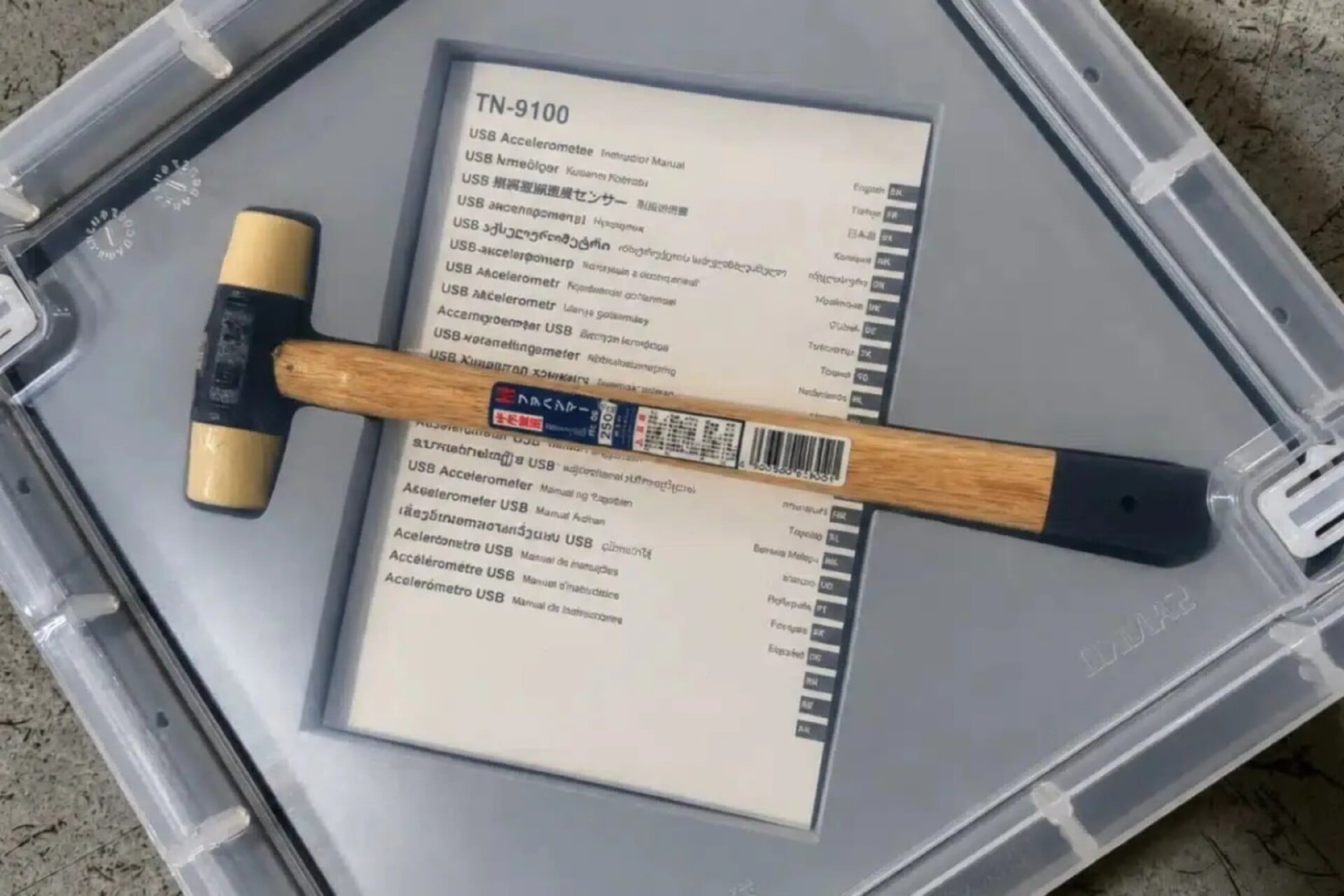
Official procedure uses plastic hammer, accelerometer and software to evaluate the crankshaft bearing; understand how it works
By
João Paulo Profeta
Published on 2026-08-19 at 08:00 AM
Published on 2026-08-19 at 08:00 AM
Be the first to comment.
Summarize with:
Toyota has turned a plastic hammer into an official diagnostic tool: technical instructions sent to dealerships describe a procedure that uses the controlled impact of a hammer to measure crankshaft vibration and decide whether the 3.4-liter twin-turbo V6 engine in Toyota cars needs to be replaced, without dismantling it.
The test is part of the recall campaign for the V35A-FTS engine, with 415 hp and 66,2 kgfm, which has already reached more than 250 thousand Tundra pickup trucks and Lexus LX 600 and GX 550 SUVs in the United States since 2024. Named V35A Crank Bearing Inspection, the procedure belongs to the 25TA14 campaign and applies to Tundra units from model years 2022 to 2024, according to instructions obtained by the Pickup Truck + SUV Talk website.
The failure originates from debris from the machining process that was not removed during manufacturing and wears down the No. 1 main bearing, the part on which the crankshaft rotates. According to Toyota, the defect can cause metallic noise, irregular operation, start failure and loss of power with the car in motion.
How the hammer test works
Before the measurement, the technician changes the oil, heats the engine to a certain temperature, removes the accessory belts and positions the crankshaft at a specific point. An accelerometer is then attached to the crankshaft bolt and linked to the brand’s inspection software .
Next, the crankshaft pulley is struck at the position equivalent to three o’clock on a watch. The software evaluates each hit and tells you if the hit was adequate, weak, too strong or doubled. Three valid measurements are required, sent to the cloud along with vehicle usage data. The system returns only two answers: OK, when the engine is approved, or Replace, when the change of the set is mandatory.
According to a Toyota spokesperson heard by The Drive, the inspection relies on the resonant frequency of the front part of the crankshaft to assess the condition of the No. 1 bearing. The development of the method, says the company, involved tests on several engines to map the frequency differences between bearings with and without abnormal wear.
Old principle, unprecedented application
The technique is not new. Known as impact testing or experimental modal analysis, it has been used for decades to measure how structures react to a short, controlled force, on the same principle as the tuning fork. Unprecedented is the use of the resource as a dealership routine, to decide whether a customer’s engine will be replaced.
The method avoids dismantling that consumes dozens of hours in the workshop, but Toyota maintains that not every vehicle recalled needs a new engine, a position that fuels the distrust of owners. The automaker also points out that the test does not diagnose engines that already have symptoms; In these cases, the guidance is to look for the dealership immediately.
None of the affected models are officially sold in Brazil: Tundra and LX 600 arrive in the country only by independent import. Here, recall campaigns are monitored by Senacon, the Ministry of Justice’s consumer protection secretariat.
SEE MORE ABOUT

0 Comments
Comments are the sole responsibility of their authors and do not represent the opinion of this site. Comments containing profanity or offensive language will not be published. If you identify anything that violates the terms of use, please report it.