


Toyota expects 400 robots in its factories from 2028; understand the plan
The plan foresees 150 thousand machines in its own units and 250 thousand in the group's and suppliers' factories, starting in 2028
By
Júlia Haddad
Published on 2026-09-22 at 03:00 PM
Published on 2026-09-22 at 03:00 PM
Be the first to comment.
Summarize with:
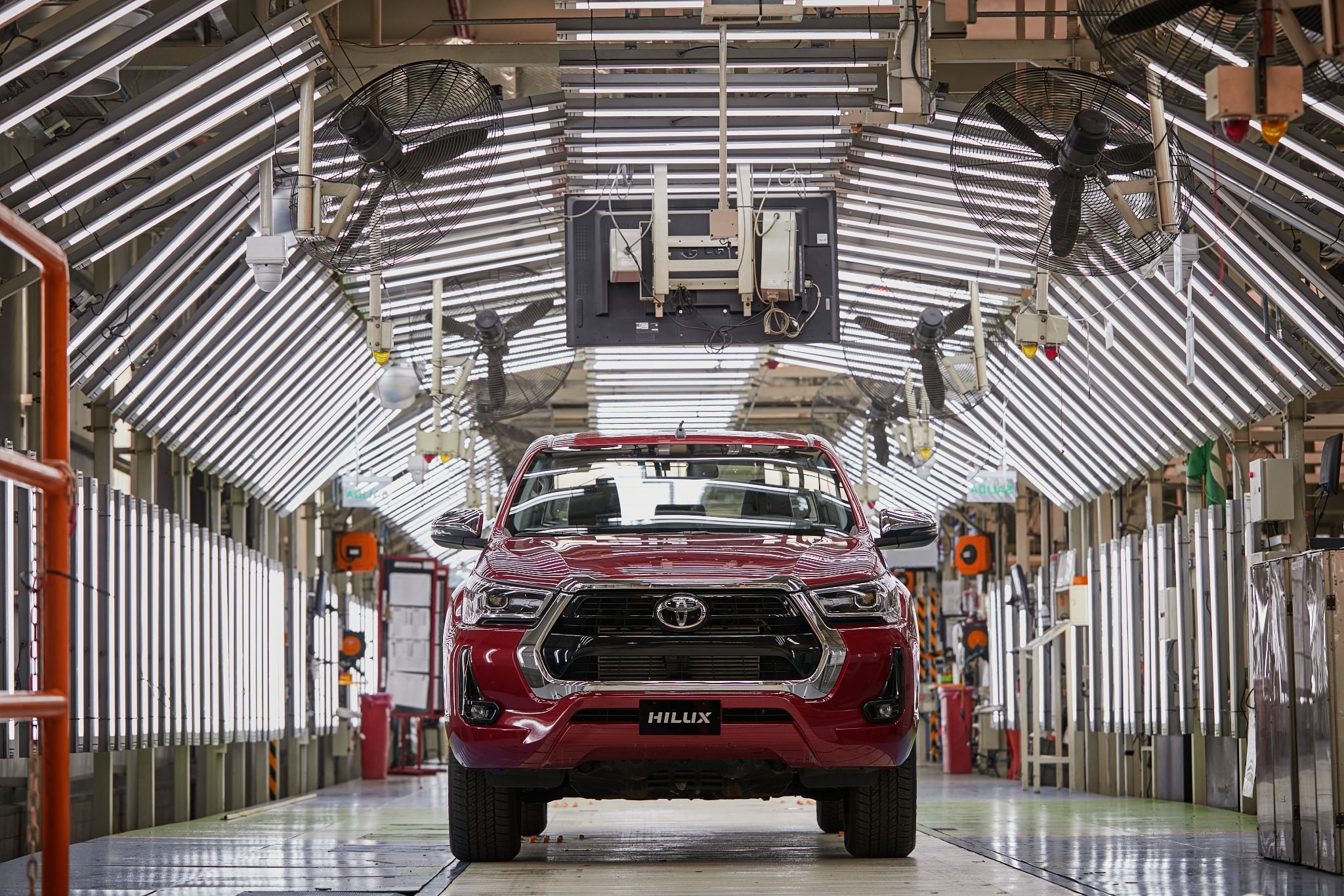
Toyota estimates to spend up to ¥1 trillion (about R$ 32.8 billion) per year, starting in 2028, to automate its global factories, with about 400 thousand robots. The plan foresees 150 thousand machines in its own units and another 250 thousand in facilities of group companies and large suppliers.
According to the automaker, in a presentation to investors, the amount includes humanoid and non-humanoid robots, in addition to the replacement of existing equipment. The company did not confirm whether the investment will actually be made or for how many years the program would last.
A robot that learns by watching the employee
The main humanoid in the project is the 50 kg Eley. Instead of walking, it moves on wheels — powered by a battery or cable — and uses two-fingered hands, instead of a claw that imitates the human hand. The choice favors proven reliability, while rivals such as Tesla and Figure bet on bipedal machines for the factory floor.
Eley learns by watching Toyota’s own employees, not external databases or simulations. Workers wear finger-shaped jigs, molded from the robot’s hands, as they repeat routine tasks; the machine extracts the technique directly from the demonstration. On presentation at the automaker’s European headquarters in early September, the robot folded T-shirts with near-perfect accuracy after 1,500 training sessions in two weeks.
Toyota plans to share the training data between its plants, so that robots from different countries acquire the same skills without repeating the process locally. The group operates 60 factories and employs 18,000 veteran workers, the takumi, whose experience is expected to become a database — and the robots are also expected to help train new hires.
“We seek a world in which robots coexist with humans, rather than replace them,” Hiroki Nakajima, Toyota’s executive vice president, said in a statement.
Different bet from Tesla and Hyundai
Toyota’s presence in the segment is not new: it dates back more than two decades, from elderly care robots to the Welwalk rehabilitation exoskeleton.
More recently, the company started to develop, at the Toyota Research Institute, the so-called Large Behavior Models, which use generative AI to teach physical skills from a few minutes of human demonstration. There is also a partnership with Agility Robotics to employ the biped Digit in logistics.
The path contrasts with that of competitors that converge on a single bipedal format, such as Boston Dynamics’ Atlas, which Hyundai intends to put into operation at its plant in Georgia (USA) from 2028, and Tesla’s Optimus. Toyota is betting that learning fine manual tasks on wheels quickly weighs more in the short term.
The automaker did not detail which units will be covered. In Brazil, the group has factories in Sorocaba and Porto Feliz (SP) — the latter resumed engine production on Tuesday (22), a year after being destroyed by a storm — and has a plan for R$ 11 billion in investments in the country by 2030.
SEE MORE ABOUT

0 Comments
Comments are the sole responsibility of their authors and do not represent the opinion of this site. Comments containing profanity or offensive language will not be published. If you identify anything that violates the terms of use, please report it.