

Threadlocker: the discreet adhesive that prevents planes, cars and appliances from coming loose
Applied directly to the bolts, the anaerobic adhesive hardens without air and maintains tight torque even under intense vibration
By
Júlia Haddad
Published on 2026-06-25 at 08:00 AM
Published on 2026-06-25 at 08:00 AM
Be the first to comment.
Summarize with:
Have you ever observed the wing of an airplane during a flight and wondered how it remains stable even under strong vibrations and atmospheric pressure variations? Or how many of our appliances don’t fall apart, like in cartoons, over the years?
All this stability depends on a discreet product, but indispensable in everyday life: the thread lock, an adhesive applied directly to the screw fillets to prevent them from loosening with vibration and time.
Although little known outside the industry, it is an anaerobic adhesive: it remains liquid when exposed to air, but hardens precisely when it is confined between the metal surfaces of the screw, in the absence of oxygen. Once cured, it forms a plastic film that fills the gaps between the wires and maintains the applied torque, even under shock and shaking. Depending on the version, the formulations resist thermal ranges ranging from very negative temperatures to more than 300 °C.
Approved by the major manufacturers and already applied in the assembly lines, the product ensures the factory quality standard even before the equipment reaches the consumer. “In the aftermarket and maintenance, the correct use is what differentiates a professional repair from a palliative solution,” says Célio Ruiz, technical assistance manager for adhesives and sealants at Henkel, owner of the Loctite brand, a reference in the segment.
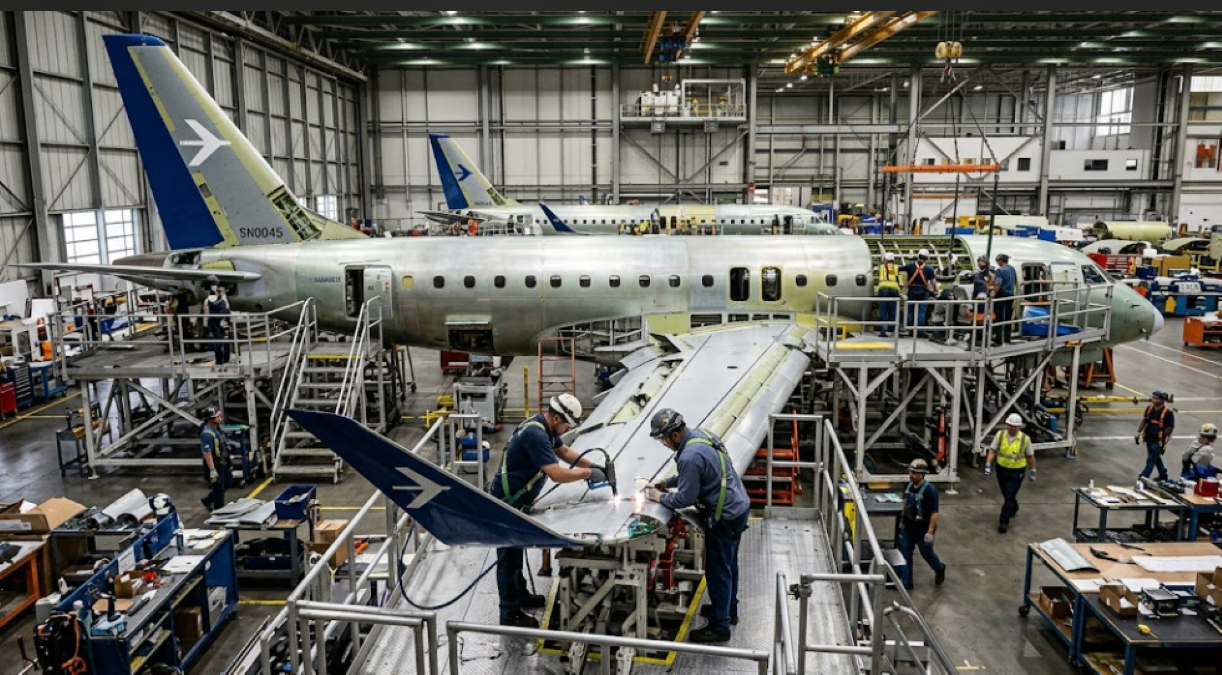
Thanks to its versatility, its application ranges from the domestic environment — locks and appliances — to infrastructure, in the sealing of metal pipes that could leak. In urban mobility, it is a key piece in the safety of elevators, stairs and moving walkways, where vibration is constant. In high-demand sectors, such as automotive and aerospace, it needs to withstand intense vibrations and high mechanical efforts without giving in.
By keeping the torque-to-tension ratio within the designed, the technology also prevents over-tightening of bolts, which can warp components or crack housings. Efficiency is directly linked to the formulation, which allows different levels of fixation as needed. Low-torque versions are suitable for smaller screws and components that require periodic adjustments.
Medium-torque products, on the other hand, offer a balance between strength and practicality, and are widely used in parts that are subject to vibration, but still need to be disassembled with conventional tools. For more demanding applications, the high torque provides a permanent and highly resistant fixation, reducing the need for maintenance and ensuring maximum safety in systems subjected to high tensions.
SEE MORE ABOUT

0 Comments
Comments are the sole responsibility of their authors and do not represent the opinion of this site. Comments containing profanity or offensive language will not be published. If you identify anything that violates the terms of use, please report it.