

Russia uses automotive gasoline to fuel planes amid fuel crisis caused by war
Ukrainian attacks on refineries and sanctions have left Russia without kerosene and local aviation is looking for risky ways out so as not to stop
By
Júlia Haddad
Published on 2026-06-25 at 09:00 AM
Published on 2026-06-25 at 09:00 AM
Be the first to comment.
Summarize with:
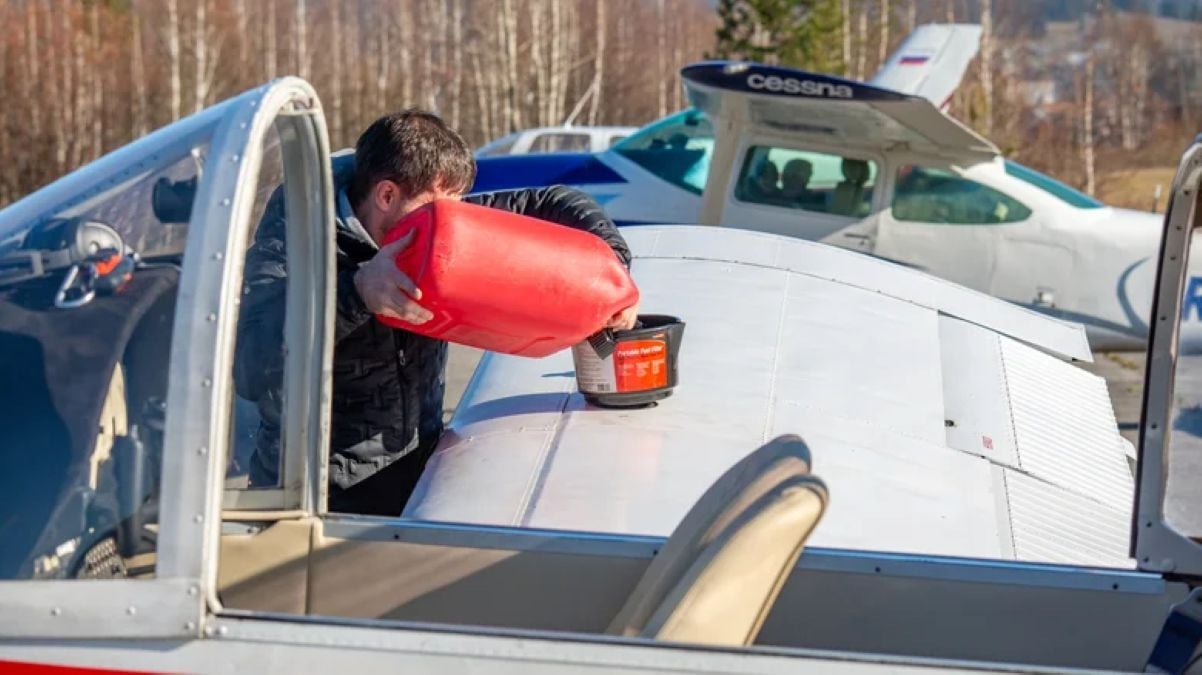
Russia is facing a fuel supply crisis that has already reached civil aviation. Faced with the shortage and high price of aviation gasoline, operators of light aircraft have started to test the use of common automotive gasoline in engines — an alternative considered risky by experts, according to the Russian newspaper Kommersant.
The tests already include demonstration flights. Some companies have replaced the Rotax-912 engines with similar Chinese C100 models, capable of operating on lower octane gasoline, of the Euro-3 type. The first results did not point to immediate damage to performance, but the accumulated flight time is still insufficient for definitive conclusions.
Aeronautical fuel has a higher octane rating — usually 100 — and is formulated to withstand low temperatures and high altitudes. Regular gasoline, with a lower octane rating, increases the risk of detonation in the engines, a phenomenon that can reduce power, accelerate the wear and tear of the exhaust system and, in extreme situations, cause failures in mid-flight.
The causes of scarcity
The lack of fuel is attributed to the combination of the high costs of the war, international sanctions and Ukrainian attacks on Russian energy infrastructure. In recent months, drones from Kiev have been hitting refineries and strategic facilities, putting further pressure on production and distribution. To preserve domestic stocks, Moscow has banned gasoline exports until the end of July and jet fuel until the end of November, as well as relaxing quality standards — authorizing gasoline with sulfur content far above the environmental limit.
The pressure falls more heavily on small aviation, where fuel accounts for more than a third of operating costs. The association that brings together operators of the Antonov An-2 — a biplane of Soviet origin with 853 units registered in the country — has asked the Ministry of Transport for state regulation of the prices of kerosene and aviation gasoline. Jet fuel prices have risen about 41 percent since the start of the year, and in some regions, aviation gasoline reserves are expected to last one to a month and a half.
In addition to supply challenges, Russian civil aviation continues to face difficulties in keeping the fleet in operation because of international sanctions, which restrict access to parts, components and maintenance services. Faced with the impasse, authorities are considering putting back into operation up to 700 Soviet-era An-2s that were idle, after the failure of the attempt to develop a modern replacement.
SEE MORE ABOUT

0 Comments
Comments are the sole responsibility of their authors and do not represent the opinion of this site. Comments containing profanity or offensive language will not be published. If you identify anything that violates the terms of use, please report it.