

This helmet promises to face a bear, but would be fined in any blitz in Brazil; understand
Equipment has a bicycle helmet shell and a polycarbonate visor up to the chin; understand why it would be illegal in Brazil
By
Eduardo Passos
Published on 2026-07-27 at 09:00 AM
Published on 2026-07-27 at 09:00 AM
Be the first to comment.
Summarize with:
TOM’s is known for making Toyotas and Lexus faster: suspensions, exhausts, preparation kits and decades of victories on Japanese tracks. Now the brand has entered territory that no one expected. Its most recent novelty has nothing to do with automobiles: it is a helmet made for those who are afraid of bears.
Called Protect Light, the equipment was developed by Ishino Shokai, a subsidiary of TOM’s, in partnership with Tohoku Tachibana. The choice is not random: Ishino has been manufacturing helmets for motorcycles and bicycles for more than four decades.
Bike shell with polycarbonate shield
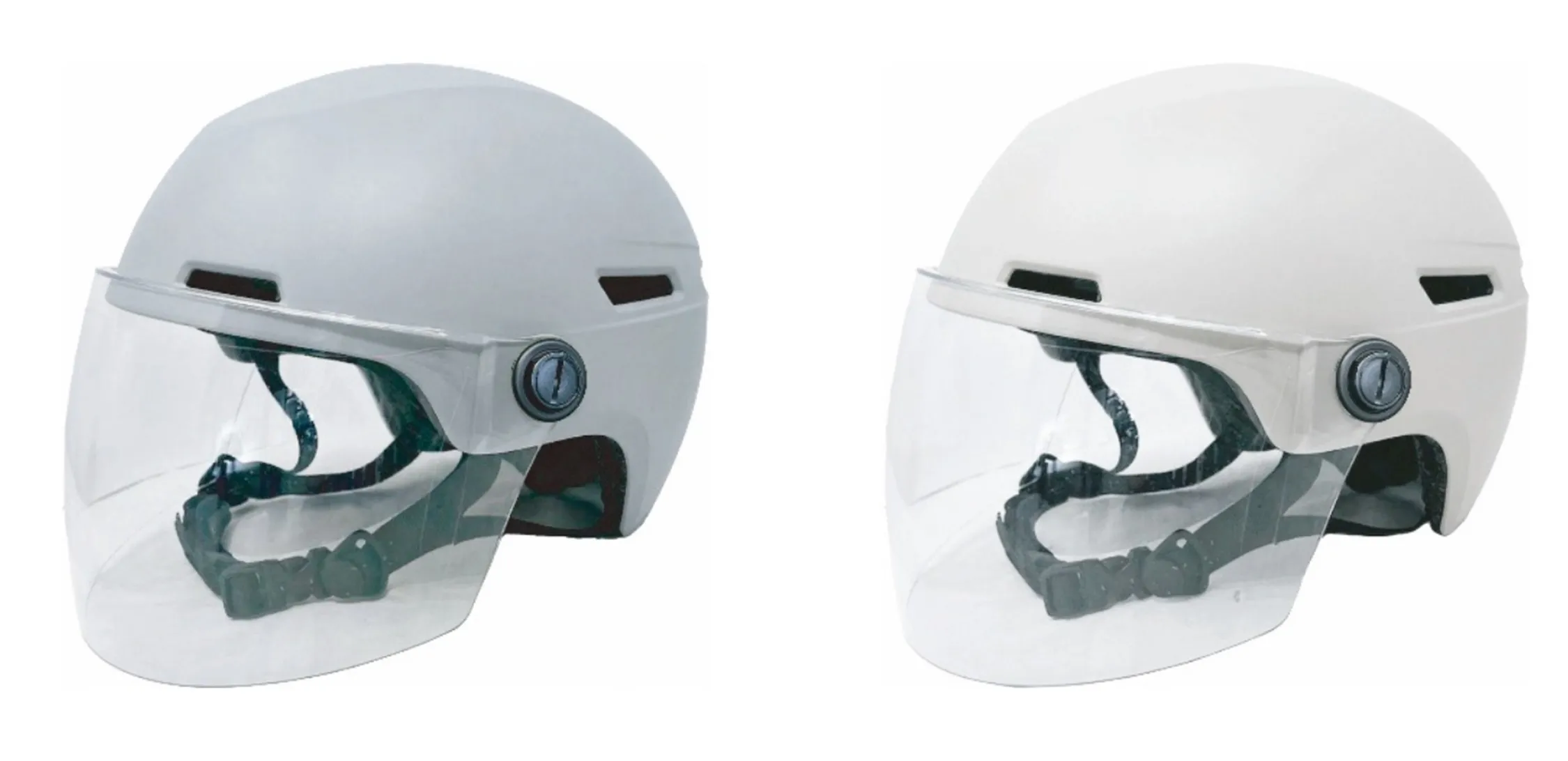
Visually, the Protect Light looks like a cross between a 1960s Formula 1 helmet and the equipment that a city employee uses to mow weeds on the side of the road. The shell, available in white or gray, is based on a certified bicycle helmet. On the front, a wide polycarbonate visor descends to almost chin height, creating a barrier between the face and whatever comes your way.
The set weighs 540 grams and costs 14,800 yen (about $90). The target audience is farmers, hikers and anyone who needs to circulate through forest areas in Japan.
The manufacturer, however, repeats the warning several times: Protect Light does not guarantee protection against bears or other wild animals. The visor can be damaged or punctured by strong impacts, claws or teeth. The goal is to reduce the risk of injury to the face, not to turn the user into a medieval knight.
The context explains the demand. According to Japan’s Ministry of Environment, the country recorded 50,776 sightings of Asiatic black bears in fiscal year 2025 — more than double the previous record. The attacks killed 13 people and injured 225 others in the period, the worst toll ever recorded.
And in Brazil? What the law requires of a helmet
Here, bears are not a problem, but helmets are a regulated matter. Contran Resolution 940/2022 defines what is valid on public roads: the equipment must be motorcyclical, be certified by an organization accredited by Inmetro and carry the seal of conformity or internal label. It is also mandatory to have retroreflective devices on the sides and back — those stickers that many people tear off for aesthetic reasons and shouldn’t.
The jugular strap must be attached under the jaw, and the driver must wear a visor or, failing that, goggles in good condition. With the bike moving, the visor must be down; At night, it needs to be of the crystal standard. Applying film is prohibited.
The punishments vary: driving without a helmet or with improper equipment is a very serious infraction, with a fine of R$ 293.47 and suspension of the right to drive. Helmet out of specification is a serious infraction, of R$ 195.23. Driving without a visor or goggles is an average infraction, of R$ 130.16 and five points in the license.
In other words: no matter how ingenious it may be, a Protect Light on the head would not free anyone from being fined in a Brazilian blitz. It was made for the forest, not for the asphalt.
SEE MORE ABOUT

0 Comments
Comments are the sole responsibility of their authors and do not represent the opinion of this site. Comments containing profanity or offensive language will not be published. If you identify anything that violates the terms of use, please report it.