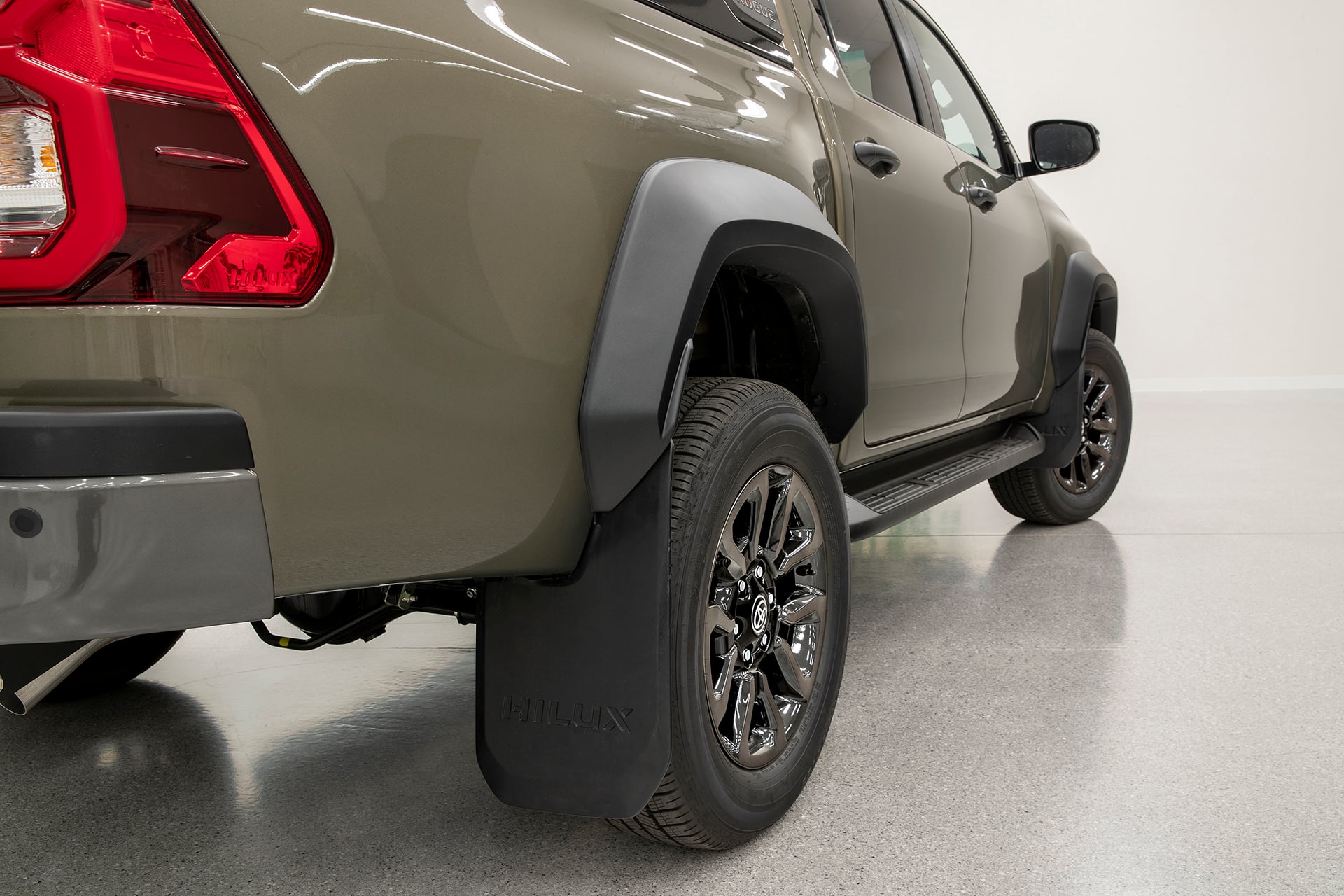
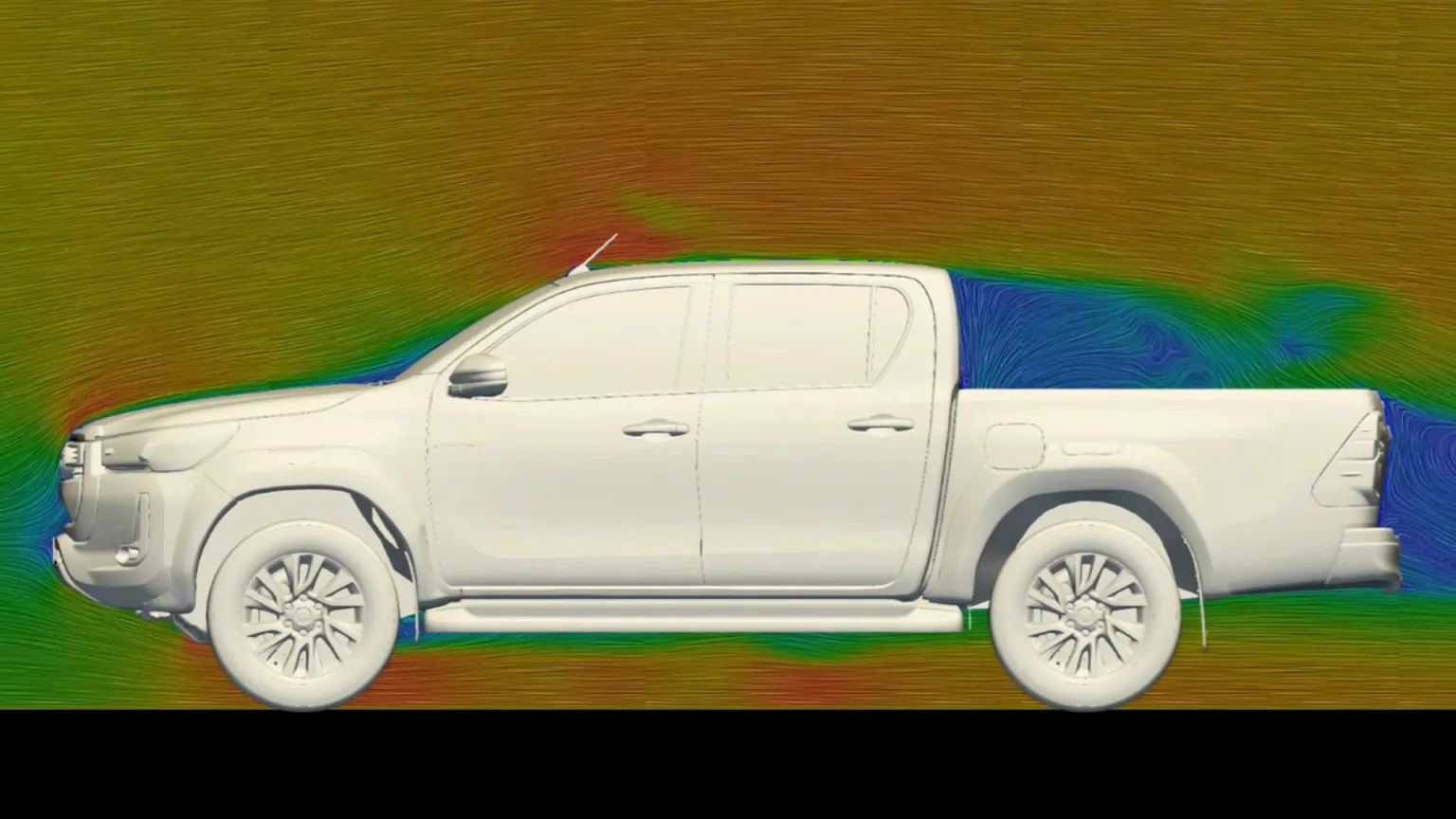
Removing the fenders from a pickup truck really reduces aerodynamic drag, but the gain is small in the face of a much bigger problem: ground clearance. It is the conclusion of a simulation made by the American consultancy Premier Aerodynamics with an eighth-generation Toyota Hilux running at 100 km/h, released in a video on YouTube.
The company used OpenFOAM, an open-source computational fluid dynamics (CFD) program, to measure the effect of the rubber flaps installed behind the wheels. With the mudguards, the pickup’s drag coefficient rises from 0.37 to 0.38. According to the presenter of the analysis, removing the parts would save about US$ 70 per year in fuel, the equivalent of R$ 358, considering predominantly road use and the prices practiced in the United States.
The diagnosis, however, is more interesting than the number. The flaps impair aerodynamics by interrupting the airflow in a higher region of the body, but they only aggravate a problem that already exists: the raised suspension generates large trails of turbulence around the wheels. The front of the Hilux keeps the air glued to the body efficiently, and it is precisely behind the front wheels that this flow is detached, because of the free span.
Photo: Premier Aerodynamics | YouTube
Where are the real
gains More effective changes, the analysis points out, would be to cover the bed, preferably with a fastback-type top, with a sloping line, or to lower the suspension. The study also criticizes two styling traits of the eighth generation: the pronounced wheel arches and the sharply angled A-pillars, which do not fulfill a practical function and increase air resistance.
Still, the pickup behaved better than the silhouette suggests. The body line between the rear wheel arch and the bucket lid rises and acts as a diffuser, and the airflow over the bed is well controlled. In a previous analysis, the same consultancy concluded that the second-generation Ram Dakota was also more aerodynamic than it appeared.
For those thinking of disassembling the parts, it is worth a reminder: the fenders exist to contain splashes of water, mud and gravel on the body itself and on the vehicles behind it. Contran Resolution 888/2021 establishes requirements for an anti-spray system for pickup trucks and a wheel protection device for cars, vans and SUVs, with staggered application deadlines.
Comments are the sole responsibility of their authors and do not represent the opinion of this site. Comments containing profanity or offensive language will not be published. If you identify anything that violates the terms of use, please report it.