Qantas has confirmed that it will inaugurate, in October 2027, the longest commercial flight in the world: a direct, non-stop route between Sydney and London-Heathrow. It is the first concrete stage of Project Sunrise, a project announced by the Australian company in 2017 to connect the east coast of Australia to London and New York without technical stops. Tickets go on sale in February 2027.
The aircraft and the route
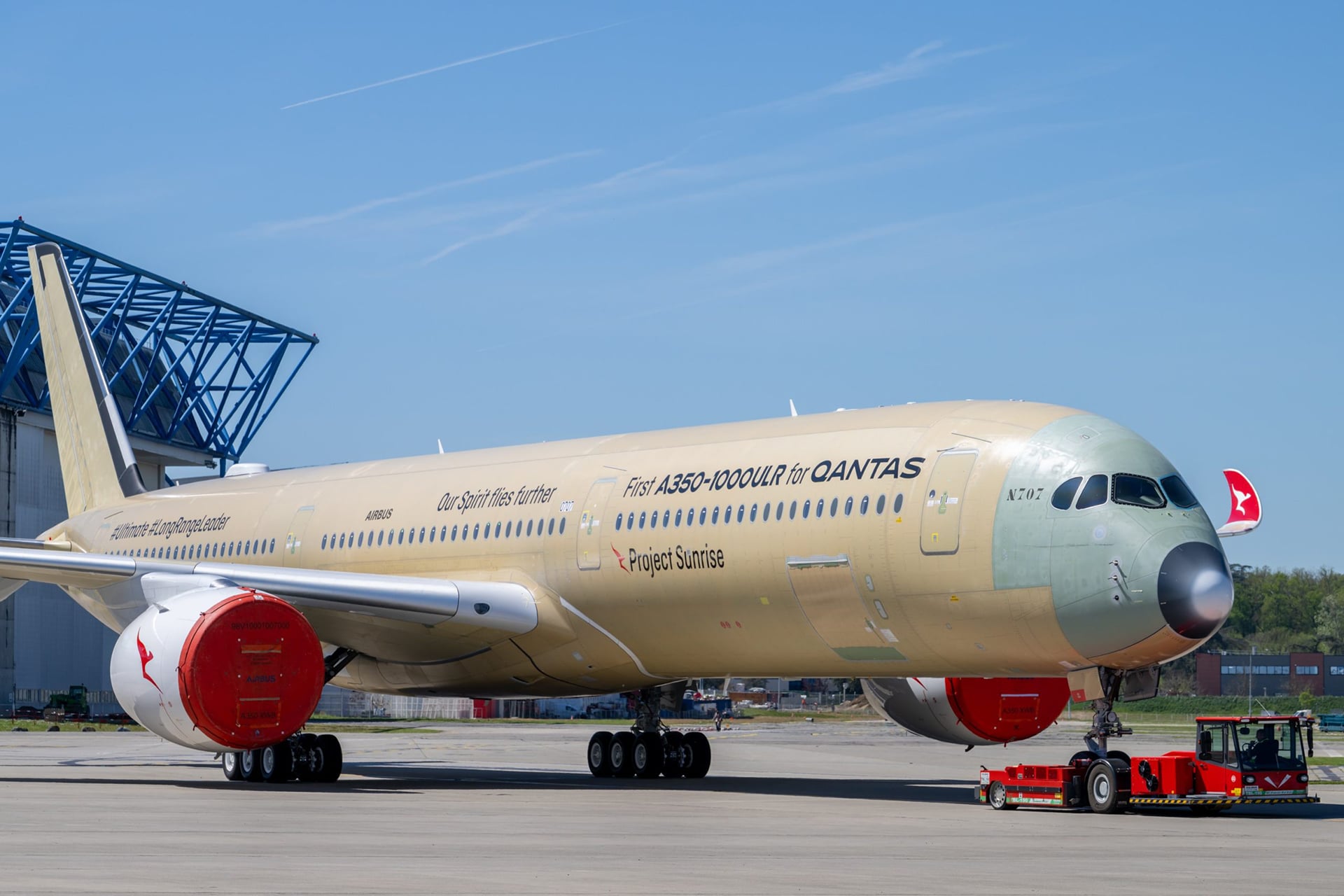
To make the feat possible, Qantas ordered, in May 2022, twelve units of a bespoke version of the Airbus A350-1000, called the A350-1000ULR (acronym for ‘ultra long range’). The central modification is an additional fuel tank at the rear of the fuselage, which extends the range by about 1,800 km and brings the total range to approximately 18,000 km. The first example, called Vega, made its maiden test flight on June 2, 2026, taking off from Toulouse, France, for a 3h43 session that reached just over 41 feet. Delivery to Qantas is scheduled for April 2027.
The Sydney-London stretch covers about 17,000 km and is expected to last up to 22 hours in the air, depending on the winds. It is the route that eliminates the last stop of the historic air link between Australia and the United Kingdom, operated by Qantas since 1947 — when the trip took four days and seven stops. New York is also in the company’s plans, but has not yet had a premiere date announced.
The project’s name harkens back to the “Double Sunrise” missions of World War II, when Qantas’ Catalina seaplanes crossed the Indian Ocean between Perth and Ceylon (now Sri Lanka) on flights of 27 to 33 hours — long enough for crew and passengers to see the sun rise twice.
How many sunrises and sunsets passengers on the commercial route will see, however, is not a fixed number: it depends on the time of departure and the route. In the 2019 research flights, the London-Sydney section (eastbound, 7:19 pm) did indeed yield two sunrises. In a trip of about 22 hours, the passenger must cross at least a complete cycle of day and night, being able to witness two sunrises according to the schedule. Qantas has not released an official tally for the commercial flight.
The preparation of the crew
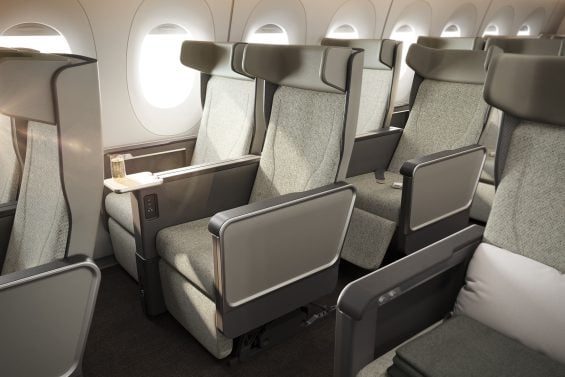
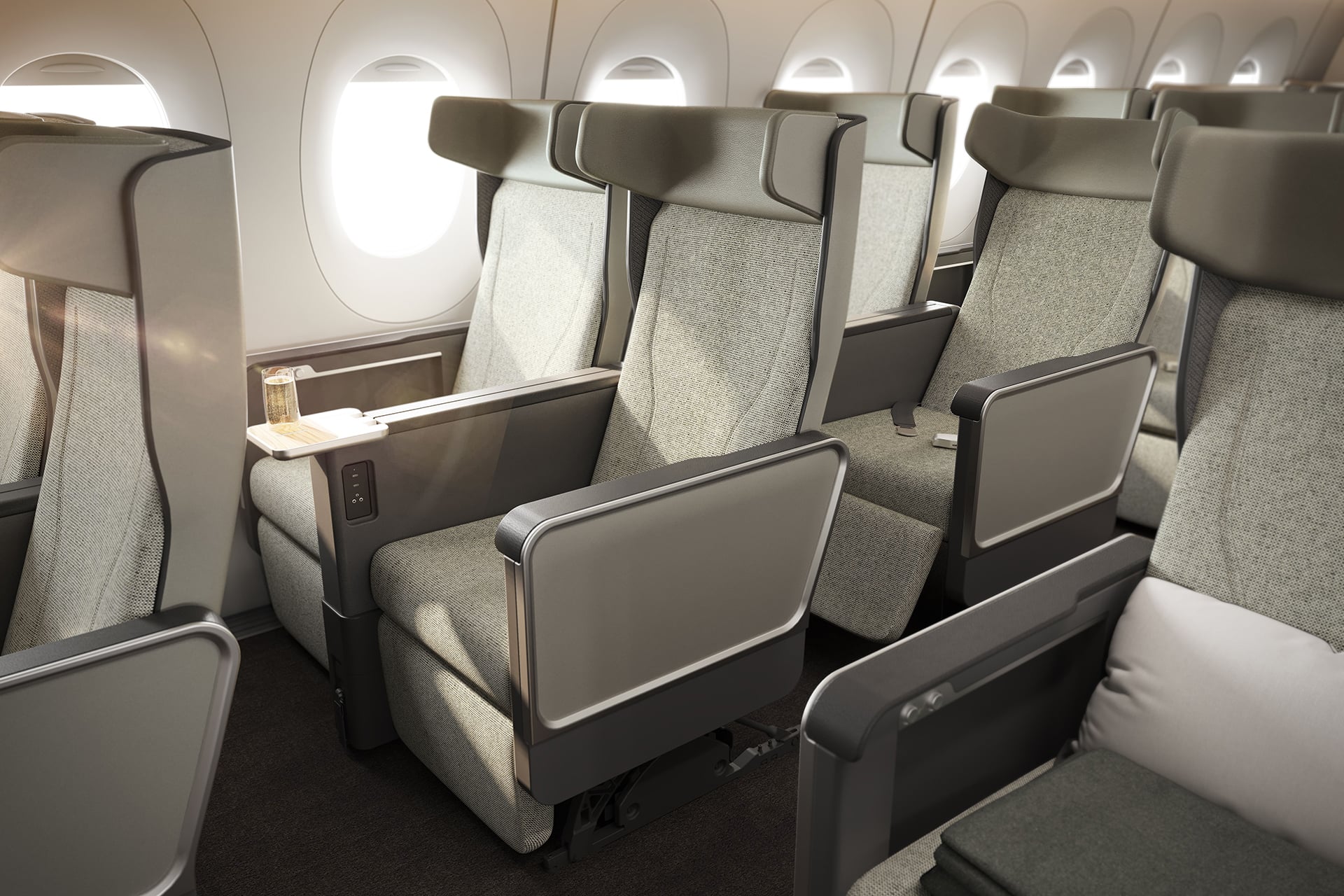
Project Sunrise’s Airbus interior is adapted to offer more space for passengers
The training of the crew members was one of the pillars of the project. Between 2019 and 2020, Qantas operated direct research flights from New York and London to Sydney, with scientists from the Charles Perkins Centre (University of Sydney) and Monash University on board. Pilots used brainwave (EEG) monitors and provided samples to measure melatonin levels before, during and after flights in order to map the biological clock and define the best rest periods.
The data was presented to the Civil Aviation Safety Authority (CASA), the Australian regulator, which needs to certify that crew members can safely face up to 22 hours of work. Project Sunrise aircraft will have exclusive rest compartments for pilots and flight attendants, separate from the cabin, with structured schedules and periods of controlled sleep. The composition under study provides for a commander, a first officer and two second officers per flight.
Passenger care
For those who travel, the strategy revolves around well-being and combating jet lag. Thus, the interior configuration will have only 238 seats – the lowest density among all A350-1000s in operation in the world – distributed in four classes: six suites in First, 52 in Business (with sliding door, unprecedented in the company), 40 in Premium Economy and 140 in Economy, of which 42 are sold as Economy Plus, with more space between rows. More than 40% of the seats are in premium cabins.
The plane will also have a ‘Wellbeing Zone‘, an open area for stretching, hydration and movement, as well as 12 lighting scenarios — including “Sunrise”, “Sunset” and “Awake” — calibrated by the science of circadian rhythm to simulate the dawn and dusk of the destination and help the body adapt to the new time zone. Meal service will also be timed by the biological clock, and not by the time of origin. The set was developed over about a decade in partnership with the Charles Perkins Centre and Caon Design.
The premiere took a long time. The first delivery slipped from the end of 2026 to April 2027, delaying the schedule by about five years from the original plan, because of the pandemic, bottlenecks in Airbus’ supply chain and the need to redesign the fuel system after regulatory questions. The company projects that the operation could add more than 400 million Australian dollars per year to revenues and has already signaled that fares should be about 20% above alternatives with a scale, especially in the upper classes – although official prices have not yet been published.
Comments are the sole responsibility of their authors and do not represent the opinion of this site. Comments containing profanity or offensive language will not be published. If you identify anything that violates the terms of use, please report it.