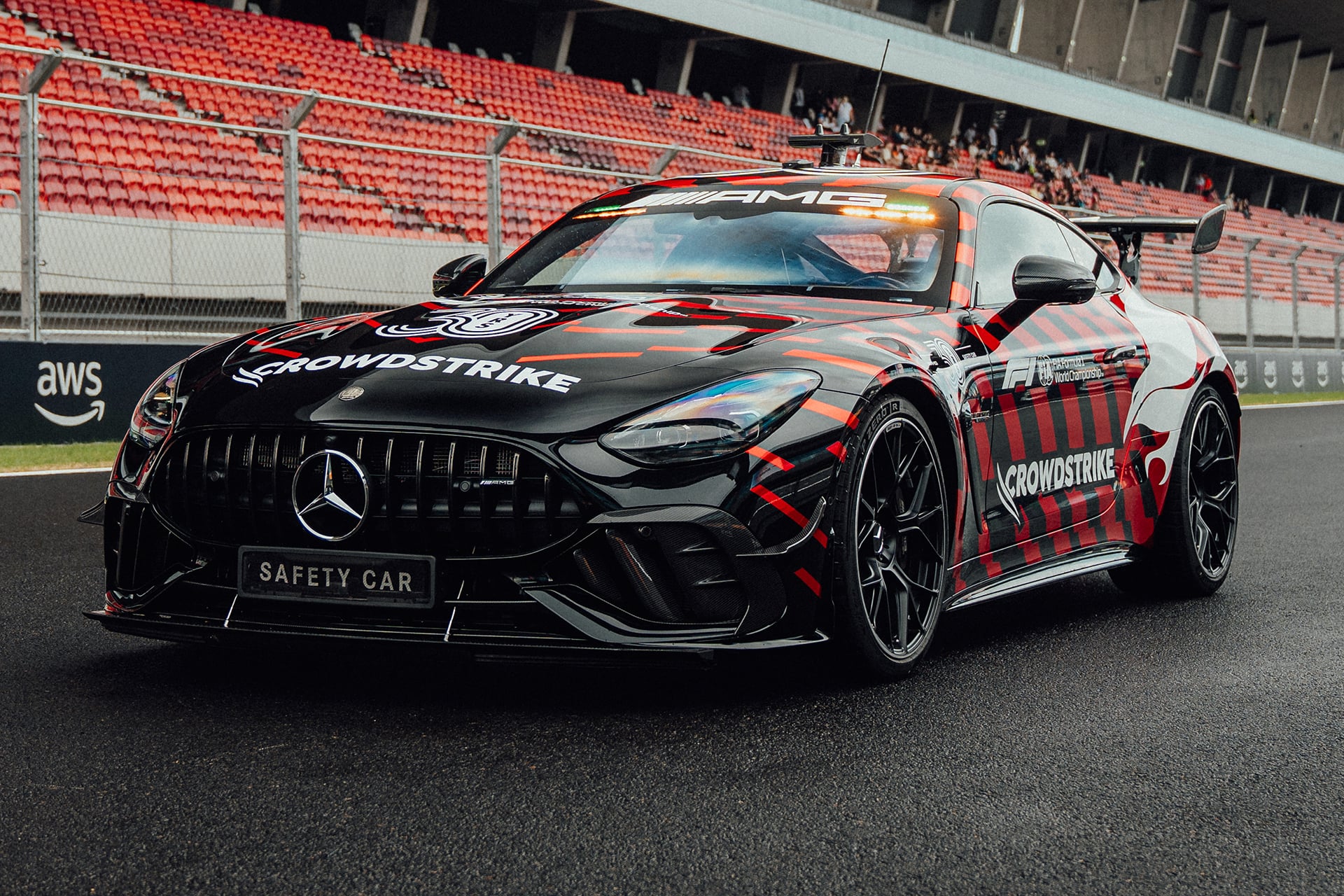
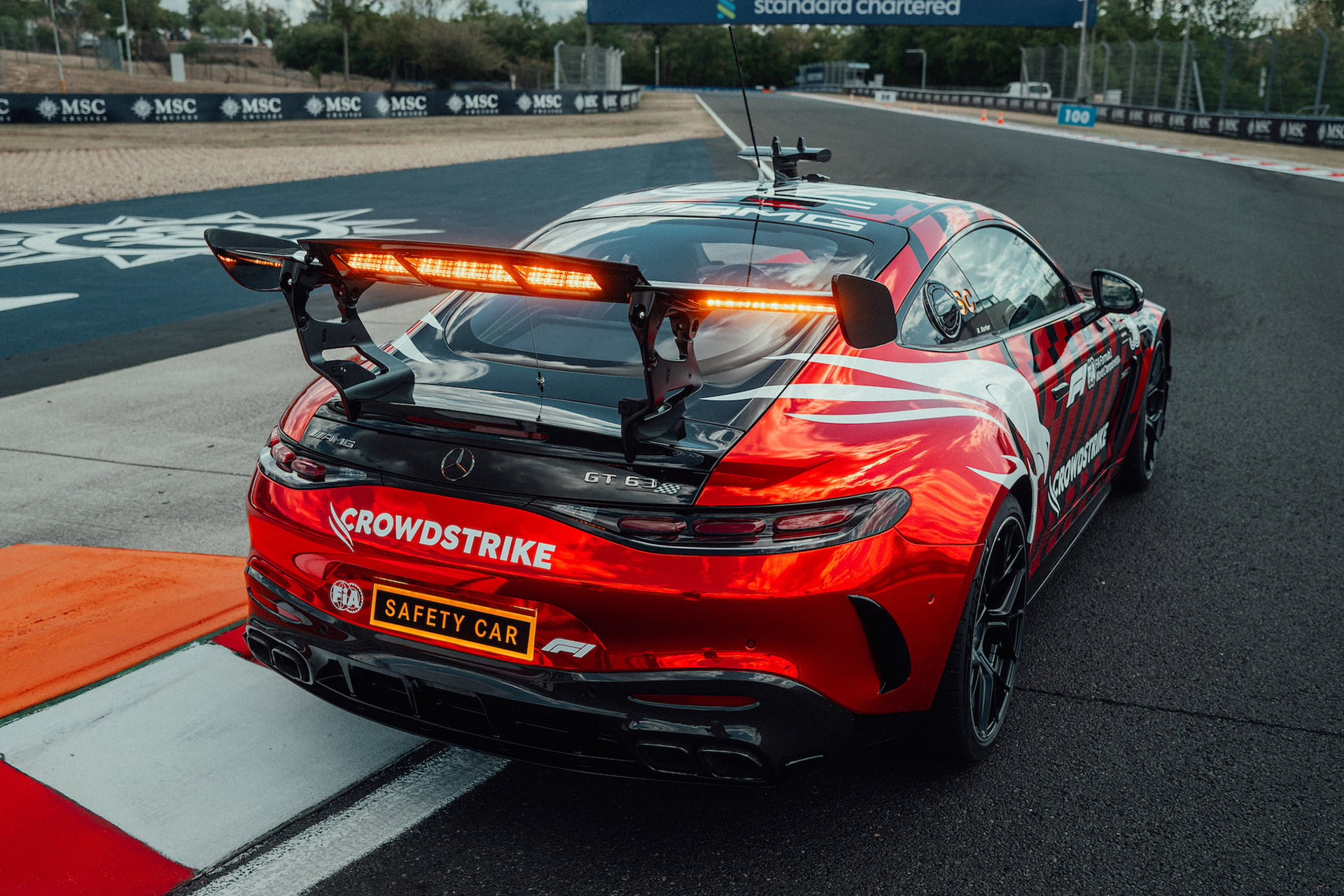
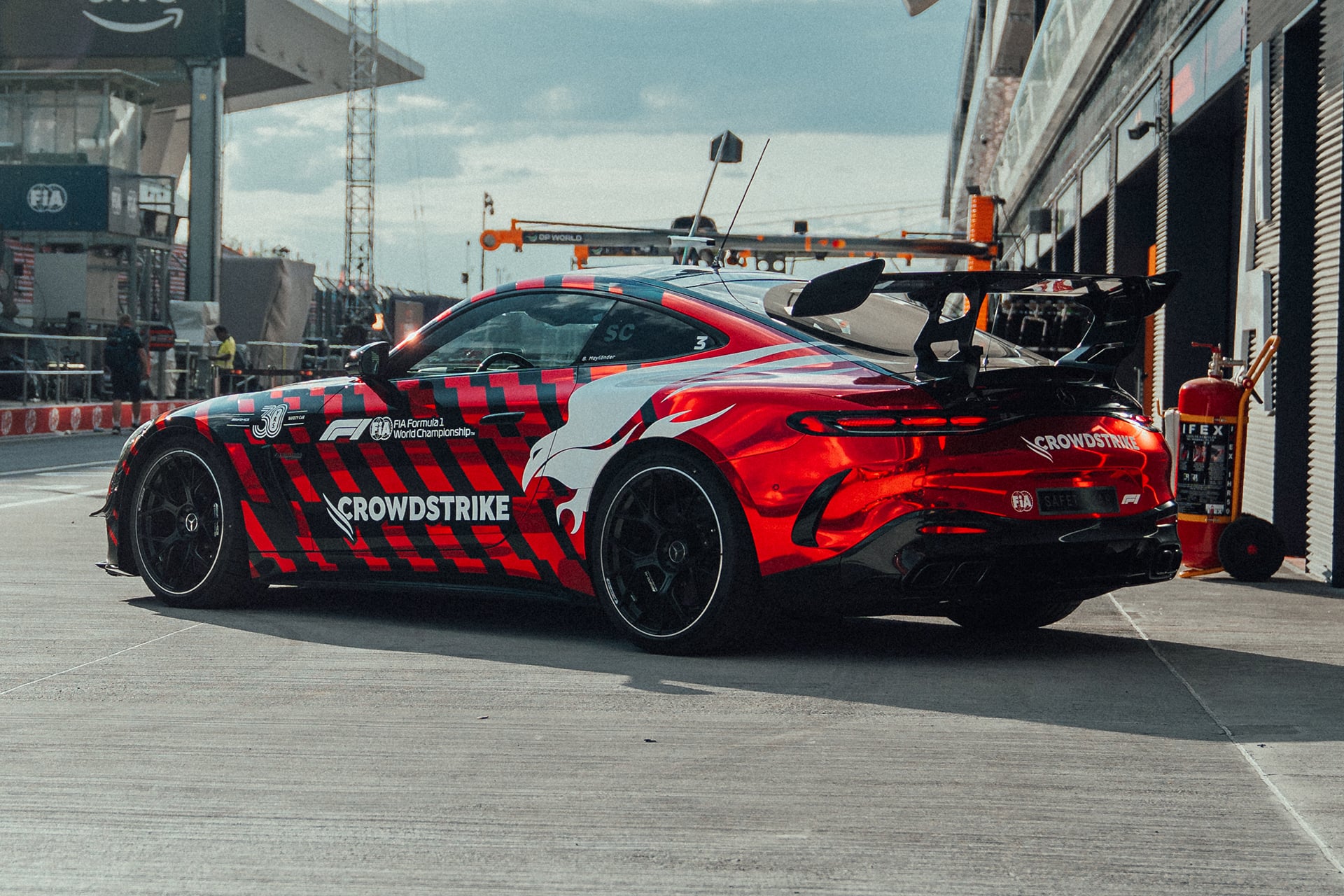
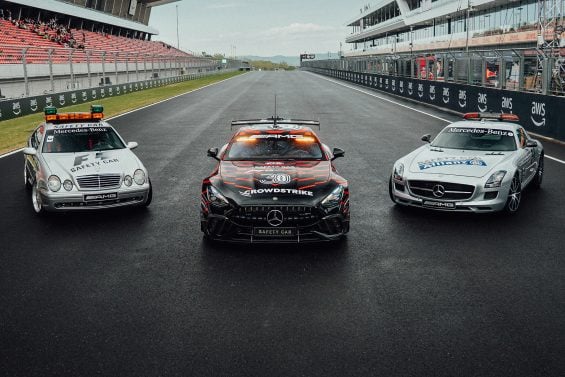
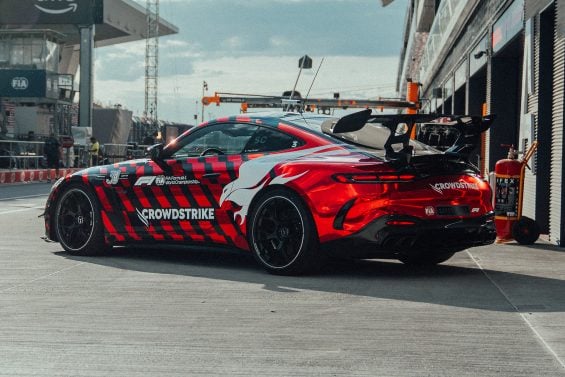
Those who followed the Hungarian Grand Prix last Sunday (26) may have noticed something strange in the Formula 1 safety car – not for what he won, but for what he lost. The light bar with ‘giroflex’ on the roof, a trademark of safety cars for decades, has simply disappeared.
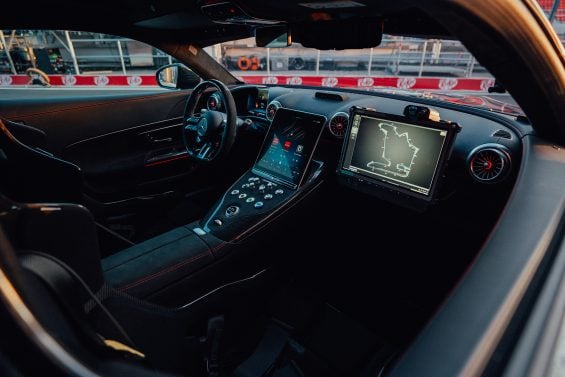
In its place, Mercedes-AMG integrated the LEDs directly into the rear spoiler, alongside the cameras used by the FIA. It is from there that the signals for the drivers now come out: orange indicates that overtaking is prohibited, green authorizes the passage through the safety car. At the front, additional lights were distributed on the bumper and in the headlights themselves.
Photo: Mercedes-Benz | Disclosure
The change may seem like a detail, but it messes with something practical: the light bar has always been a separate item, screwed to the roof of a street car — a functional solution, but one that adds weight and drag precisely at the highest point of the body, in a vehicle that needs to open a fast lane so as not to delay the peloton.
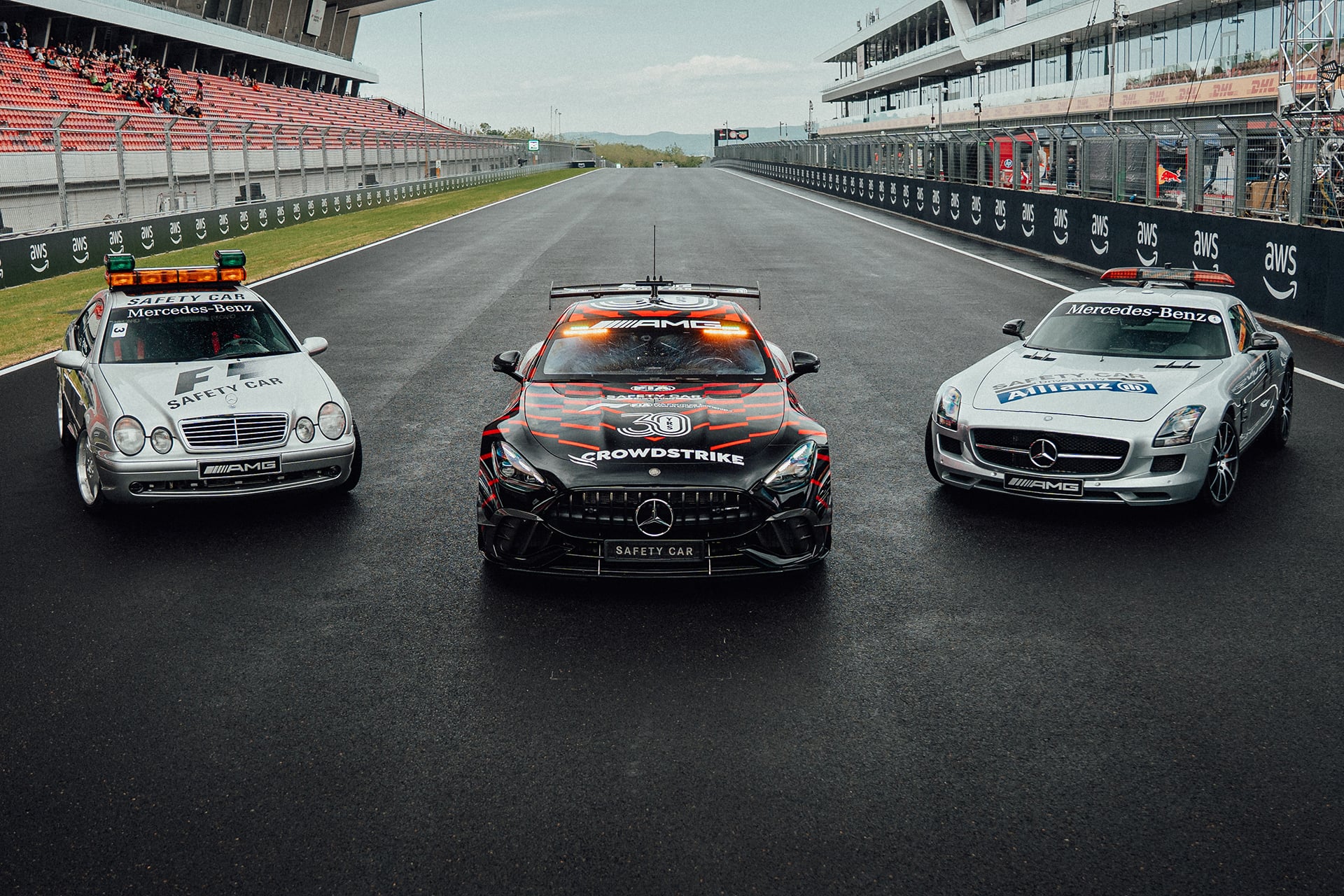
With the LEDs built into the bodywork, the safety car looks less like a car adapted in a hurry and more like a project thought out from scratch. The debut in Hungary was no coincidence: it coincided with Mercedes-AMG’s 30th anniversary as the official Formula 1 Safety Car supplier.
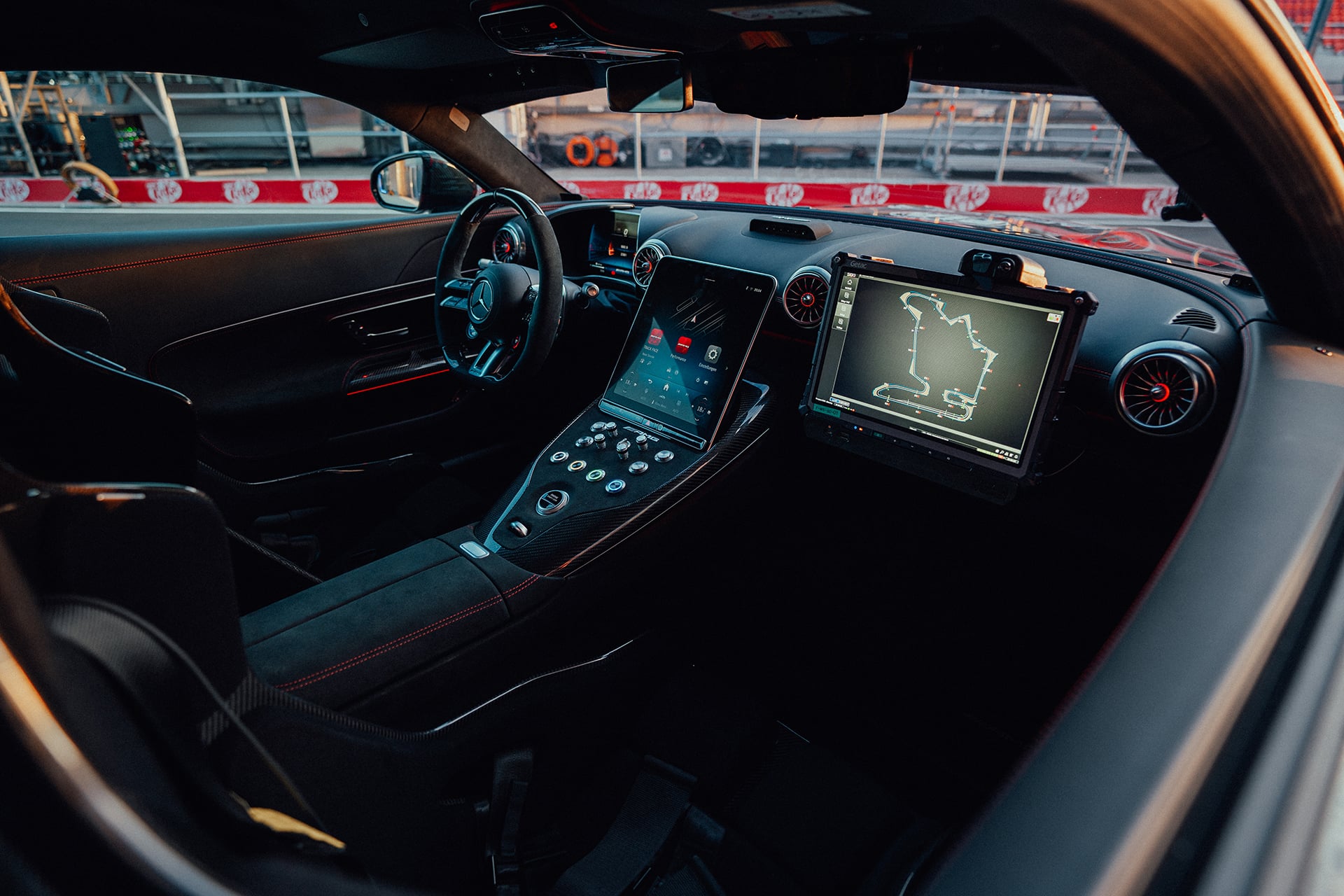
The basis of the new safety car is the Mercedes-AMG GT 63 Pro 4Matic+, which received a commemorative black and red livery. According to the brand, it is the first officialFormula 1 affecty car with all-wheel drive — the most recent predecessors sent all the power to the rear axle.
The mechanics are known: V8 4.0 biturbo with 612 hp and 86,7 kgfm of torque, enough for a top speed of 317 km/h. Numbers that make sense when you remember that the car needs to keep up with F1 single-seaters at a reduced pace without becoming an obstacle.
There is also a symbolic detail: the fuel used in the Safety Car has 40% sustainable components in its composition. It’s a step – but still far from the cars he leads on the track. Since this year, by regulation, Formula 1 single-seaters have run on 100% sustainable fuel.
Hungary closed the first half of the 2026 season, which had Lando Norris as the winner of the stage. With the European summer break, the restyled safety car will only appear again at the end of August – and, as always, those hoping to see it in action are rooting for the wrong reason.
Comments are the sole responsibility of their authors and do not represent the opinion of this site. Comments containing profanity or offensive language will not be published. If you identify anything that violates the terms of use, please report it.