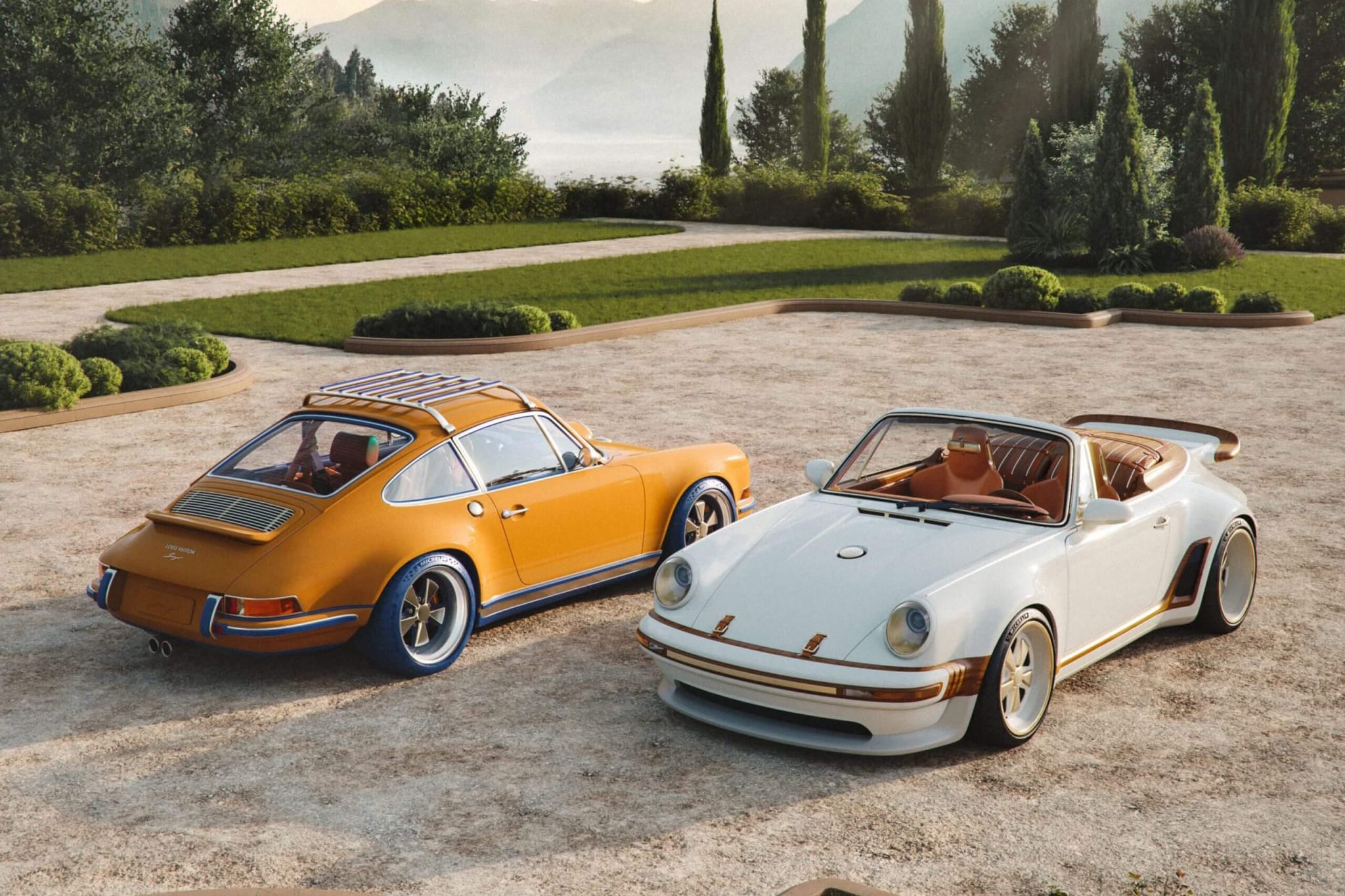
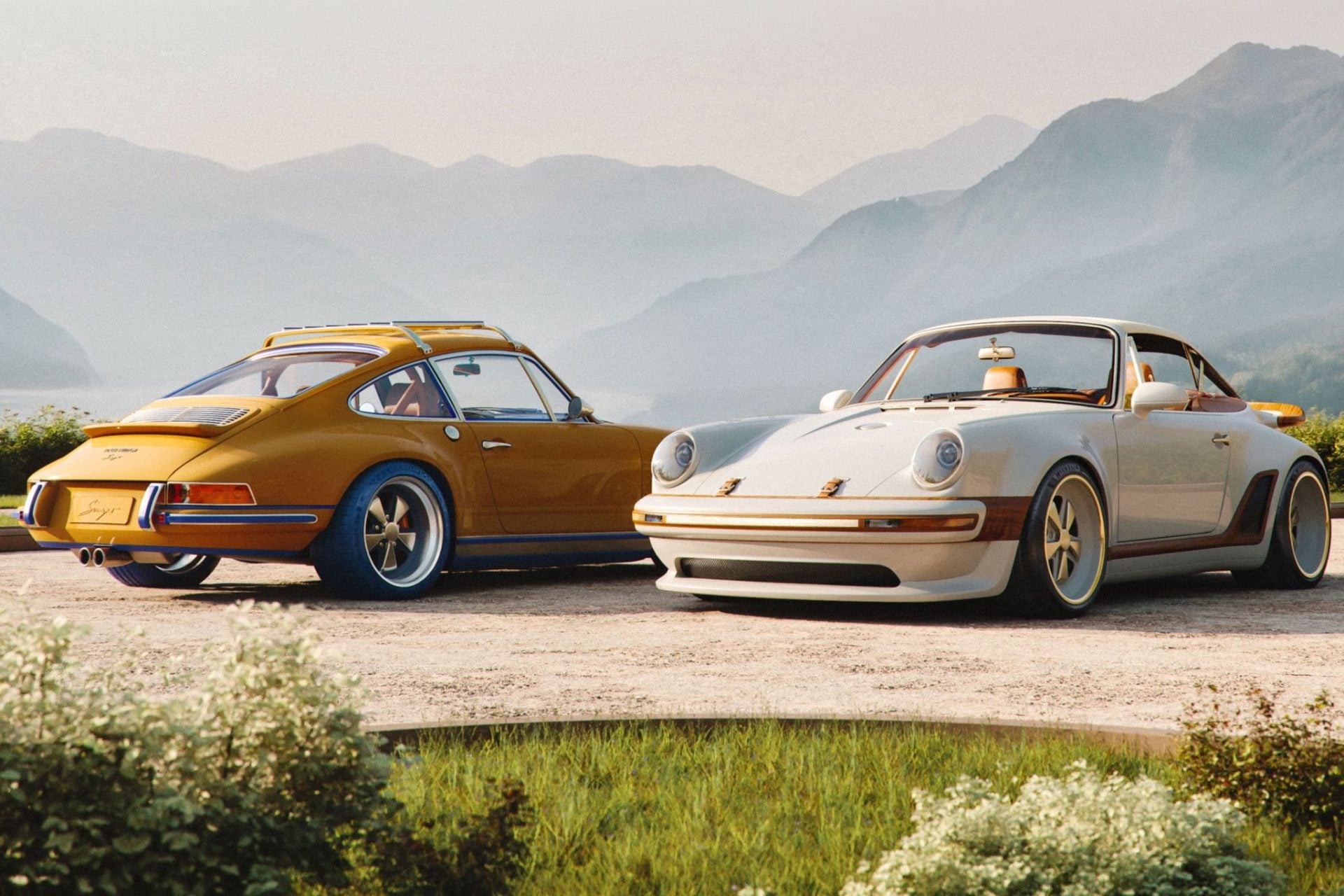
It all started with a simple request: a panel clock. The conversation evolved into the first co-branded product in Louis Vuitton’s history, as well as a first for Singer Vehicle Design — the Californian atelier specializing in creating even more exclusive versions of the Porsche 911. Unveiled this Wednesday in Monterey, California, the two creations in partnership of the brands depart from the 964 generation of the 911, and arrive with a carbon fiber body: a Classic coupe and a Classic Turbo convertible.
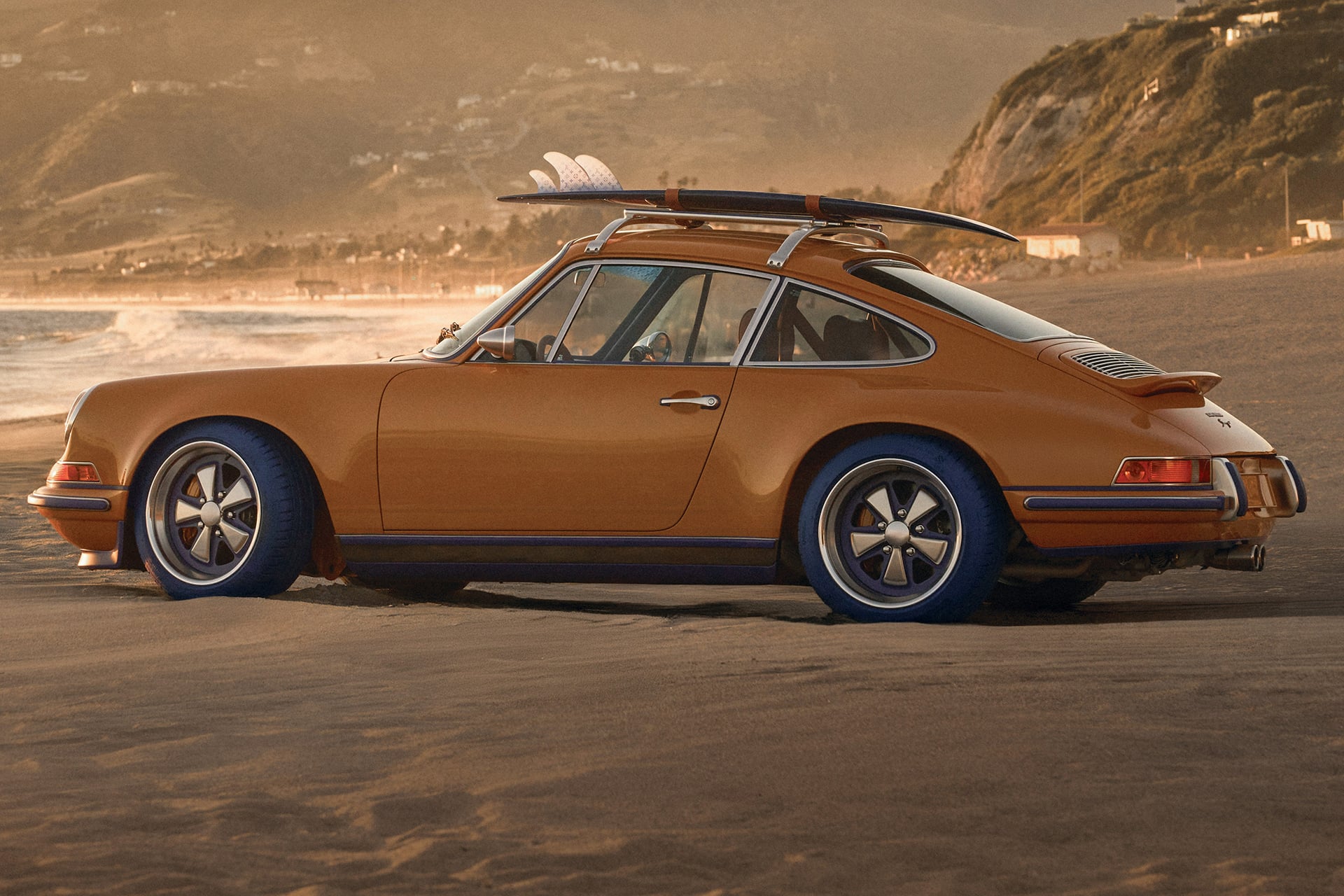
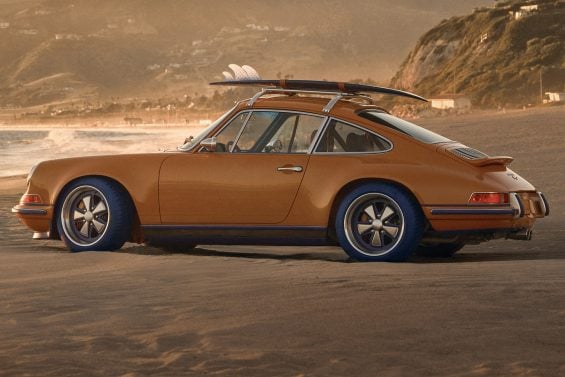
The coupe model uses the brand’s palette — saffron, cobalt blue and yellow — a shade that the house has had on file for more than a century and a half and speaks to the Bahama Yellow of Singer’s first orders. The vehicle features a bespoke roof rack for a suitcase, surfboard or skis, cobalt blue demonstration tires and the rear intake grille with the initials L and V hidden in a geometric motif.
Photo: Singer | Disclosure
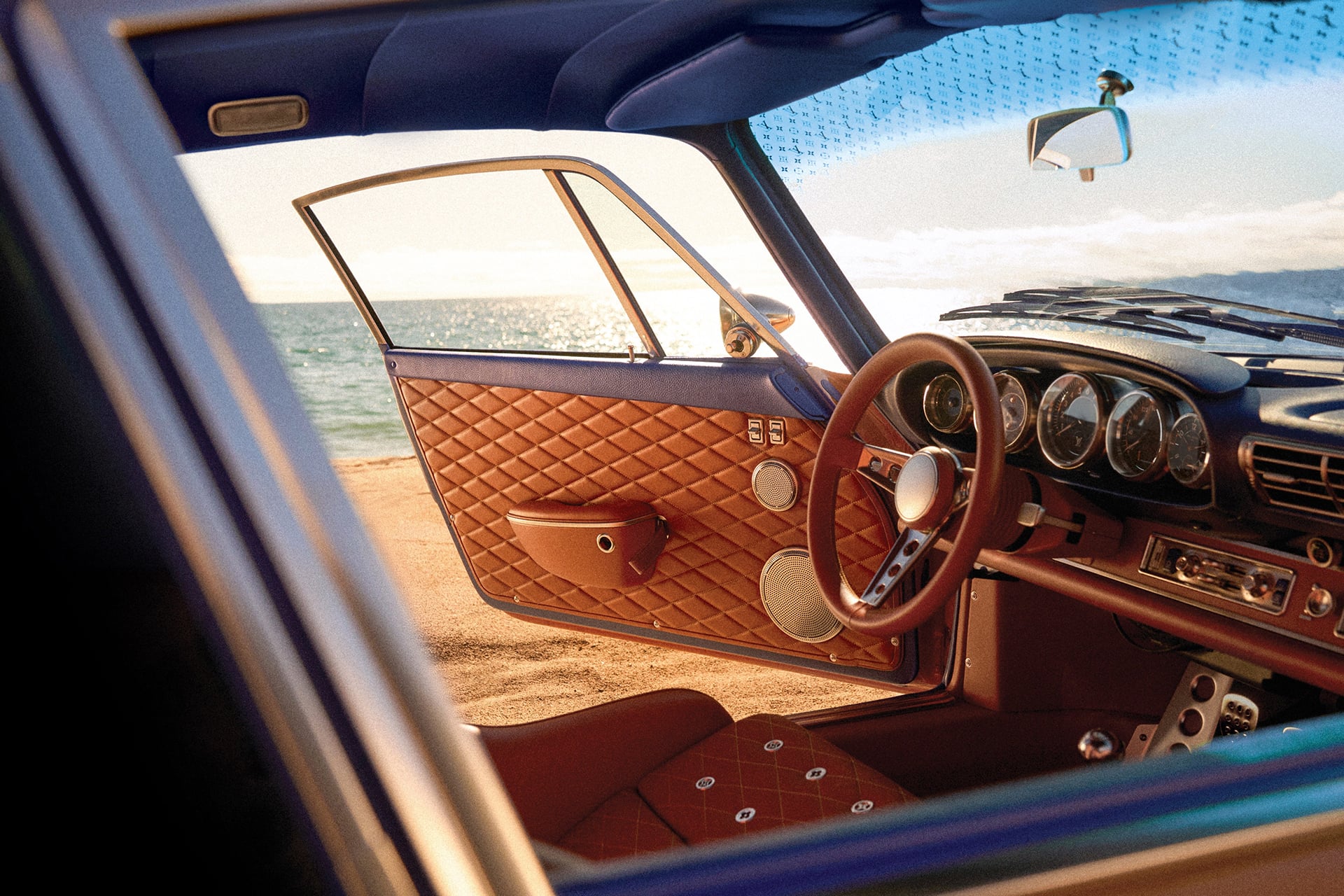
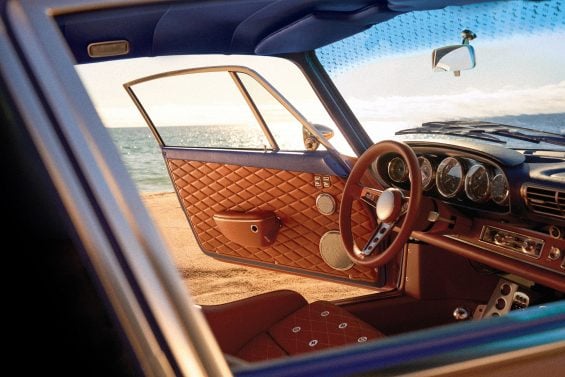
The interior is lined in leather in the tone of the VVT, used on the handles and labels of the house’s suitcases. The seats have segments that imitate the “malletage” of the trunk lining, ventilation eyelets handmade with the Monogram flower and stitching in yellow thread. No plastic: buttons, braids and air diffusers were machined from rhodium-plated metal and finished one by one with watchmaking techniques. Even the fuel and oil caps bring the typography of the brand’s watches.
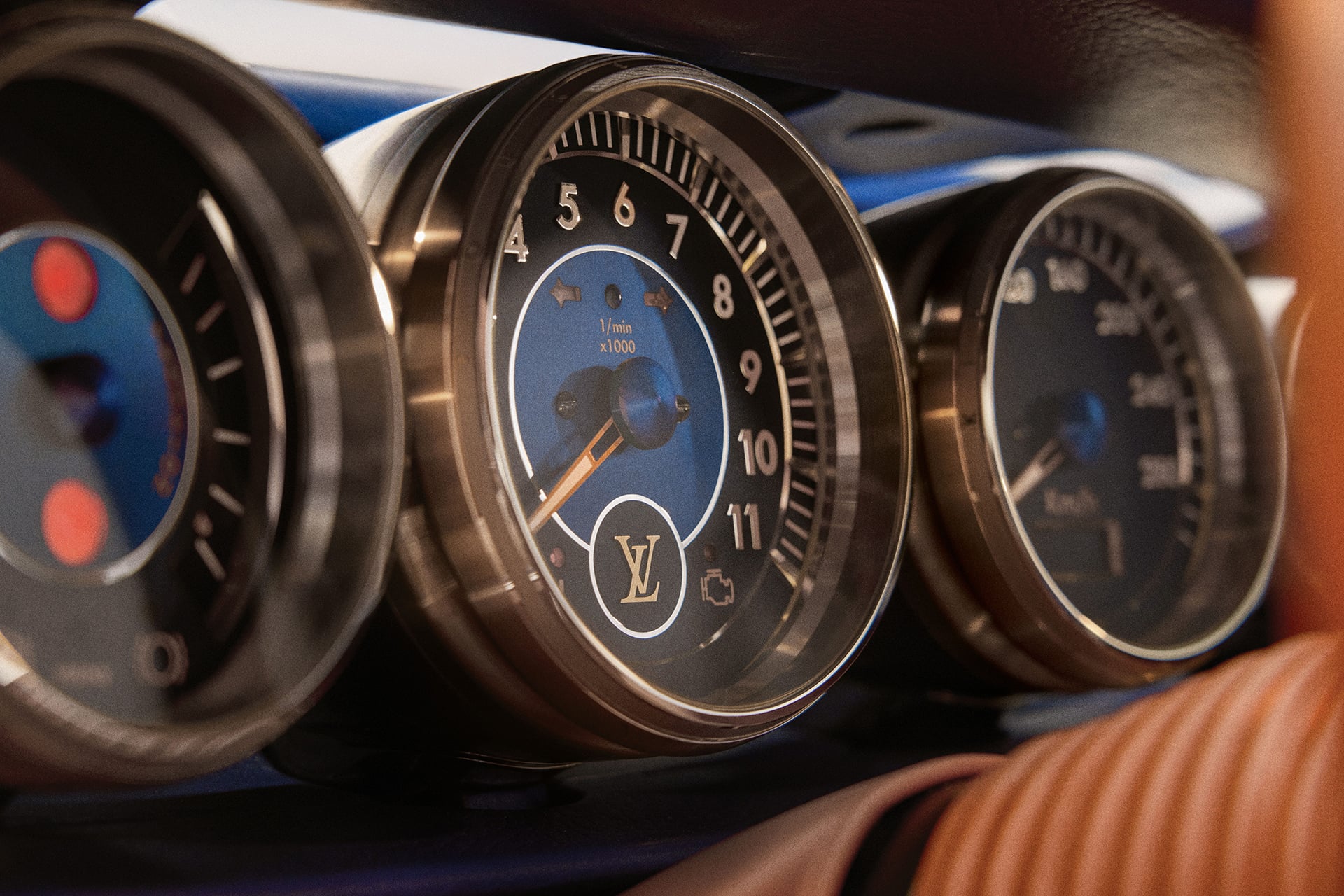
The original piece of the collation is a detachable mechanical Tambour, made by La Fabrique du Temps Louis Vuitton, in Switzerland, which comes out of the dashboard and works as a table clock. Redesigning speedometer, tachometer and dials to accompany it took a year of work: cobalt blue background, orange letters.
Photo: Singer | Disclosure
Ghesquière’s convertible
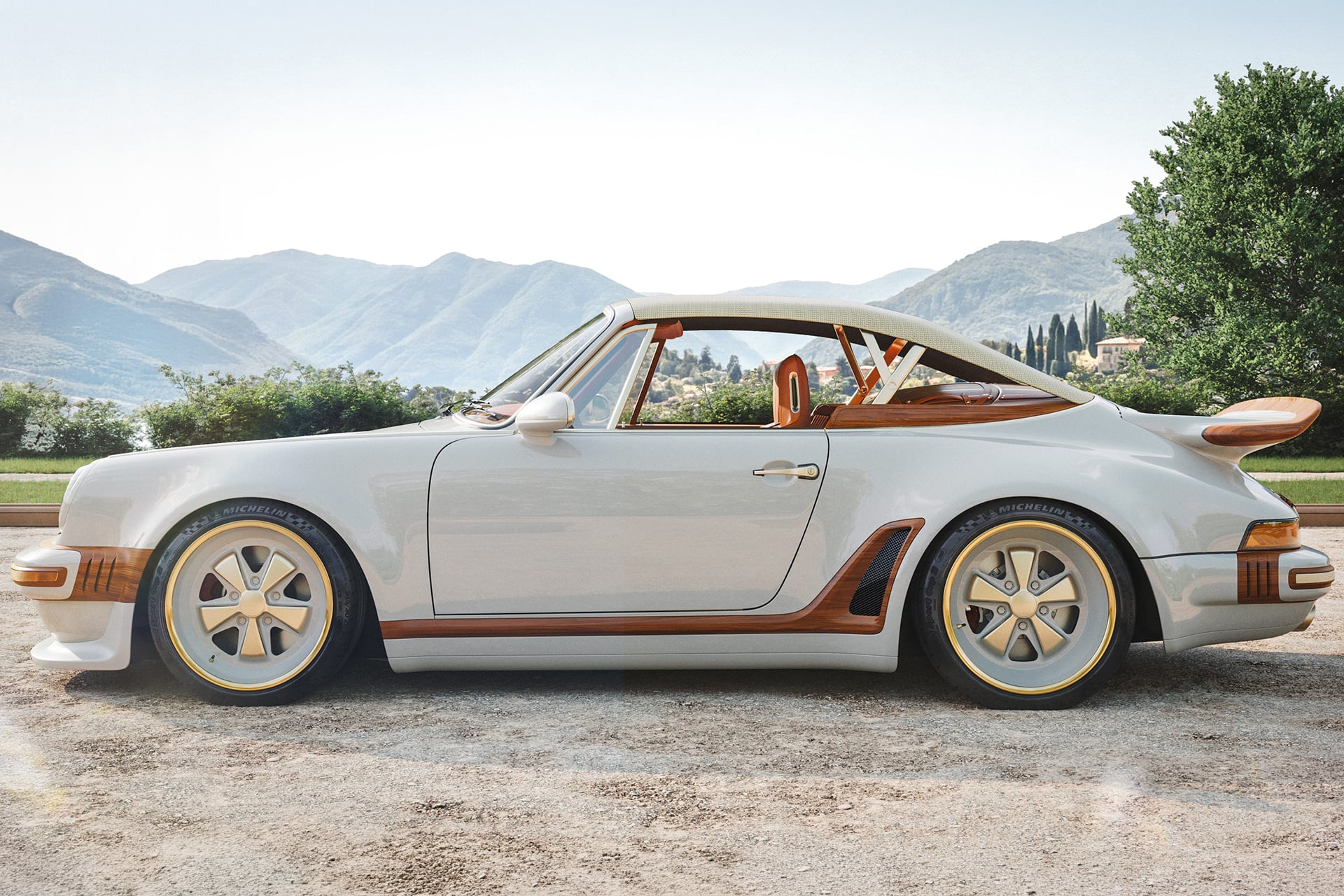
The Classic Turbo model was designed by Nicolas Ghesquière, artistic director of Louis Vuitton’s women’s collections, and mixes nautical and automobile. Calcaire Lutétien white refers to the stone that forms the landscape of Paris, including the brand’s headquarters on the Pont Neuf. The rear trunk opens revealing a varnished wooden deck using the same technique as the runabouts, and even the bumpers have wood. The watch migrates to the center of the console, next to a gold ignition key, and the finish of the lever mimics the cord of the Noah bag.
Mechanically, the coupe has a 4.0-liter air-aspirated boxer engine and the convertible, a 3.8-liter biturbo engine with air-to-water intercooler , both with a six-speed manual transmission, rear-wheel drive and carbon-ceramic brakes. The power was not disclosed.
Each car comes with its fashion capsule. The coupe got a leather jacket, perforated gloves, carbon and fiberglass jet helmet, the LV Rally shoe and the board made in Angers, with light oak and walnut marquetry; the skis come from the Alps, in wood, titanal and steel. The convertible comes with a tailored suit in parachute silk, a 40 mm Tambour Automatic watch in ceramic and yellow gold, and a Coffret Trésor — a case created by Georges Vuitton in 1896 — to store the two watches. Prices were not revealed.
Comments are the sole responsibility of their authors and do not represent the opinion of this site. Comments containing profanity or offensive language will not be published. If you identify anything that violates the terms of use, please report it.