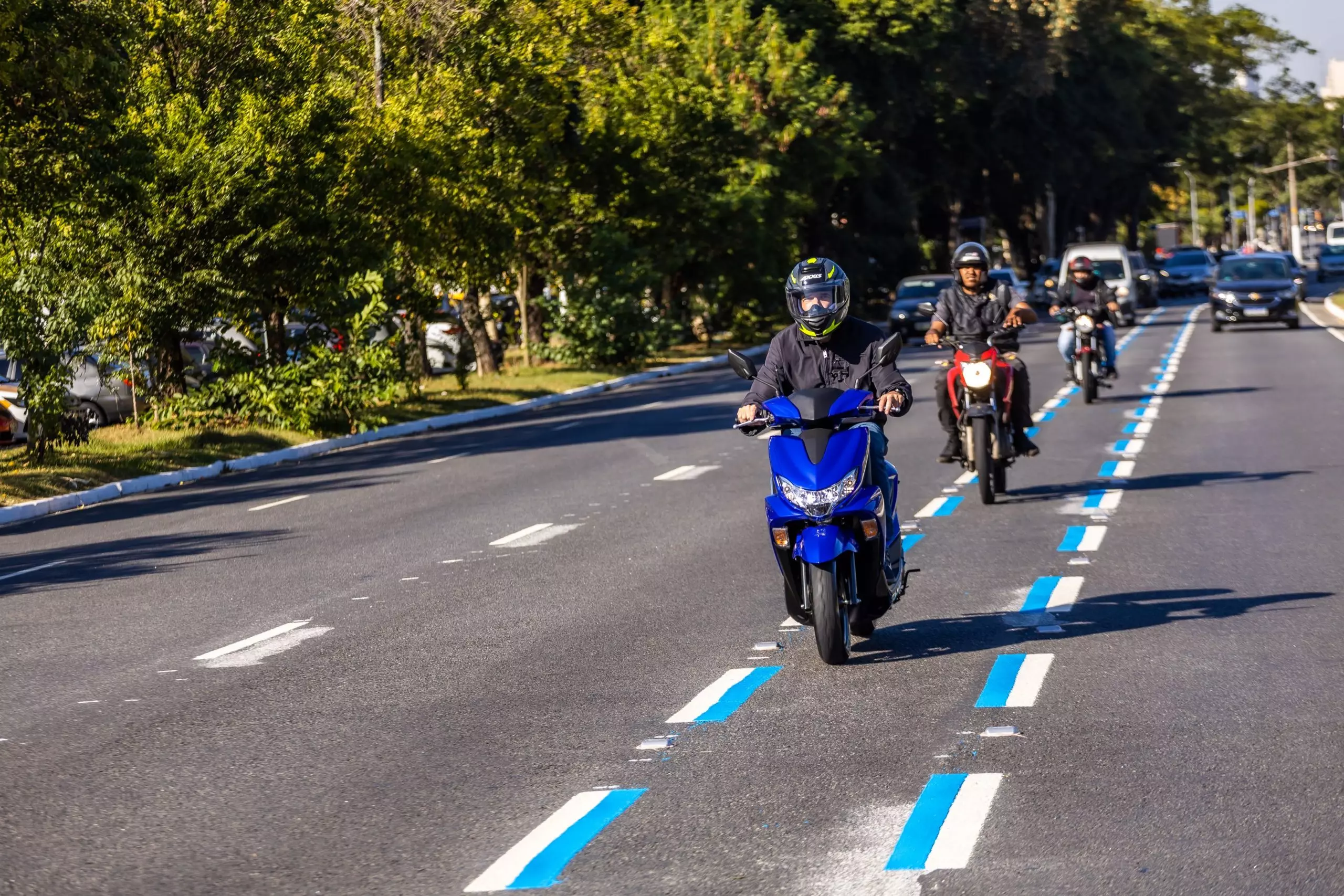
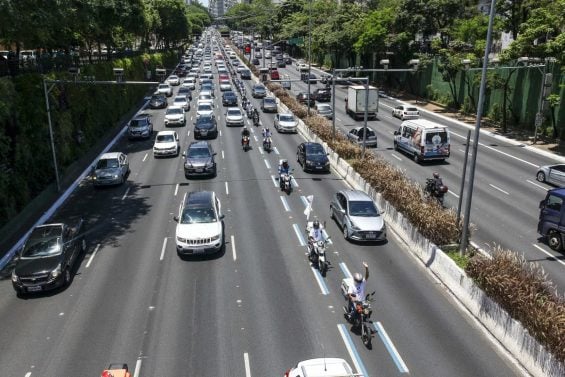
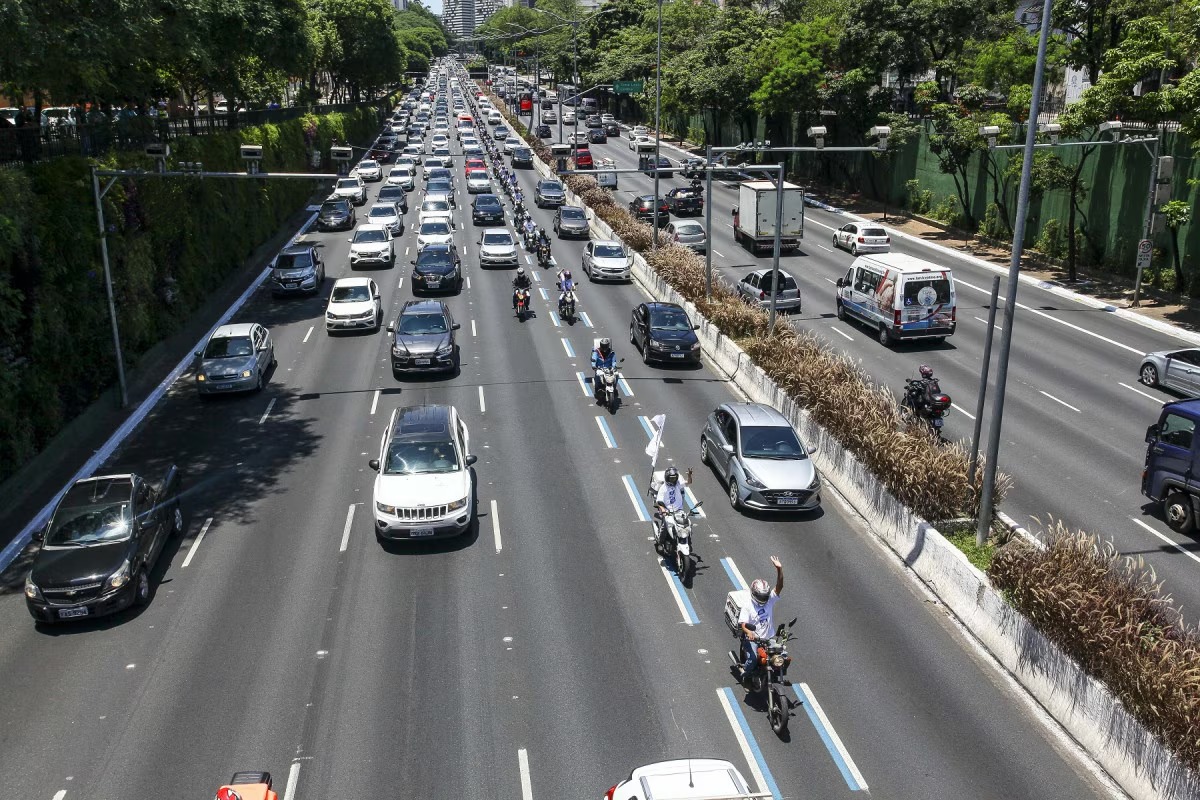
The Traffic and Transport Commission of the Chamber of Deputies approved Bill 1656/25, which proposes the nationalization of the “Blue Belt”, signage aimed at the safety of motorcyclists that has been applied in São Paulo (SP). The proposal seeks to standardize the preferential corridors on capital roads, in the Federal District and on highways with a high flow, making official a space that is already informally occupied by two-wheeled vehicles.
Inspired by urban mobility experiences such as those implemented in São Paulo, the measure establishes that the preferential lane must be strategically positioned between lane 1 (on the left) and lane 2. The central objective is not the creation of a segregated road, but the clear demarcation of a safety corridor to organize the flow and minimize conflicts between cars and motorcycles.
The rapporteur of the matter, deputy Flávio Nogueira (PT-PI), defends the initiative as an essential management tool. According to the approved opinion, the officialization of the blue lane acts both in reducing the lethality of accidents and in improving fluidity, bringing more predictability to urban and road travel.
A relevant point of the text is the limitation of the scope: the mandatory implementation is restricted to capitals and highways under federal or state jurisdiction. The decision aims to spare smaller municipalities from administrative and financial burdens that could overburden local managements without there being a real traffic demand that would justify the intervention.
Next steps in the Chamber
The project is being processed in a conclusive manner, which dispenses with the vote in plenary if there is consensus in the committees. Now, the matter goes to the analysis of the Commission on Constitution and Justice and Citizenship (CCJ). If approved, the proposal will be forwarded to the Federal Senate before going to presidential sanction and definitive integration into the country’s traffic rules.
Comments are the sole responsibility of their authors and do not represent the opinion of this site. Comments containing profanity or offensive language will not be published. If you identify anything that violates the terms of use, please report it.