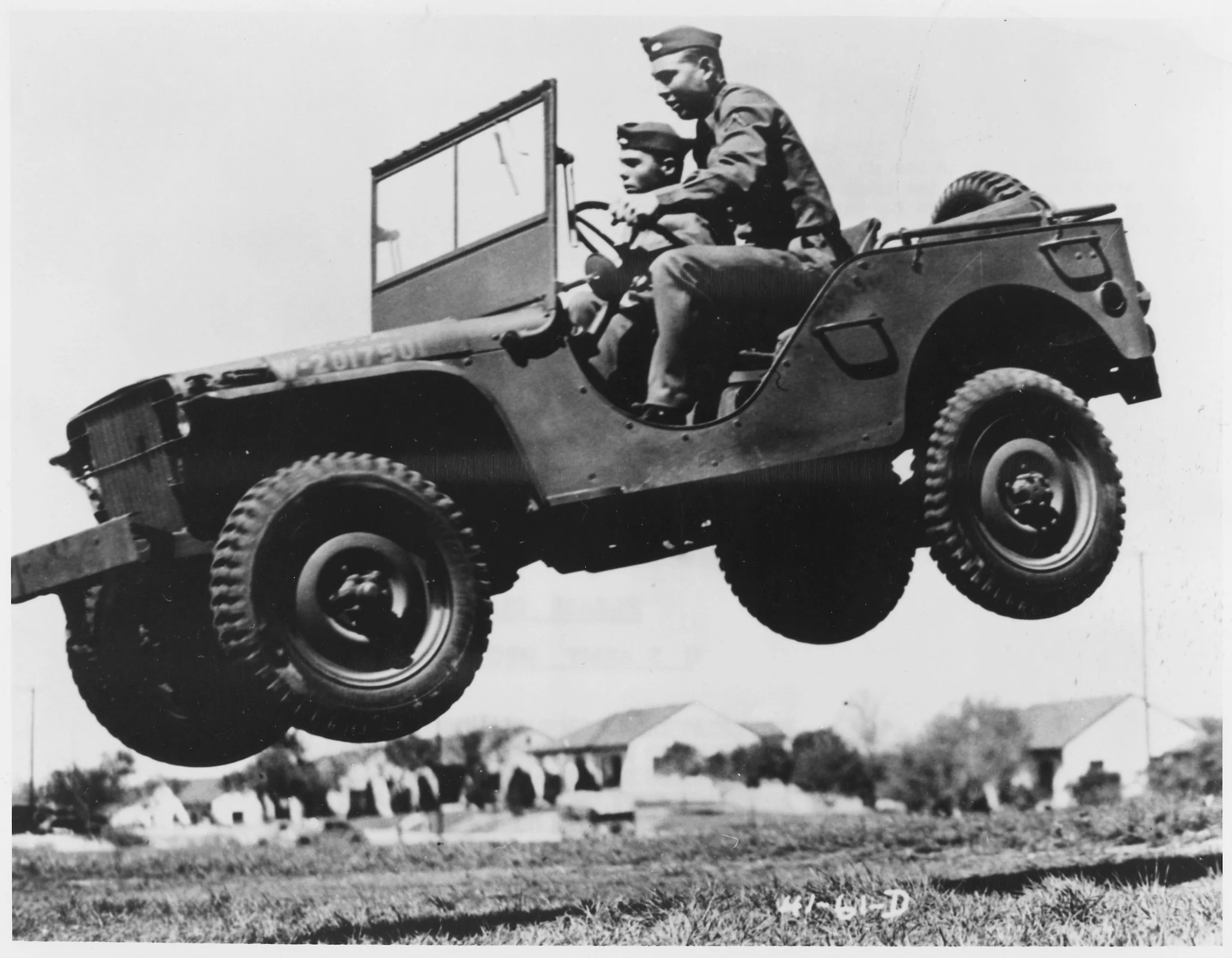
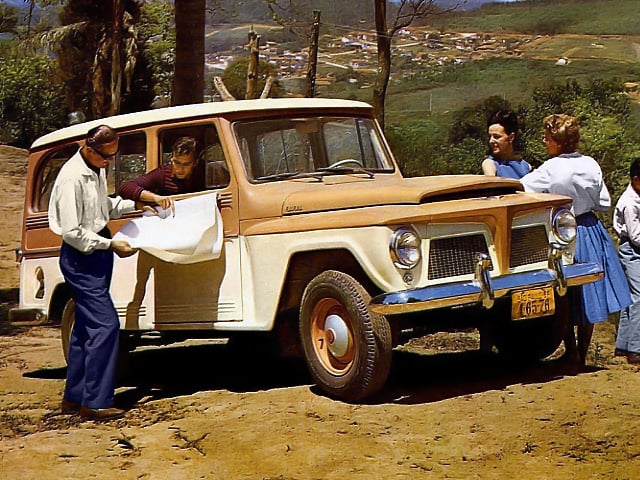
At 85 years old, Jeep carries a biography that begins in the rush of a war and ends up — for now — in the dictionary. The brand now a global synonym of off-road was born to serve in the United States Army, and its first prototype came into the world with a speed unfeasible for today: it was designed, built and delivered for testing in just 49 days by the small American Bantam Car Company. The bet was so successful that General Dwight Eisenhower would come to classify the vehicle as one of the three decisive tools for the Allied victory in World War II.
Even the name is a mystery: the most widespread explanation links “Jeep” to the pronunciation of the military acronym “GP”, for General Purpose . But there are those who defend a more picturesque origin: Eugene the Jeep, a character from the Popeye comics created in 1936, famous for going anywhere and solving any problem. Years later, American soldiers in Korea would still coin a humorous acronym for the utility — Just Enough Essential Parts.
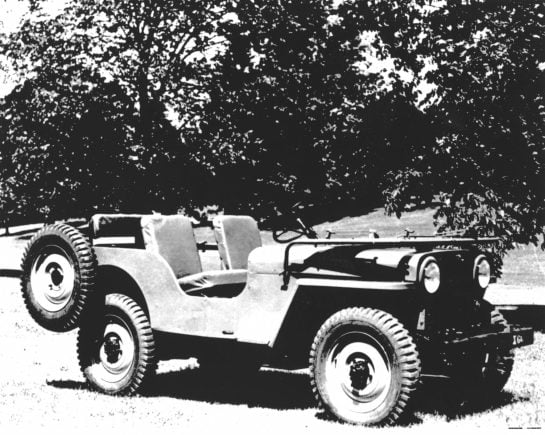
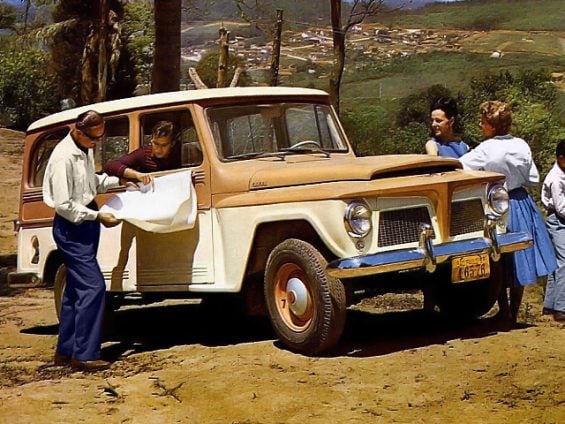
The design of the Jeep is a catalogue of solutions born out of necessity. The famous seven-slit grille, for example, did not come from an aesthetic whim: the military model had nine grooves, reduced to seven in the civilian CJ-2A of 1945 to make room for the larger headlights required on the streets. The first tires had a symmetrical tread, a trick to prevent the enemy from deducing the direction of the vehicle just by observing the marks in the mud. And in the postwar period, the shortage of heavy stamping forced the designers of the Willys Wagon to limit curves and body depths, so that the sheets could be molded by refrigerator manufacturers. In Brazil, the nationalized Rural still won a discreet tribute: the division of the front grille was inspired by the columns of the Alvorada Palace.
Off the trails, the utility vehicle reinvented itself in each country it passed through. In Colombia, the old models became the “Yipaos”, pack horses of the crop that today star in a festival of decorated vehicles. In the Philippines, carcasses abandoned by American troops were elongated and painted in vibrant colors until they became “Jeepneys”, the backbone of local public transport.
The brand also flirted with technological exaggeration in the 2005 Hurricane prototype, equipped with two V8 Hemi engines and capable of walking sideways, like a crab, or rotating 360º on its own axis. Add to this the passage through Hollywood — from Jurassic Park to Batman v Superman — and more than 400 video games, and it’s easy to understand why “jeep” ended up becoming an entry: Jeep is the only automaker to baptize a word from the dictionary of the Portuguese language.
In Brazil, the story has an address and a date: in 1947, the first units of the CJ-2A arrived at the port of Rio in crates, semi-disassembled and coming from Toledo, Ohio, to be assembled in a warehouse in Nova Iguaçu, in the Baixada Fluminense. Almost always painted gray-green, they were sold in four versions, from A to D. Then came the CJ-3B, assembled in São Bernardo do Campo (SP) with a higher grille and hood to accommodate the Hurricane engine, and, in 1966, the brand’s first factory in the Northeast, in Jaboatão dos Guararapes (PE), then operated by Willys-Overland do Brasil — a period that had the Jeep Chapéu de Couro as its greatest symbol.
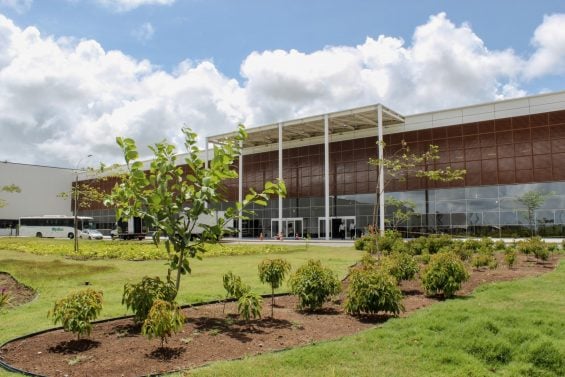
Jeep plant in Goiana (PE) (Photo: Jeep | Disclosure)
Today production is concentrated at the Goiana Automotive Complex (PE) and the Porto Real (RJ) plant, but the traces of that first utility vehicle are still in sight: the “X” design of the Renegade taillights and the new Avenger is a direct tribute to the fuel cans that soldiers attached to the rear of 1940s models. According to Hugo Domingues, head of Jeep for South America, the country is not only a strategic market, but “one of the most important chapters” in the history of the brand, which for almost eight decades has followed the development of the national industry and created a rare affective bond with the consumer.
Comments are the sole responsibility of their authors and do not represent the opinion of this site. Comments containing profanity or offensive language will not be published. If you identify anything that violates the terms of use, please report it.