BYD would have ordered ten more cargo ships with a capacity of 9,200 units (CEU) each, which would bring the Chinese automaker’s own fleet to 18 vessels. The information is from the maritime transport publications New Ships and Assafina Online and has no official confirmation from the company.
The ships would be built by China Merchants Industry at the Jinling and Haimen shipyards, with deliveries expected between 2027 and 2029. The value of the contract was not disclosed, and neither BYD nor the shipyard commented on the deal.
The vessels are PCTC (Pure Car and Truck Carrier) types, made only to transport vehicles. The order would add 92,000 CEUs to the current capacity, bringing the fleet to more than 130,000. The unit measures space on board, not the number of cars shipped per year.
Own fleet as a response to tariffs
Photo: BYD | Disclosure
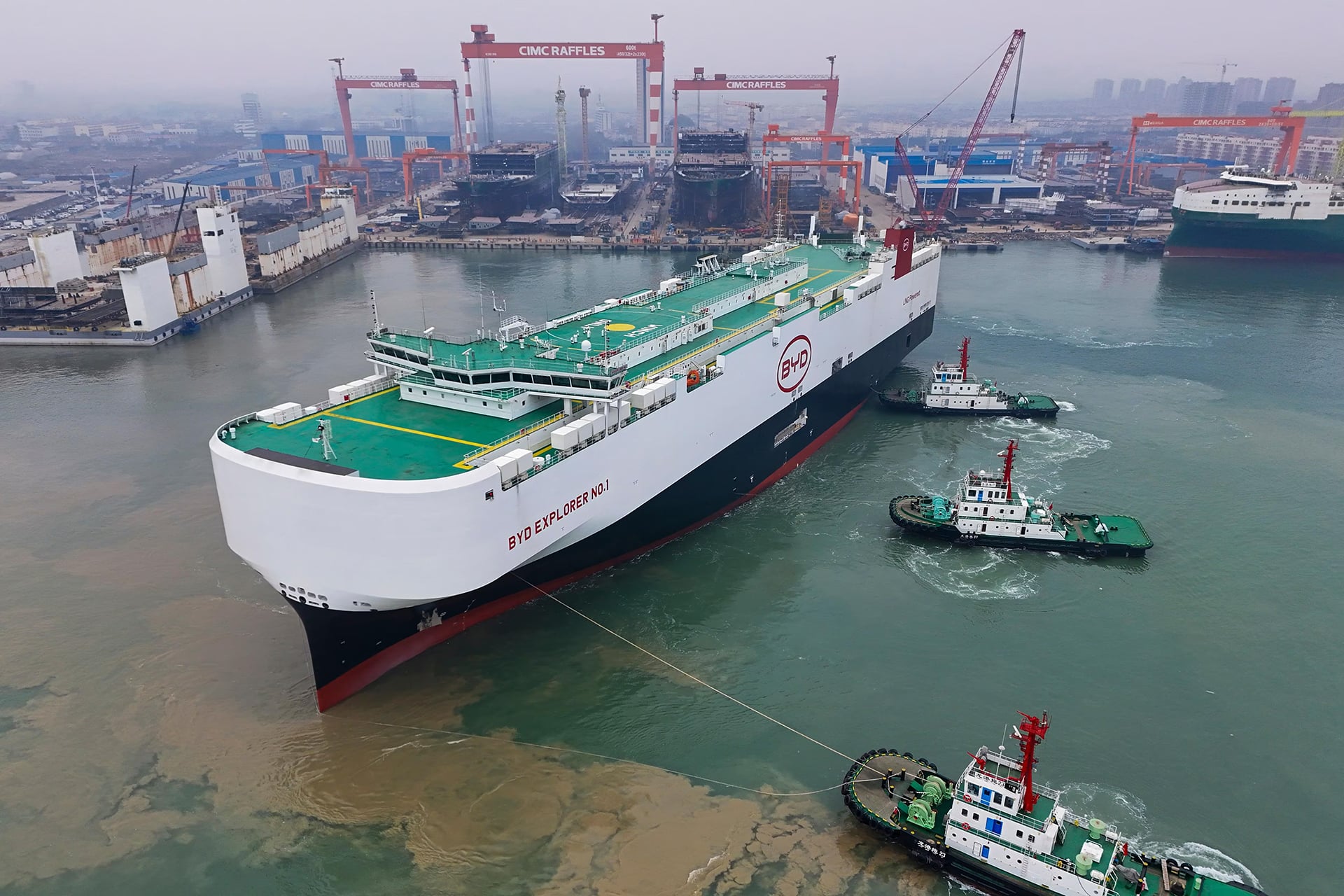
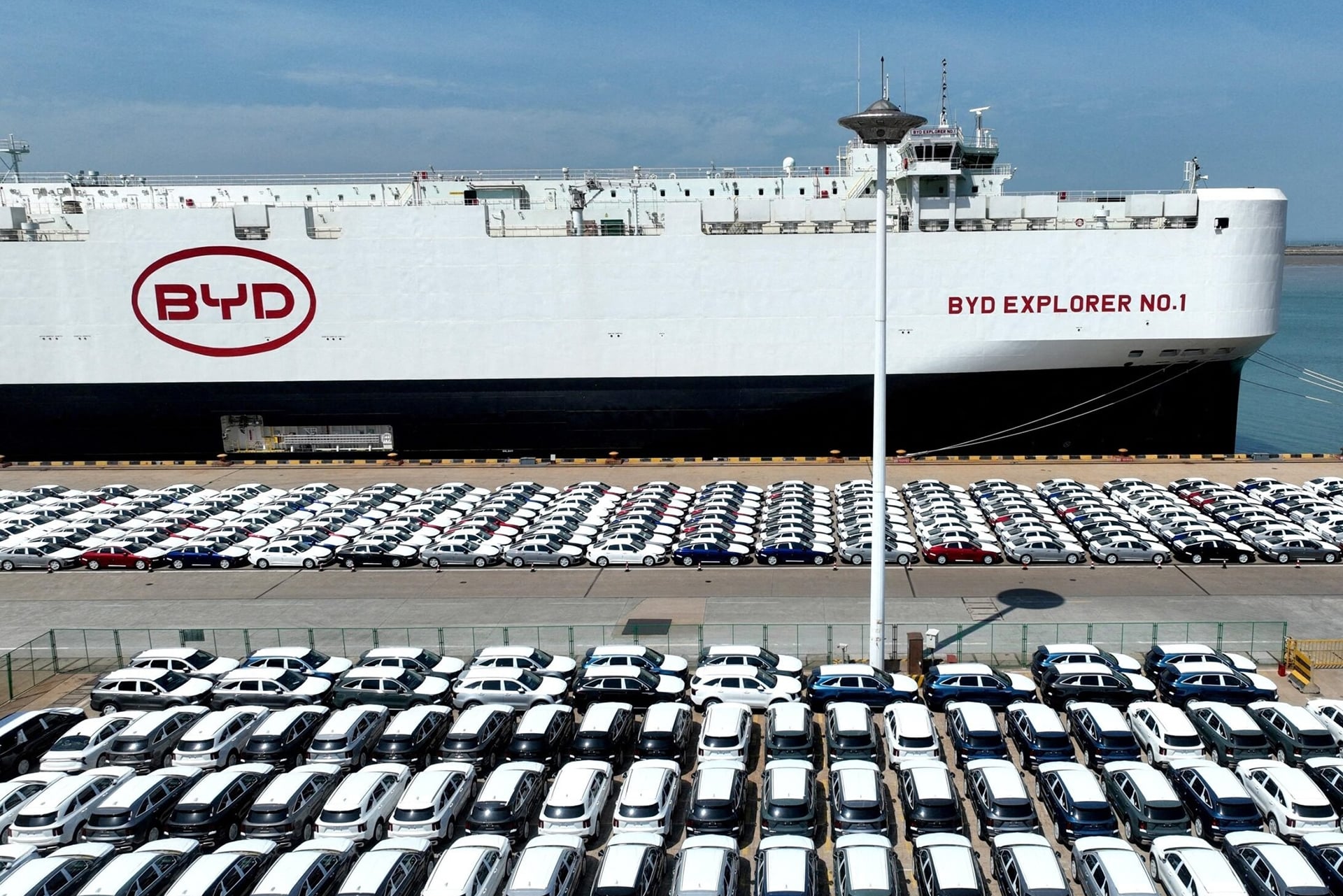
BYD completed its first fleet of eight ships in September 2025, when the BYD Jinan went into operation. All are of the RoRo (roll-on/roll-off) type, in which vehicles embark and disembark on their own wheels, without the need for containers, and have a capacity for 7,200 or 9,000 cars, depending on the model.
The first of them, Explorer No. 1, was delivered in January 2024 and, according to CIMC, responsible for the construction, passed on to the shipowner Zodiac Maritime and chartered by BYD. With a declared capacity to ship 1 million cars per year in the current configuration, the fleet would reach 2.5 million units per year after the ten new vessels, according to estimates by the CarNewsChina website.
The fleet also serves factories outside China. In September 2025, BYD Zhengzhou took right-hand drive cars from the brand’s Thai unit to the United Kingdom. Vehicles made in Thailand escape the European Union’s anti-subsidy tariffs, which in the case of BYD add up to an additional 17% on top of the 10% already charged.
Exports grow while the Chinese market shrinks
In August, BYD exported 184 thousand passenger vehicles produced in China, up 131% year-on-year and 6% compared to July, according to the Chinese association CPCA. The volume is equivalent to 35.4% of all that the country shipped in new energy cars in the month. From January to August, there were 1.127 million units, 88% more than in 2025.
At home, the scenario is reversed. The BYD brand sold 184 thousand cars in China in August, down 35% over the same month last year. In the first eight months of 2026, there were 1.15 million units in the domestic market, a decrease of 43%.
Brazil occupies a central position in this gear. BYD’s largest market outside China, the country is home to the Camaçari (BA) plant, which started production in July 2025 and, in March, announced export orders for 100 thousand vehicles to Argentina and Mexico. Local production reduces exposure to the 35% import rate that came into effect for electric and hybrid vehicles in July 2026.
Comments are the sole responsibility of their authors and do not represent the opinion of this site. Comments containing profanity or offensive language will not be published. If you identify anything that violates the terms of use, please report it.