


Honda WR-V should get restyling with sunroof and hybrid version
Restyling arrives in October in the Indian market, but the national utility should only receive aesthetic changes after 2028
By
João Paulo Profeta
Published on 2026-09-09 at 04:00 PM
Published on 2026-09-09 at 04:00 PM
Be the first to comment.
Summarize with:
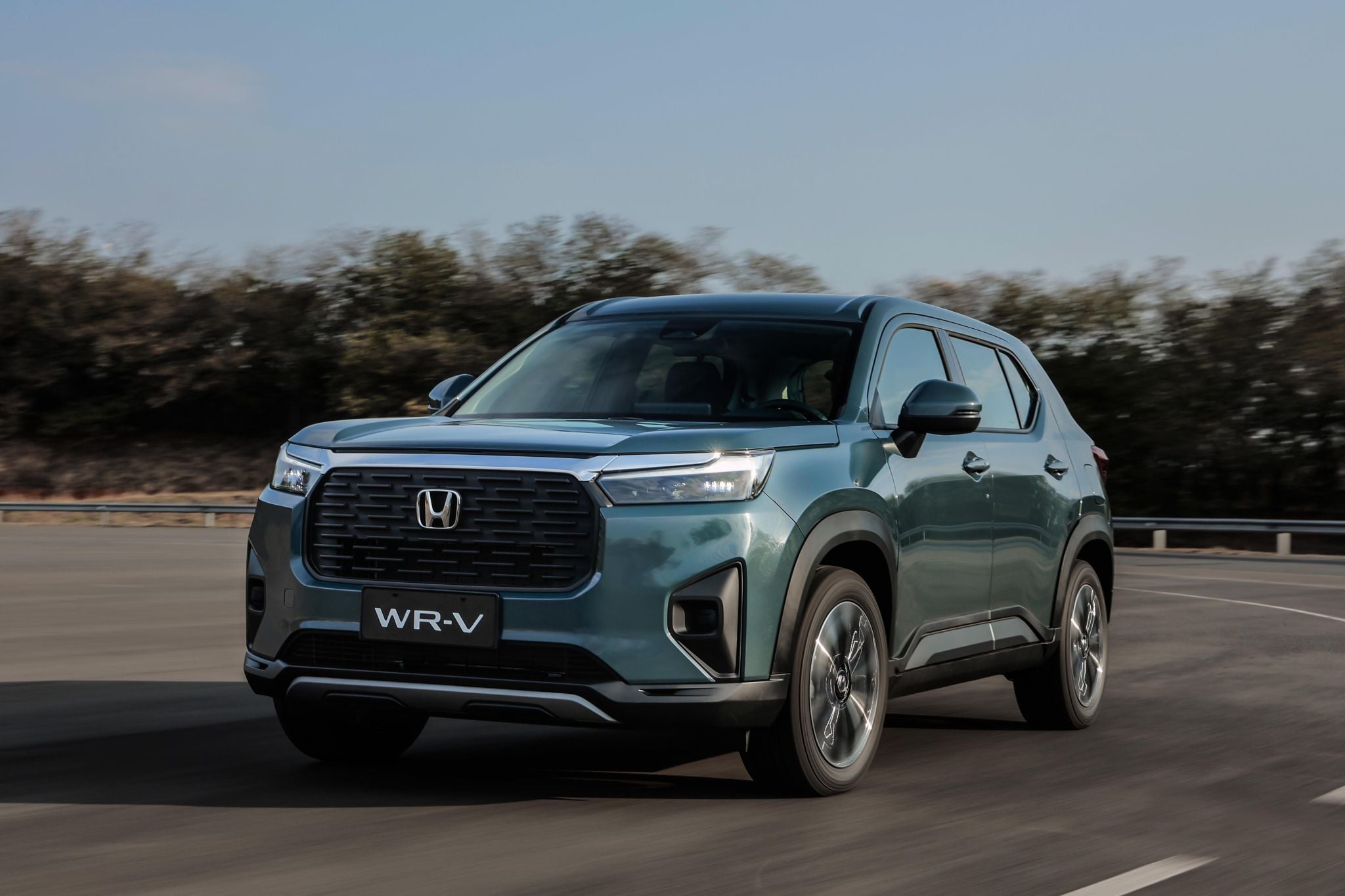
The Honda WR-V, launched in Brazil in October 2025, will already change in Asia, anticipating what may arrive here soon. Sold in India as the Honda Elevate, the compact SUV receives its first restyling in October, with a panoramic sunroof, two-zone air conditioning and ventilated seats on the equipment list, in addition to a hybrid version planned for the 2027 lineup. The information is from the Autocar India website, and the anticipation of the renewal has a clear reason: lower-than-expected sales.
With an average of 1,900 registrations per month and about 17 thousand units accumulated in the last ten months, the model fell behind in the dispute with Hyundai Creta, Kia Seltos and Toyota Hyryder. The manufacturer’s response is to include convenience and assistance items that rivals have been offering for a longer time.
Panoramic sunroof and more affordable Honda Sensing
In the cabin, in addition to the sunroof, there are new seat coverings, a modified finish pattern, electric adjustment for the passenger and a revised multimedia center. It’s no minor detail: in AutoPapo’s evaluation of the Brazilian launch, the simple finish (which is not the same, but similar to that of the Indian model) was pointed out as one of the vehicle’s weak points.
Safety also changes levels in the cheaper versions of the Indian catalog, which now receive the Honda Sensing package — with autonomous emergency braking and lane keeping assistant — combined with a 360-degree camera from the factory.
On the outside, the changes focus on the ends, a common strategy in restyling to avoid high bodywork costs. The front gets a reformatted grille, new bumpers and new internal distribution of LED lights in the headlights. At the rear, the taillights receive a different light signature, and the alloy wheels are now 17 inches.
e:HEV hybrid is the fundamental
change The current mechanics remain intact: 1.5-liter aspirated four-cylinder gasoline engine, with 121 hp and 14,8 kgfm, associated with a six-speed manual transmission or CVT automatic — the same set as the City sedan. For the 2027 line, however, the local press indicates the arrival of a variant with the full e:HEV hybrid system, which combines the same 1.5 with electric propulsions and already equips the City in other Asian markets. It would be Honda’s answer to the advantage of electrified competitors.
In India, the SUV currently costs between R$ 63 thousand and R$ 87 thousand in direct conversion (1.18 million to 1.63 million rupees), values that should rise with the new equipment.
Meanwhile, the national WR-V is produced in Itirapina (SP) and uses the 1.5 flex direct injection, with 126 hp and 15,8 kgfm in ethanol, always with CVT — a configuration that the Indian version does not have. The Honda Sensing package, which in India is now being democratized, is already standard on the two Brazilian versions, EX and EXL, offered from R$ 144.900 at launch. The aesthetic changes, these, should only land in Brazil after 2028.
SEE MORE ABOUT

0 Comments
Comments are the sole responsibility of their authors and do not represent the opinion of this site. Comments containing profanity or offensive language will not be published. If you identify anything that violates the terms of use, please report it.