

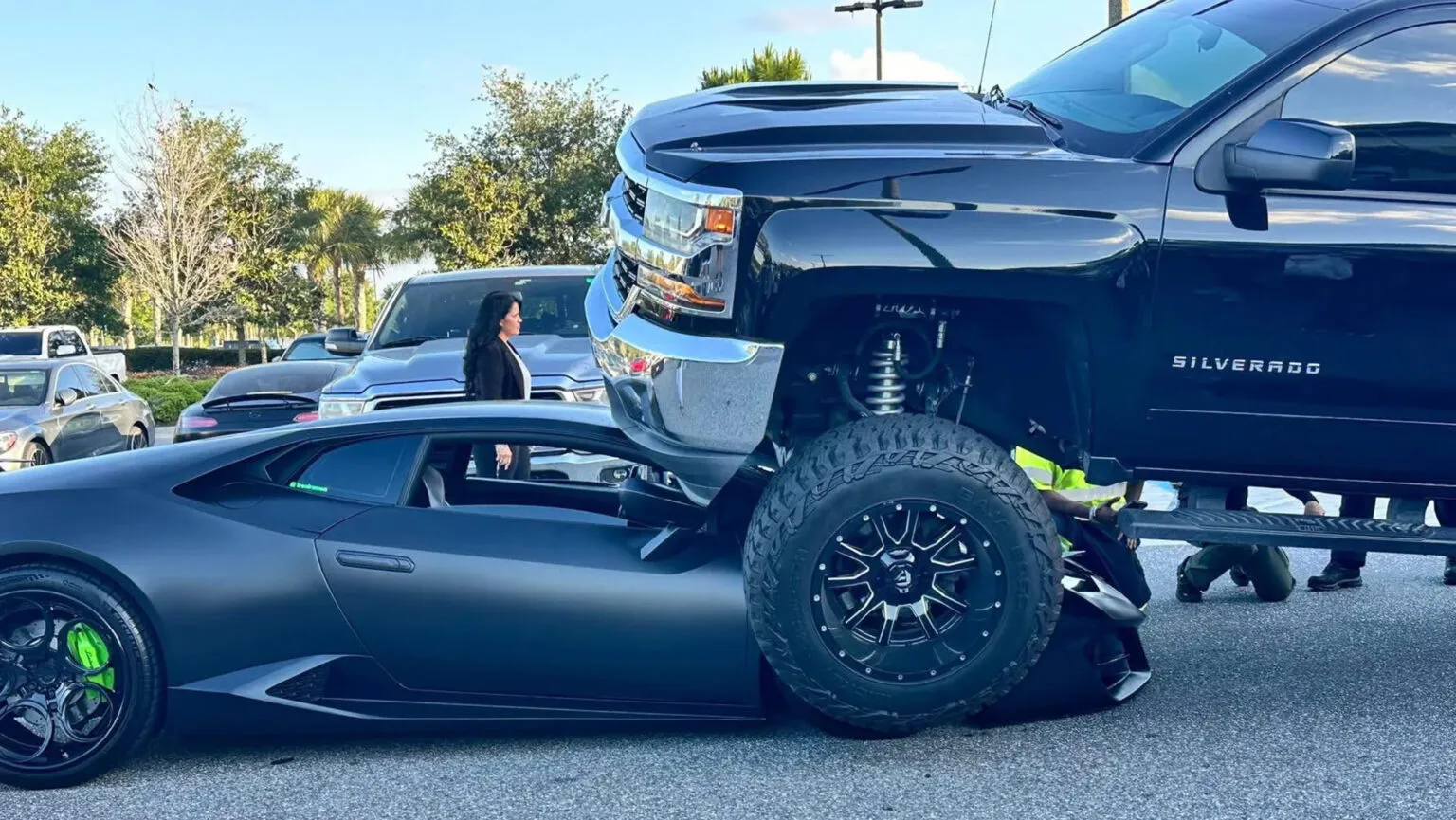
Giant Chevrolet Silverado runs over Lamborghini in the US and owner doesn’t even notice
Incident without injuries exposes visibility risks and structural incompatibility between vehicles with altered suspension and low cars
By
Júlia Haddad
Published on 2026-04-27 at 10:00 AM
Updated on 2026-04-27 at 10:26 AM
Published on 2026-04-27 at 10:00 AM
Updated on 2026-04-27 at 10:26 AM
Be the first to comment.
Summarize with:
A Chevrolet Silverado with raised suspension ran over a Lamborghini Huracán in a parking lot in the United States, generating debate about the visibility risks in modified large vehicles, common in the country. The incident, recorded on video, shows the pickup advancing on the front of the Italian supercar, which was practically stationary at the time of impact. Despite significant material damage to the sports car, there were no injuries.
The images suggest that the driver of the Silverado entered the parking lot at a speed incompatible with the location, while the Huracán was traveling slowly. The absence of braking marks or swerving maneuvers indicates that the driver did not even notice the presence of the Lamborghini. The pickup only stopped after the front wheels rose completely over the hood and windshield of the low vehicle.
SEE ALSO:
- Honda leaves South Korea under pressure from BYD
- Porsche is successful in Brazil, but fame comes at a cost
- Pickup stolen 40 years ago found intact in lake in the US
The case illustrates the concept of “collision mismatch”, a recurring problem when vehicles of extreme heights interact. In cars with original suspension, the bumpers are designed to absorb the impact. However, with the elevation of the Silverado, the pickup’s protective structure passes over the Lamborghini’s crumple zone, directly hitting sensitive areas such as the passenger compartment.
In addition to the structural risk, the suspension lift and the use of larger tires severely widen frontal blind spots. In modified models, the invisibility area in front of the hood can hide not only low cars, but pedestrians, cyclists, and animals. Currently, the legislation for these changes focuses more on height limits than on maintaining direct visibility standards for the driver.
Road safety experts question whether driving these urban “monsters” should not require a specific license. While pickup trucks grow in size and popularity, the lack of rigor in proving safety after homemade or accessory modifications remains a critical point for peaceful coexistence in traffic and common areas.
SEE MORE ABOUT

0 Comments
Comments are the sole responsibility of their authors and do not represent the opinion of this site. Comments containing profanity or offensive language will not be published. If you identify anything that violates the terms of use, please report it.