


Free 15-minute ticket in the Blue Zone becomes law in Congress
Rule reaches the spaces operated by municipal traffic agencies and creates a new signaling requirement; the bill still needs to pass through the Senate
By
Júlia Haddad
Published on 2026-09-10 at 04:00 PM
Published on 2026-09-10 at 04:00 PM
Be the first to comment.
Summarize with:
The Commission on Constitution and Justice and Citizenship (CCJ) of the Chamber of Deputies approved, in a conclusive manner, Bill 4884/19, which frees drivers from paying for the first 15 minutes of rotating parking on public roads — the system known in much of the country as the Blue Zone. The vote took place on Wednesday (9).
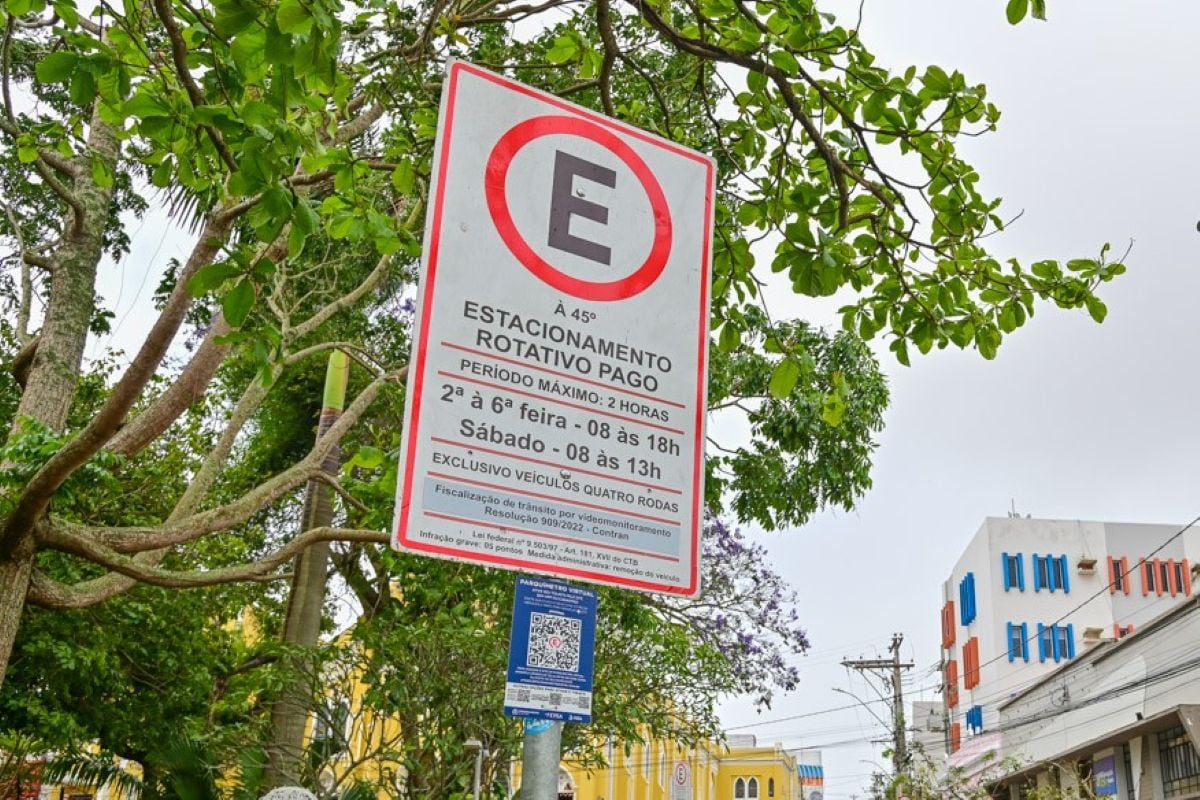
According to the text, the gratuity is valid for the spaces implemented, maintained and operated by the executive traffic bodies and entities of the municipalities. If the stay does not exceed 15 minutes, there is no charge. The proposal amends the Brazilian Traffic Code (CTB), which today does not set a grace period: the charging rules are defined by each city hall.
The obligation does not stop at the exemption: municipalities will also have to inform the free period in the signage of the vacancies and in the applications used to charge the rotary, which requires adjustment both in the signs and in the digital systems contracted by the city halls.
In practice, the change affects those who only need the space for a few moments — to leave a package, withdraw money or pick up someone at the door of a building. Municipal rotary systems usually sell time in blocks, which forces the driver to buy 30 minutes or an hour even when it is much less than that.
Less bureaucracy in quick
stops The bill is authored by Deputy AJ Albuquerque (PP-CE) and has been pending in the Chamber since 2019 — seven years between its presentation and this Wednesday’s vote. When reporting the text to the Traffic and Transport Commission, in 2023, Deputy Nicoletti (União-RR) argued that the effect of the measure goes beyond the amount saved: in five- or ten-minute stops, the driver would no longer have to resort to street vendors, shopkeepers or apps to pay for such a short period.
In the CCJ, the rapporteur was Deputy Hugo Leal (PSD-RJ), who recommended approval and made wording adjustments. The main change delimits the competence of each federative entity: the municipality is responsible for implementing, maintaining and operating rotating parking, while traffic regulation continues within the scope of the Union, according to the opinion.
What is missing to become law
Because it has been processed in a conclusive manner, the proposal can go directly to the Senate, without going through the Plenary of the Chamber – unless a parliamentarian presents an appeal to take the text to a vote among the 513 deputies. In the Senate, the project will have to be analyzed in committees and approved before going to the presidential sanction. There is no set deadline for these steps, and the gratuity only takes effect after the law comes into force.
SEE MORE ABOUT

0 Comments
Comments are the sole responsibility of their authors and do not represent the opinion of this site. Comments containing profanity or offensive language will not be published. If you identify anything that violates the terms of use, please report it.