

France turns to the automotive industry to expand production of military drones
Renault, Valeo and Forvia have entered into partnerships with defense companies and could bring the country to 60,000 drones a year, still below what is needed
By
Júlia Haddad
Published on 2026-08-07 at 08:00 PM
Published on 2026-08-07 at 08:00 PM
Be the first to comment.
Summarize with:
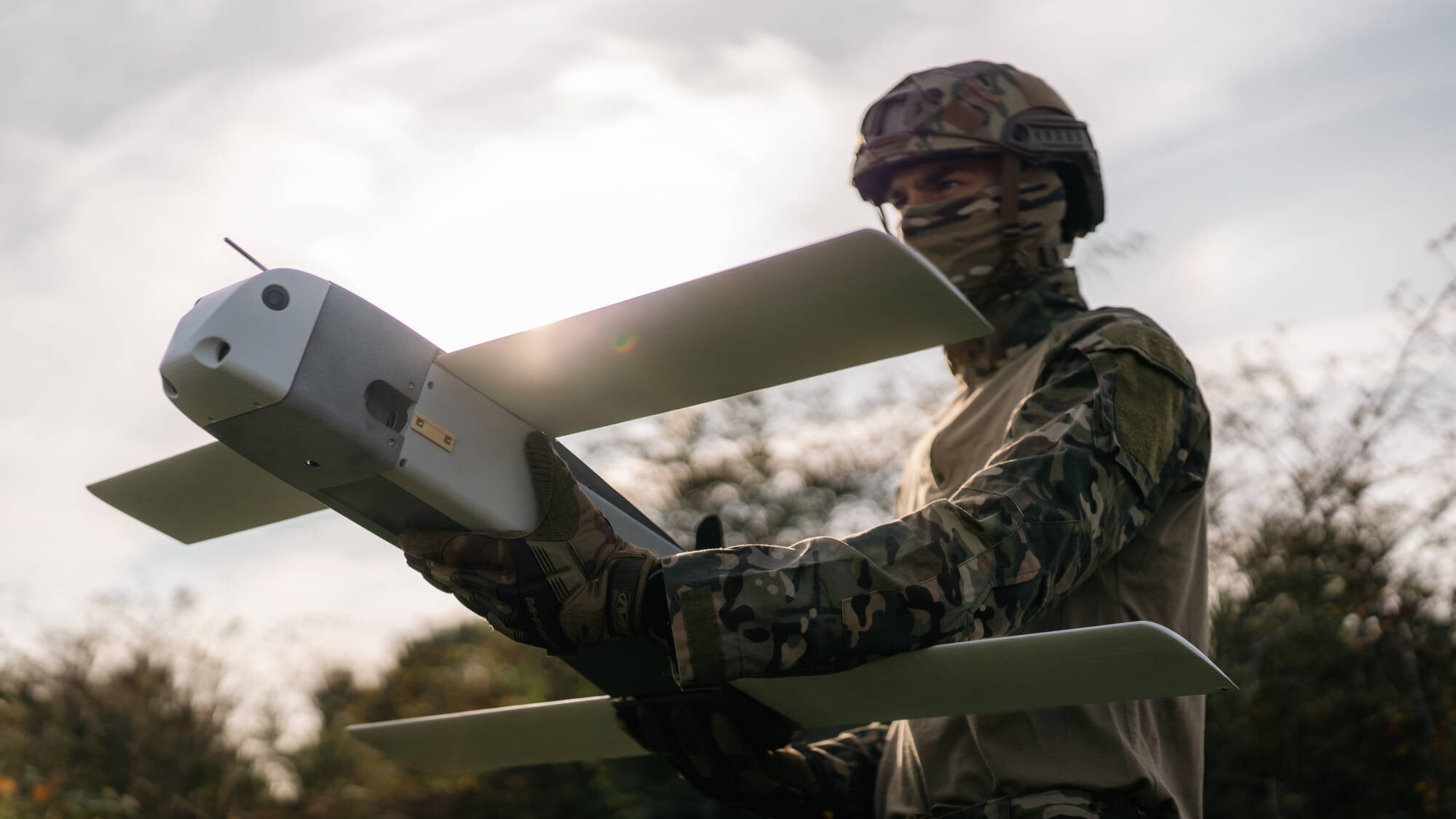
France has turned to its automotive industry to speed up the production of military drones. Since the beginning of the year, Renault and suppliers Valeo and Forvia have announced partnerships with defense companies, in a strategy encouraged by the French government to strengthen the country’s industrial and military autonomy.
The logic is to apply the scale, automation, and efficiency of automotive lines to one of the fastest-growing military segments. “Why now? Because the need is now,” Christophe Perillat, president of Valeo, summarized in July. “And why in France? Because we are asked to guarantee our sovereignty.”
A report by the French Senate’s defense committee, published in July, classified the national stockpile of military drones — estimated at a few thousand units — as insufficient to reach critical mass. The intensive use of the equipment in the war between Russia and Ukraine has changed the way conflicts are conducted, and pressure from the United States for Europe to expand its military capabilities has accelerated the movement.
What has already been announced
Valeo will manufacture electric motors for drones developed by defense technology company Harmattan AI in France. Forvia closed an agreement at the end of July with an unnamed European defense company, which specializes in anti-drone systems assisted by artificial intelligence, and is considering setting up a unit for 1,000 interceptor drones per month in the country.
Renault went further. The automaker is working with Turgis & Gaillard to produce the Chorus long-range drone at its Le Mans plant in the west of the country, where it says it can reach 600 units a month. In June, at the Eurosatory show, it announced a partnership with Thales to industrialize the Toutatis, a teleoperated ammunition — an explosive drone — with a goal of a thousand units per month starting in 2027.
Also in June, French drone manufacturer Delair partnered with Germany’s Schaeffler to install a line in France capable of producing about 100 drones per day by November.
Scale doesn’t solve everything
Together, the capacities of Renault, Schaeffler and Forvia can approach 60 thousand units per year. The volume would remain below what French authorities estimate is necessary in a high-intensity conflict. In December, the government announced 150 million euros (about R$ 884 million) to develop the sector, an amount that part of the industry considers below what is necessary.
There is also the risk of stockpiling equipment that ages quickly. “Drones evolve very quickly,” Patrice Caine, president of Thales, said this year. Therefore, the French bet is less on accumulating an arsenal and more on keeping manufacturing capacity ready to be activated – something that, according to Patrick Pailloux, delegate general for Armaments, a defense startup does not deliver: manufacturing in very high volumes, with production line robots, is another industrial problem.
SEE MORE ABOUT

0 Comments
Comments are the sole responsibility of their authors and do not represent the opinion of this site. Comments containing profanity or offensive language will not be published. If you identify anything that violates the terms of use, please report it.