


Formula 1 decides to shorten races to save fuel
Reduction of two to three laps per race follows the 5% increase in fuel flow forecast for 2027 engines
By
João Paulo Profeta
Published on 2026-09-24 at 03:00 PM
Published on 2026-09-24 at 03:00 PM
Be the first to comment.
Summarize with:
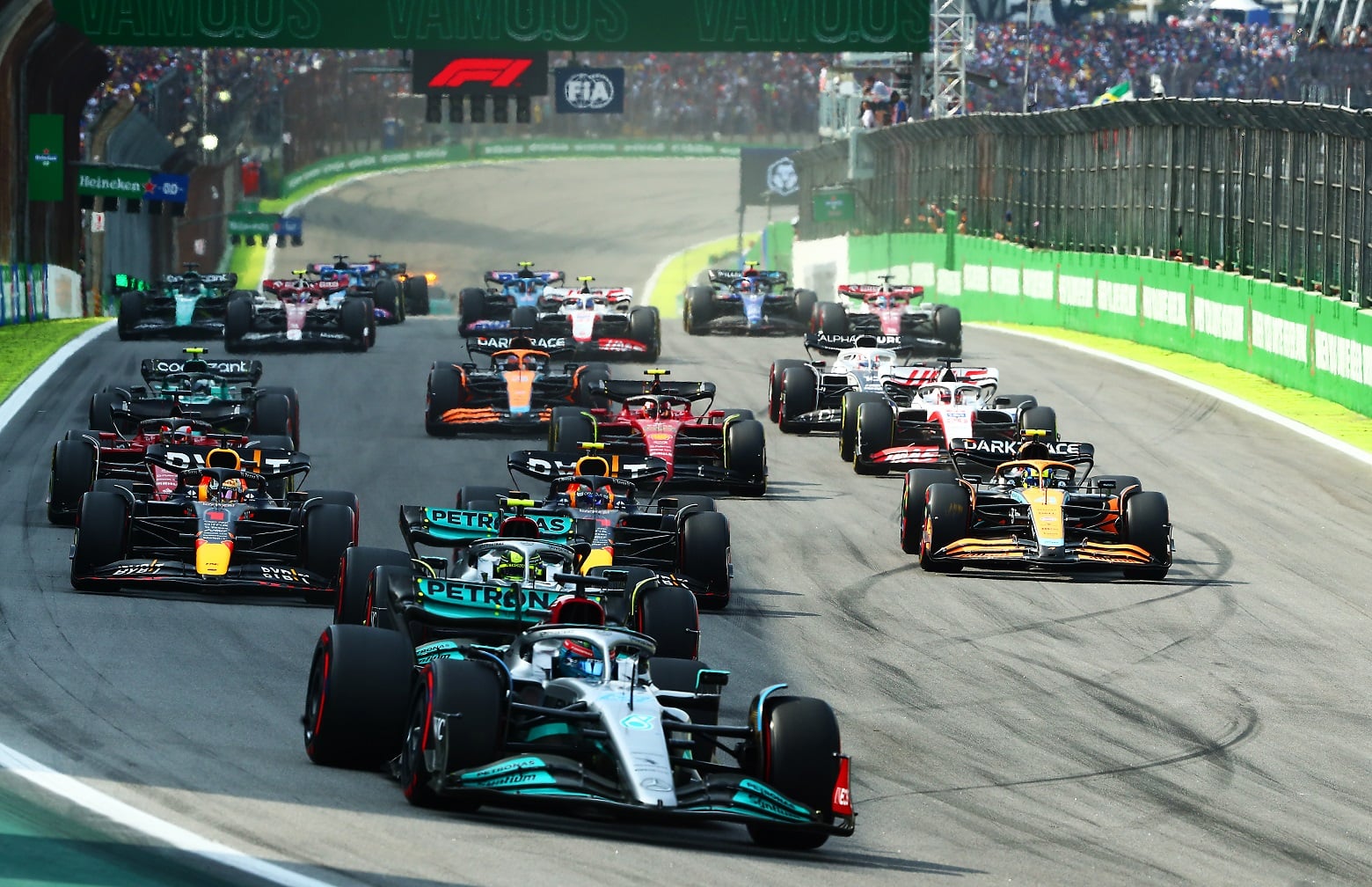
Formula 1 will shorten its races from 2027. The F1 Commission approved this Monday (21), at a meeting at the FIA headquarters in London, the reduction of the standard distance of Grand Prix Prix from 305 km to 290 km – the equivalent of two or three laps less depending on the layout. The decision still depends on ratification by the World Motor Sport Council, a step considered a formality.
The cut responds to the adjustment in the power units scheduled for next year. The flow of fuel released to the combustion engine rises 5%, raising the ceiling of this part of the set from 544 hp to 571 hp. On the other hand, the maximum power of the MGU-K electric motor drops from 476 hp to 408 hp in normal racing conditions, maintaining the peak of 476 hp in overtaking mode.
As a result, the ratio between combustion and electricity goes from the current 53%-47% to 58%-42% in 2027. The final stage, from 60%-40%, was left for 2028, when the fuel flow will be 13% higher than in 2026.
No bigger tank, fewer kilometers
Burning more fuel requires taking more fuel on board. As the tank is integrated into the car’s structure and cannot be expanded without a new chassis, the teams preferred to cut mileage rather than redesign the single-seaters, an option that would raise costs precisely in the year in which they intend to reuse most of the 2026 projects.
The F1 Commission, made up of teams, FIA and commercial rights holders, also changed the stoppage rules. The three-hour ceiling between the start and the end of the race, accounting for interruptions, no longer exists. In its place comes a closing time limit, the hard stop time, adjustable on a case-by-case basis according to the circuit and the natural light available.
The limit of two hours of effective racing remains in effect. According to the FIA, the change seeks to increase the chance for the public to follow the complete race when there is an interruption due to rain or accident. Free practice may also be extended if they are cut by red flags. At the same meeting, the commission approved the end of the homologation of foreign exchanges in 2027, a measure that, according to the entity, preserves the freedom of development of suppliers.
Interlagos should lose three laps
In Brazil, the effect will be felt at Interlagos. The São Paulo circuit has 4.309 km per lap and today completes 71 laps, which is 305.879 km. At the new minimum, the race would drop to 68 laps and about 293 km. The Monaco Grand Prix, a historical exception with 78 laps and 260 km, should not be affected by the rule.
SEE MORE ABOUT

0 Comments
Comments are the sole responsibility of their authors and do not represent the opinion of this site. Comments containing profanity or offensive language will not be published. If you identify anything that violates the terms of use, please report it.