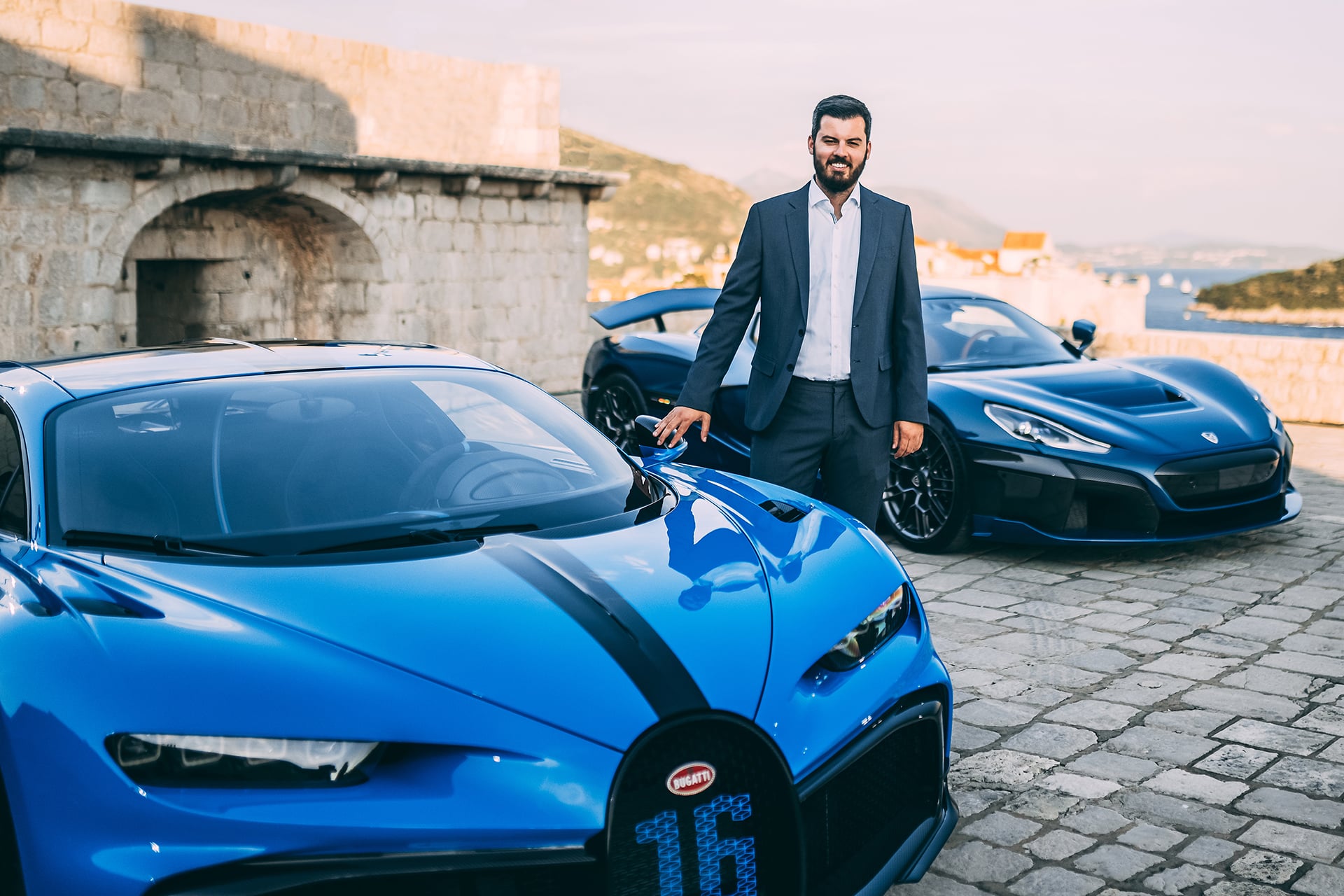
The man who proved that an electric car could humiliate gasoline supercars now says that the combustion engine will survive at the top of the market for a long time. In an interview with CNBC, published on August 25, Mate Rimac said that the industry is splitting in two: everyday cars are moving towards electrification, while sports cars and hypercars will continue to burn fuel.
The argument is not nostalgic, it is commercial. According to the executive, pure performance is no longer a differential. He cites an uncomfortable example for those who charge millions: today it is possible to buy in China, for about R$ 260 thousand (US$ 50 thousand), a car faster than any sports car ten years ago.
The comparison Rimac uses comes from watchmaking. Only about 5 percent of the world’s watches are made in Switzerland, but that’s where most of the industry’s profit lies. A smartwatch does a lot more than a mechanical watch, he said, and yet no one pays the equivalent of $1 million for one.
He fought with shareholders not to make an electric
Bugatti When the Rimac Group took control of Bugatti in 2021, in partnership with Porsche, the executive says he received from Volkswagen and Porsche the mission to launch an electric Bugatti. He already had an electric hypercar ready and admits that transforming it into a Bugatti would be the easiest way. He opted for the most difficult and faced the shareholders themselves.
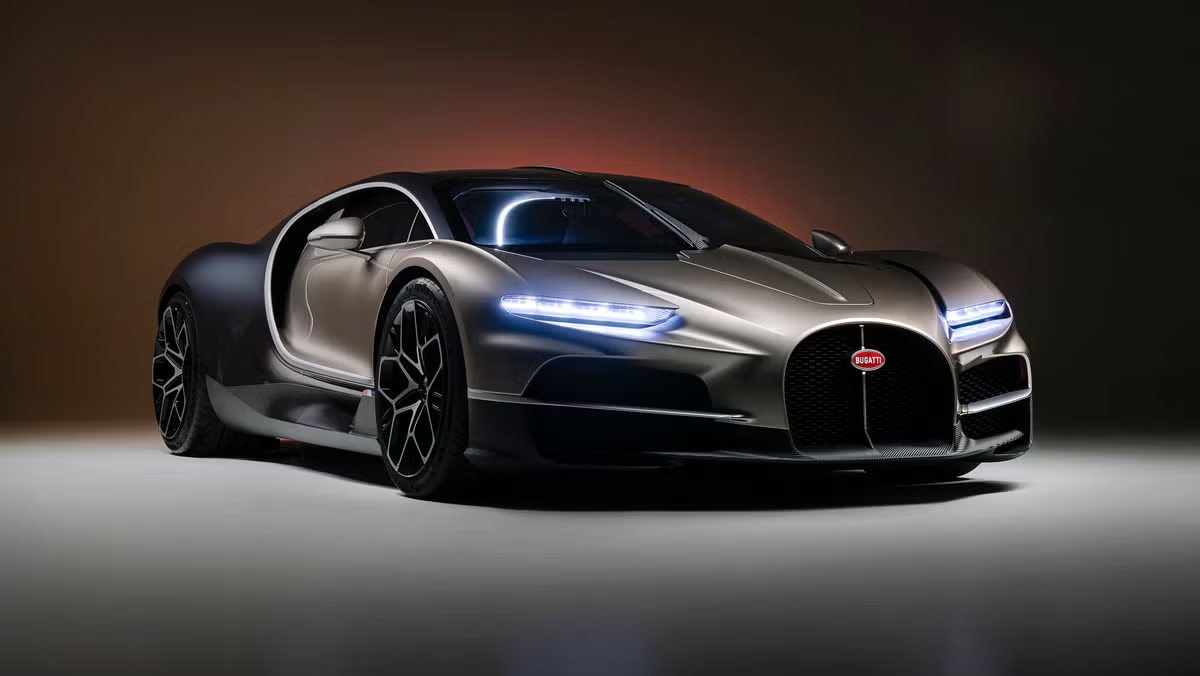
The result was the Tourbillon, successor to the Chiron. Instead of a battery, an 8.3-liter naturally aspirated V16 engine and 1,000 hp, developed in partnership with the British Cosworth, added to three electric motors that yield another 800 hp. The set delivers 1,800 hp and 305,9 kgfm, accelerates from 0 to 96 km/h in 1,9 seconds and reaches 380 km/h, or 445 km/h with the Speed Key.
Photo: Bugatti | Disclosure
A dashboard made by watchmakers
The aesthetic choice follows the same logic. While the market stacks screens, the Tourbillon has an analog instrument panel built in titanium, sapphire and rubies by Swiss watchmakers, mounted behind the steering wheel. It’s no coincidence: tourbillon is the name of a high-precision clock mechanism. The car is assembled in Molsheim, France, and the V16 comes from the group’s factory in Croatia, the same line where the Nevera, an electric hypercar with more than 20 performance records, is born.
The 250 planned units of the Tourbillon are sold, starting at approximately R$ 22.9 million (3.8 million euros). And the list price is just the beginning: according to Rimac, the average buyer spends from R$ 3.1 million to R$ 3.6 million (US$ 600 thousand to US$ 700 thousand) on customization, including exclusive paintings, leathers and tailor-made stitches. For him, the customer in this segment is not buying time back, but an object that tells a story and bears his own signature.
Comments are the sole responsibility of their authors and do not represent the opinion of this site. Comments containing profanity or offensive language will not be published. If you identify anything that violates the terms of use, please report it.