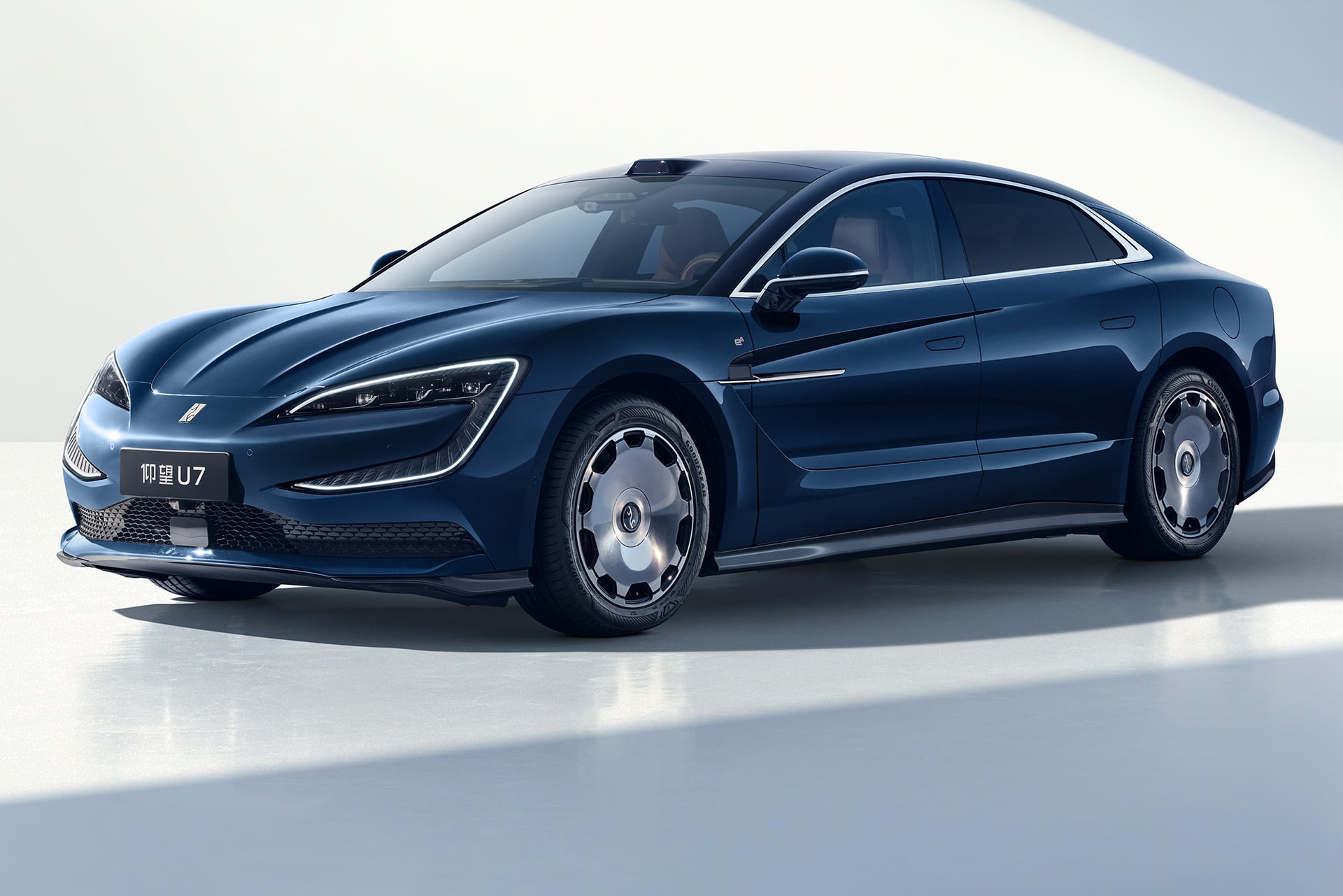
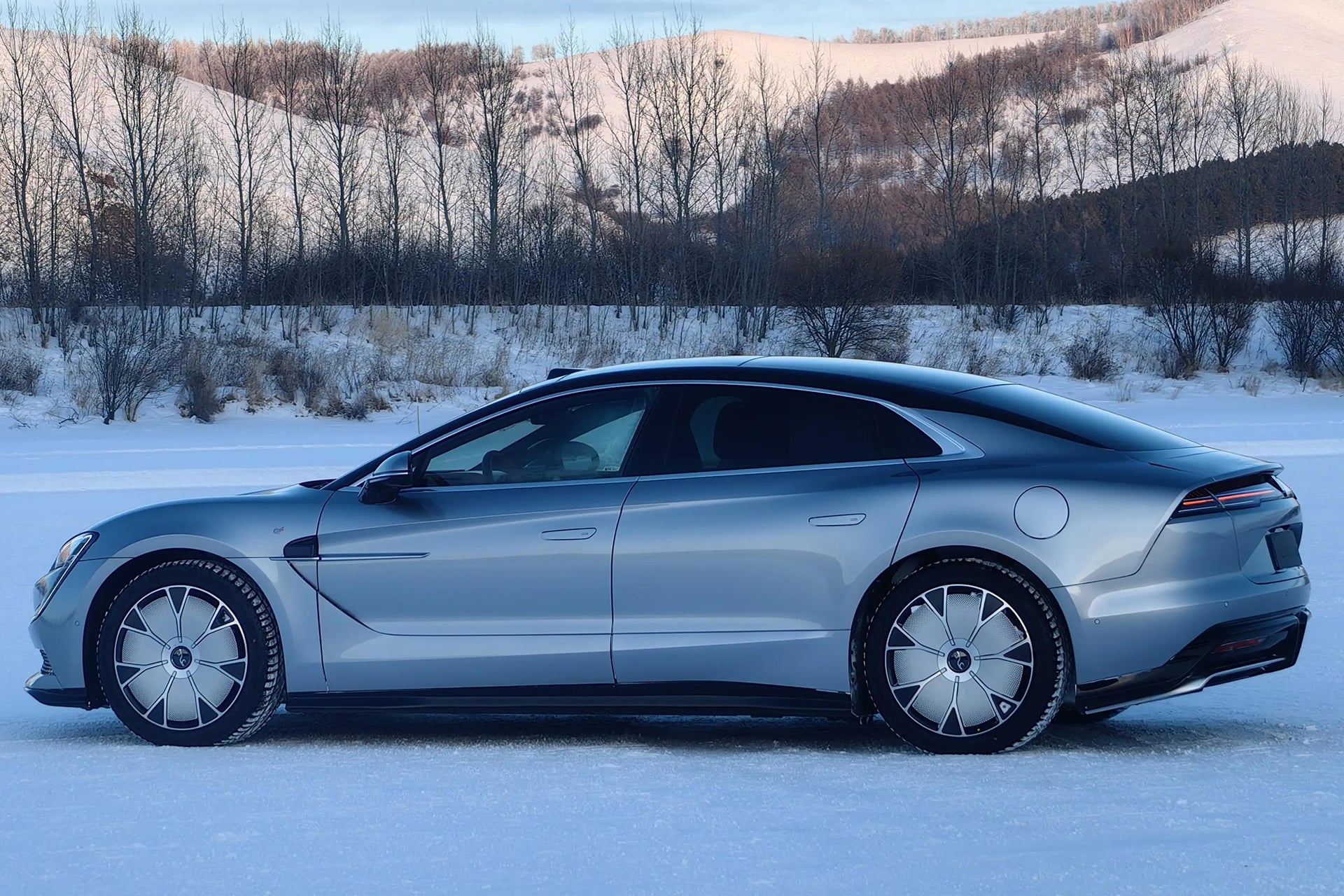
BYD put an electric sedan weighing more than three tons to run 30 thousand kilometers at 240 km/h – twice the maximum limit allowed on Brazilian highways – under heat above 36°C, and recharged the battery more than 350 times in just over eight days. In the end, the cells had lost 1.3% of their original capacity.
The Yangwang U7, the luxury brand sedan of the Chinese group, completed the route in 8 days, 19 hours and 58 minutes, on a closed circuit in Nanning, southern China. According to the manufacturer, the relative humidity reached 80% and the air conditioning remained on at 24°C from start to finish. The battery finished the marathon with 98.7% of capacity.
The automaker insists that it was not a prototype. Hu Xiaoqing, Yangwang’s general manager, said that the unit was randomly taken from a dealership, without preparation or modification, and that the company accepts to see the test repeated by independent institutions.
Photo: YangWang | Disclosure
Why 30,000 km, not 15,000
The number is not arbitrary. China is raising the minimum mileage of the on-track durability tests required of new energy vehicles (electric, hybrid, hydrogen, etc.) from 15,000 to 30,000 kilometers — the same level charged for years for combustion cars. The change was reported by China Daily in August.
To the newspaper, Cui Dongshu, secretary general of the Chinese Association of Passenger Vehicle Manufacturers (CPCA), classified the old limit as a temporary concession to the electricity sector and said that the unification of the rules signals the maturity of the segment. Translated: BYD has just run, on its own, the test that will become mandatory.
The closest reference is German: in 2025, Mercedes-AMG covered 40,075 km with the GT XX prototype in 7 days, 13 hours and 24 minutes. The difference is in the tested object: there, a concept; here, a series car.
The technology has already landed in Brazil
The U7 was the first model of the group to receive the second-generation Blade battery, designed to support Flash Charging chargers, of up to 1,500 kW per connector. Last week, at the Interlagos Festival, Denza — BYD’s premium brand — presented the equipment in Brazil and promised a thousand units in the country by the end of 2027, starting with a dealership in Brasilia. The best fast chargers here are around 300 kW.
For now, the only car for sale in Brazil capable of taking advantage of this power is the Denza Z9 GT, from R$ 670 thousand. Models with higher volume, such as the Dolphin Mini, are still limited to their own systems.
The electric Yangwang U7 adds up to 1.306 hp and 161.5 kgfm with four motors, goes from 0 to 100 km/h in 2.9 seconds and reaches 300 km/h. There are two batteries: 135.5 kWh, with 800 km of autonomy in the Chinese CLTC cycle, and 150 kWh, with up to 1.006 km. In China, it starts at 658 thousand yuan, about R$ 505 thousand. There is no forecast for sale in Brazil.
Comments are the sole responsibility of their authors and do not represent the opinion of this site. Comments containing profanity or offensive language will not be published. If you identify anything that violates the terms of use, please report it.