


China has become Porsche’s nightmare: stores closing, recharging turned off and 3,900 jobs cut
With sales down 21% and a loss per car sold, the German brand closes stores in China and prepares to cut 3,900 jobs
By
João Paulo Profeta
Published on 2026-07-03 at 10:00 PM
Published on 2026-07-03 at 10:00 PM
Be the first to comment.
Summarize with:
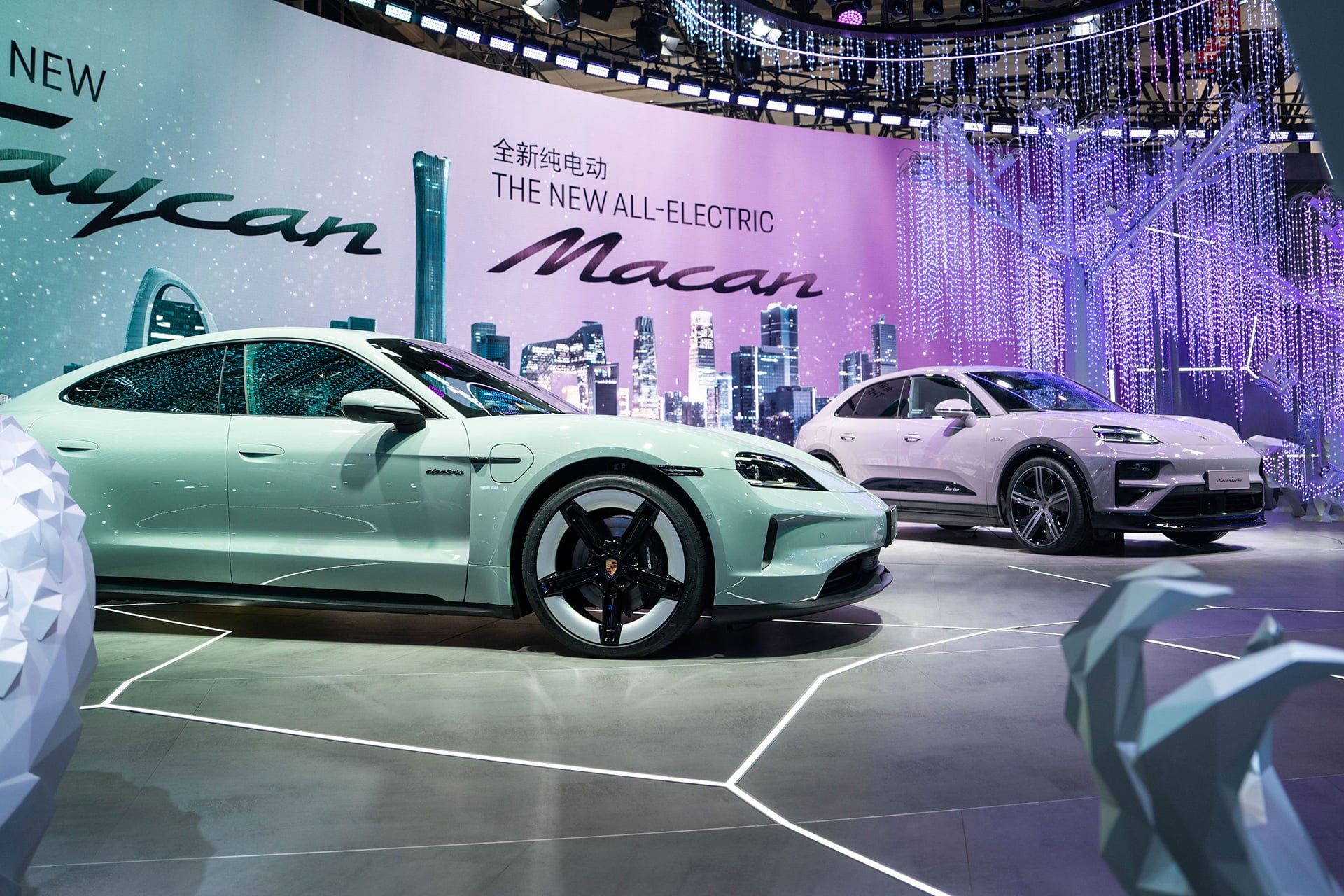
Porsche has begun to shrink its operation in China, once the brand’s largest market in the world, in the face of a sharp drop in sales. The German automaker closed four regional dealerships on June 30, in the cities of Wuhu, Jining, Huai’an and Nanning, and is preparing a much broader cut: it intends to reduce the local network from 116 to about 80 points in the coming years. The information was published by the Chinese website IT-home and reproduced by CarNewsChina.
The four stores have closed their activities and will have their sales authorizations reviewed; It is not yet clear which ones will continue to provide service to current customers. The drop in deliveries explains the movement. Porsche closed 2025 with 41,938 units sold in China, down 26.3% compared to 2024, and the decline continued in 2026: there were 7,519 cars in the first quarter, 21% less year-on-year, the biggest retraction among all the brand’s markets at the beginning of the year. Outside Germany, sales fell in almost all regions in the period.
The account does not close for resellers. According to the survey, each dealership would be losing 20 thousand to 30 thousand yuan per car delivered (about R$ 15 thousand to R$ 23 thousand), which helps explain the decision to downsize the network to recover profitability.
The adjustment goes beyond retail. Porsche has deactivated about 200 ultra-fast charging points in the country, infrastructure built at high cost, and plans to simplify the line, retiring low-output versions, such as the Taycan Sport Turismo. Globally, the brand has already agreed with unions to cut 3,900 jobs by 2030, part of a Volkswagen Group plan to eliminate 50,000 jobs in Germany.
The cuts come after a difficult year. In 2025, Porsche’s operating profit plummeted by about 93%, eroded by writedowns of approximately 3.9 billion euros linked to the review of the electric strategy, the drop in China and import tariffs from the United States. Deliveries of the Taycan, its most prestigious electric car, fell 22% on the year. In the Chinese market, local brands such as Xiaomi have started to surpass European ones in technology and price. Under the new CEO, Michael Leiters, the company recalibrated the plans: it postponed electric models, strengthened combustion engines and hybrids, and adopted a logic of value over volume.
For the Motor1, the picture reflects the market’s shift away from electric vehicles, whose effects tend to be more severe in China. Automakers with broader portfolios would have the breath to absorb the blow; Porsche, more dependent on niches, is forced to make a deep structural adjustment.
SEE MORE ABOUT

0 Comments
Comments are the sole responsibility of their authors and do not represent the opinion of this site. Comments containing profanity or offensive language will not be published. If you identify anything that violates the terms of use, please report it.