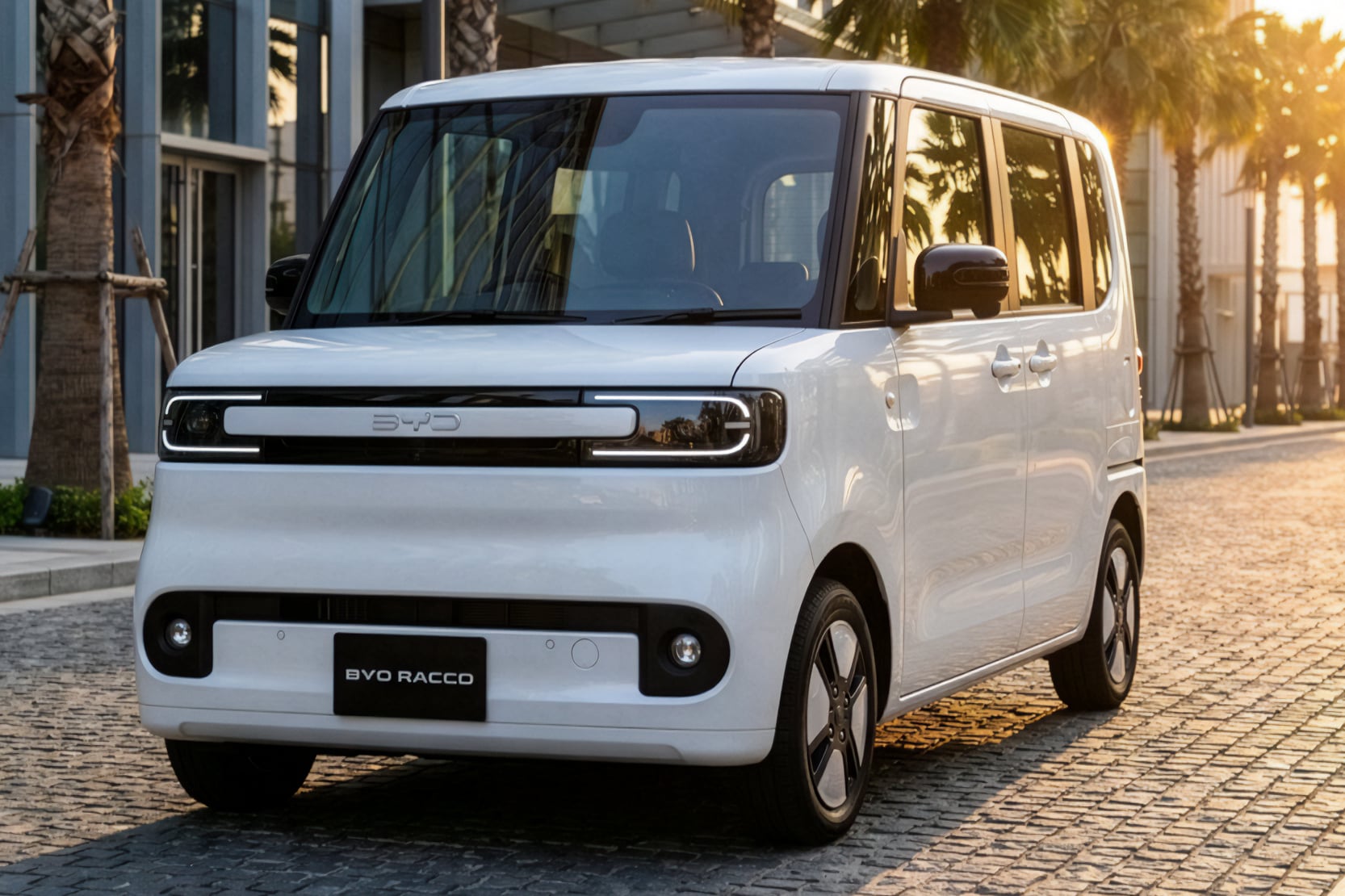
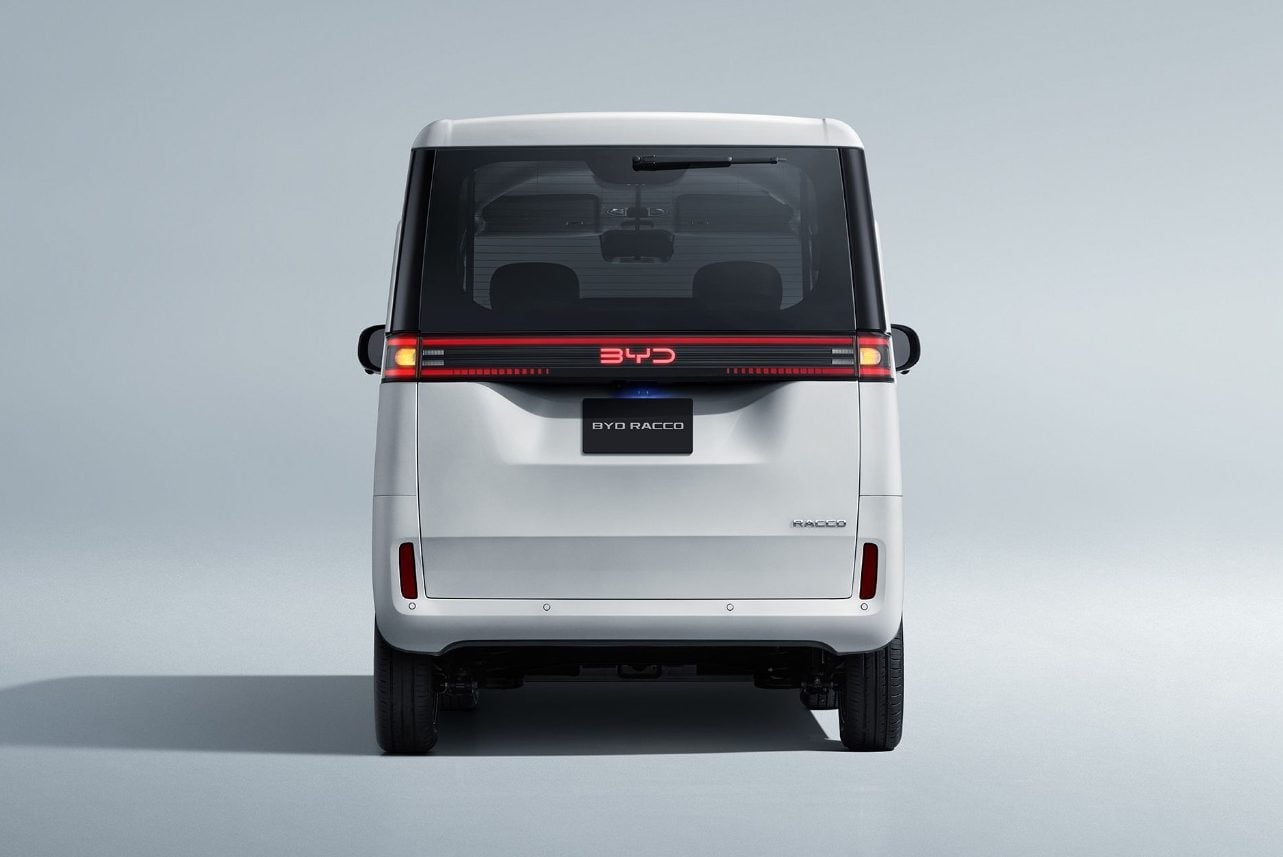
BYD launched in Japan, on Tuesday (28), the Racco, its first kei car — and the first foray by a foreign brand into the category that sustains the Japanese market. The electric car was developed from scratch for the country, and not adapted from a Chinese model, and puts the manufacturer to fight with Suzuki, Daihatsu, Honda and Nissan at home.
The line has three versions, all with consumption tax included: Racco 200, for 2,145,000 yen, Racco 300 Plus, for 2,398,000 yen, and Racco 300 Premium, for 2,497,000 yen — values ranging from R$ 66,816 to R$ 77,781, in direct conversion. The name refers to rakko, the sea otter.
What is a kei car and why does the segment matter so much
Kei cars are a class regulated by law in Japan. To fit in, the car cannot exceed 3.40 m in length, 1.48 m in width and 2 m in height, with an engine limited to 660 cubic centimeters and 64 hp. In exchange, the owner pays less tax and insurance — an advantage that made the category the most popular in the country.
The numbers explain BYD’s interest: in 2025, there were 1,667,360 kei cars registered in Japan, or 36.5% of the 4,565,777 new vehicles sold in the year, according to the Japanese dealership and light vehicle associations. It is more than a third of the market concentrated in a single format.
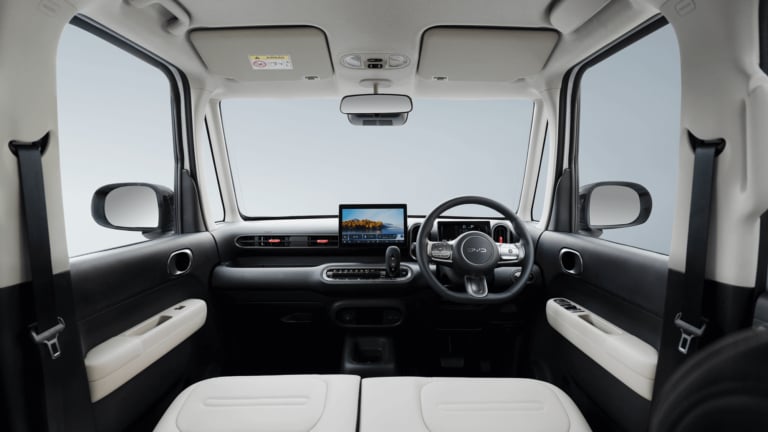
The Racco fits into this template with minimum clearance: 3.39 m long, 1.47 m wide and 1.80 m high. The front engine delivers exactly the 64 hp of the legal roof and 16,3 kgfm, and the cabin takes up to four passengers.
Where BYD is in Japan before Racco
The brand has been selling passenger cars in the country since January 2023 and had just over 7,400 units delivered by the end of 2025. In 2025 alone, there were 3,870 registrations, an increase of 62%, according to the Japan Association of Automobile Importers. In the first half of 2026, it totaled 2,388 units, an increase of 40%, in the 16th position among imported units. The goal is to register 10 thousand Racco orders by the end of the year.
The technical advantage and the problem of the subsidy
The trump card of the model is autonomy. The 300 versions use a 35.8 kWh lithium iron phosphate battery and reach 320 km in the WLTC cycle — the first electric kei car to exceed 300 km. The entry-level has 22.4 kWh and 210 km. The Nissan Sakura, Japan’s best-selling electric car, starts at 2,448,600 yen and reaches 180 km. The Racco also accepts fast charging of up to 100 kW and features electric sliding doors, ADAS systems and NFC key on the cell phone.
The obstacle is in the incentive: electric cars from Japanese brands access a subsidy of up to 580 thousand yen, while imported ones such as Racco only qualify for the 150 thousand yen of the basic program. The car has the lowest label in the segment, but not the lowest final price.
Comments are the sole responsibility of their authors and do not represent the opinion of this site. Comments containing profanity or offensive language will not be published. If you identify anything that violates the terms of use, please report it.