


Brazil approaches 30,000 chargers for electric cars and plug-in hybrids
Survey by ABVE and Tupi points to growth of 77% in one year; fast chargers already represent 38% of the network, present in almost 2 thousand cities
By
João Paulo Profeta
Published on 2026-09-25 at 03:00 PM
Published on 2026-09-25 at 03:00 PM
Be the first to comment.
Summarize with:
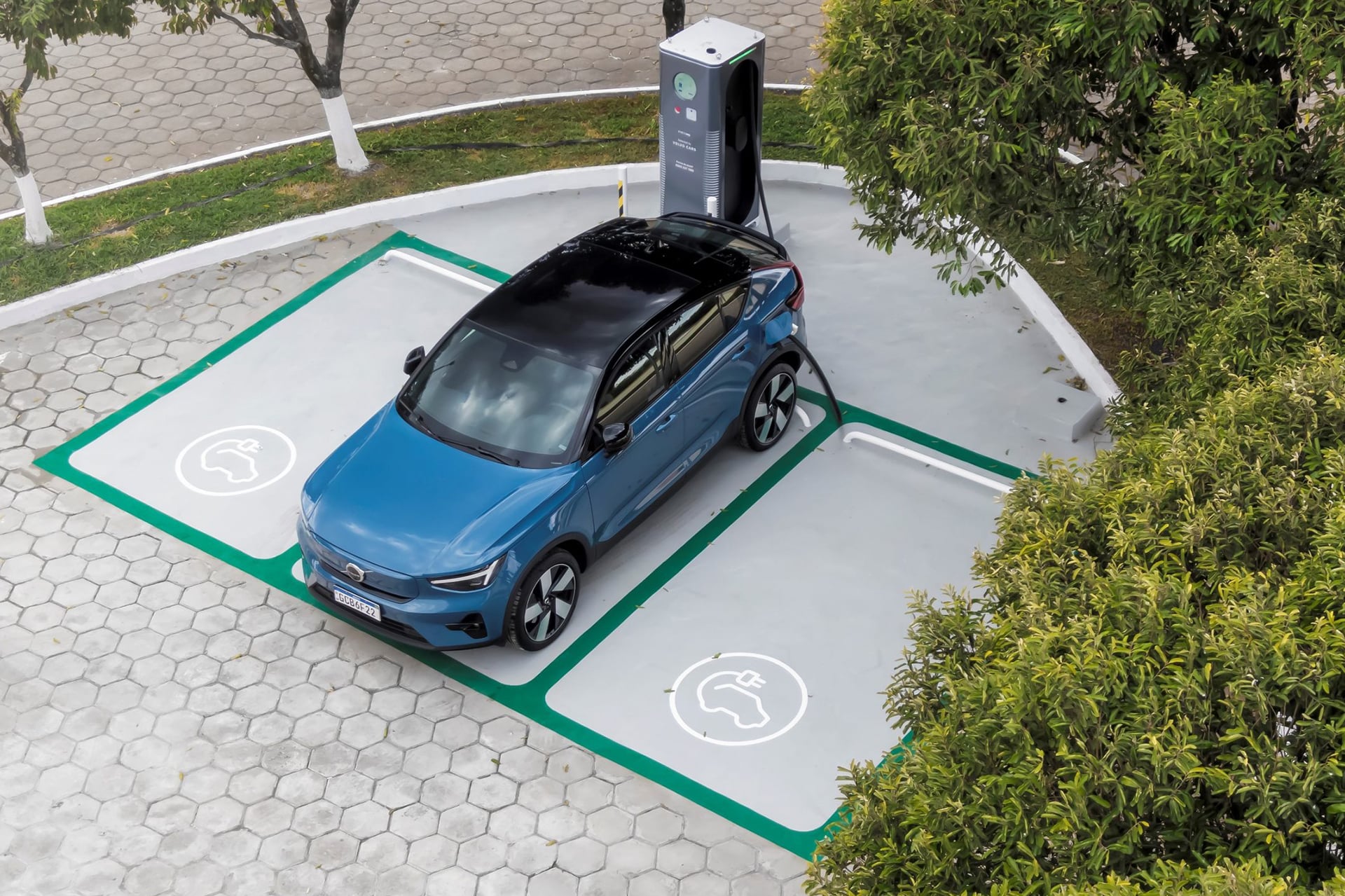
Brazil is close to reaching the mark of 30 thousand charging points for electrified vehicles. According to a survey by the Brazilian Electric Vehicle Association (ABVE) and the electric mobility platform Tupi, the country had 29,896 public and semi-public points in August, up 77% compared to the same month in 2025.
The number represents an increase of 4,441 points compared to the previous study, carried out in May, which corresponds to an expansion of 17.4% in the quarter. Almost 2 thousand municipalities, about a third of the 5,570 Brazilian cities, already have at least one charger, and more than a thousand have fast charging.
The Brazilian fleet of 100% electric and plug-in hybrid cars totals 639,133 units, which results in a ratio of 21.4 vehicles per charging point. Of this total, 313,140 (49%) are exclusively battery-powered models, and 325,993 (51%) are plug-in hybrids.
Fast charging grows more
The largest share of the mapped points is slow charging, in alternating current (AC), with 18,485 units. According to ABVE, this equipment serves everyday use and is, in general, in residential and commercial condominiums, offices, long-term parking lots and fleet garages.
On the other hand, fast chargers, in direct current (DC), used mainly in travel, add up to 11,411 units, or 38.2% of the total, and grew 32.6% between May and August.
The Southeast concentrates most of the network, with 12,673 points, followed by the South (7,270), Northeast (5,581), Midwest (3,340) and North (1,015). The Northeast had the biggest advance in the quarter, of 22.8%. In the North, which has the smallest network, 58.1% of the points are fast recharge, the highest proportion in the country.
According to ABVE, the expansion is driven by the continuous drop in the cost of equipment, technological evolution and the gain in scale of operators. The entity also cites the growing demand for medium and long-distance travel, the electrification of corporate and logistics fleets and greater consumer confidence.
Bottleneck is in the power
grid For Davi Bertoncello, executive director of Tupi, the main question of the consumer now is whether there is a charger on the route he travels. According to him, the cost of equipment has fallen, the technology has matured and operators have learned to install.
“The bottleneck now precedes the charger,” he said. The problem, he says, lies in the deadline and conditions imposed to connect a new load to the power grid.
The topic is discussed in public consultation 033/2026 of Aneel (National Electric Energy Agency), opened on September 10, which proposes to modernize the connection rules for distributed generation, energy storage, electric vehicles and flexible loads. The consultation receives contributions until November 9.
SEE MORE ABOUT

0 Comments
Comments are the sole responsibility of their authors and do not represent the opinion of this site. Comments containing profanity or offensive language will not be published. If you identify anything that violates the terms of use, please report it.