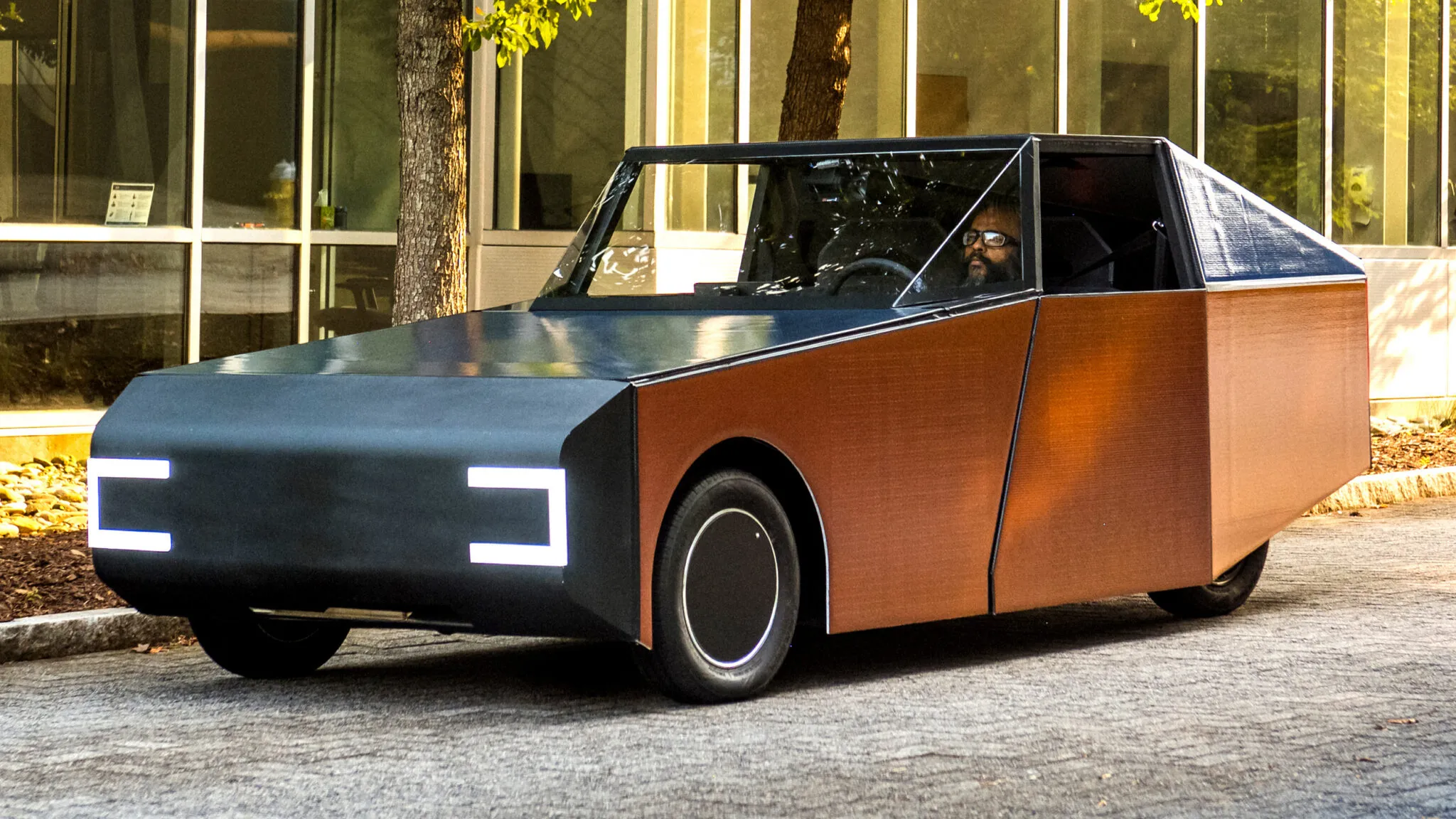
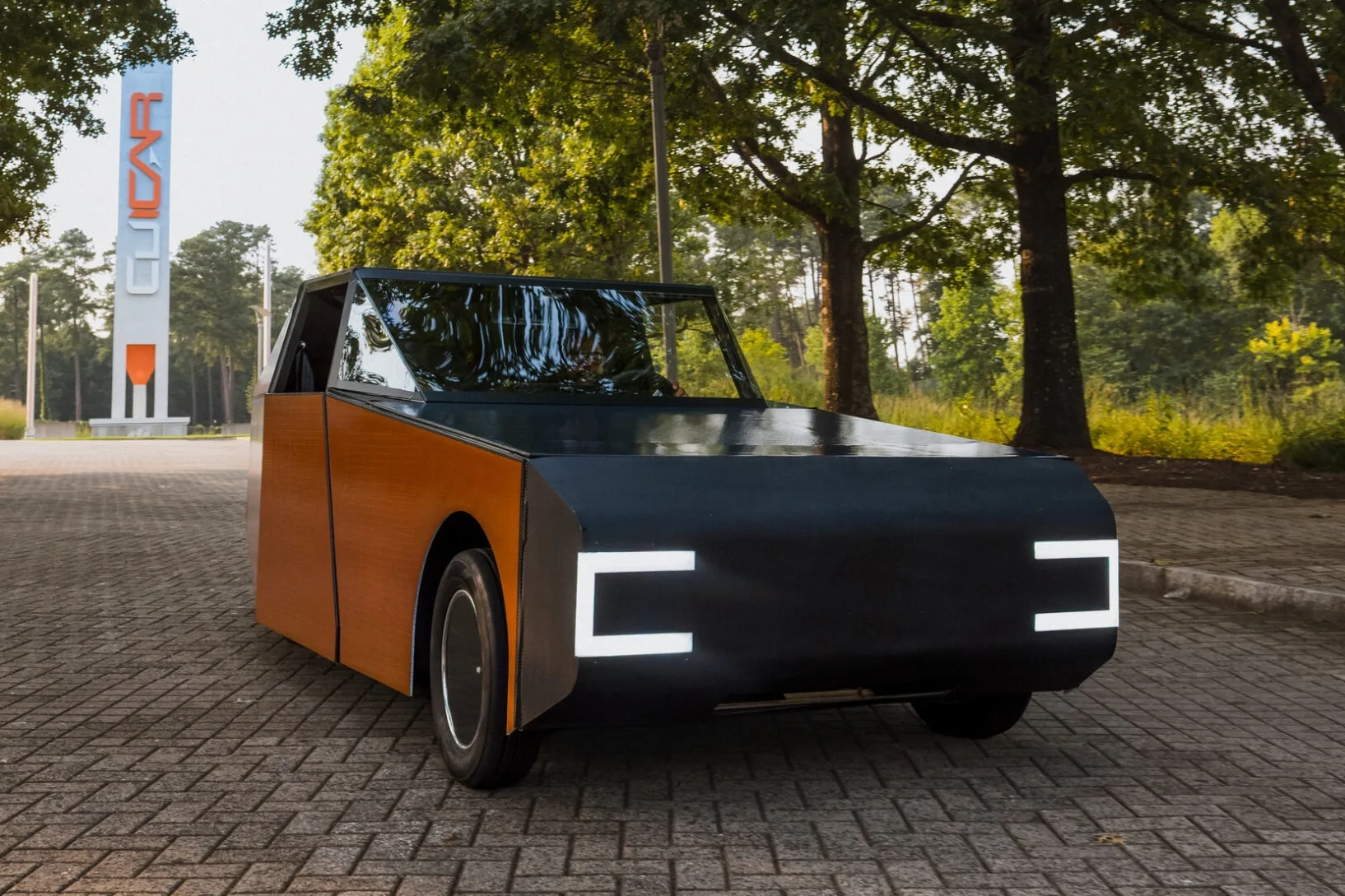
An electric prototype created by 16 master’s students at Clemson University, in the United States, in partnership with BMW, finished the simulations of urban use with more energy than it spent. Named Luminetta, the car has more than 1,700 photovoltaic cells in the body and was presented on August 6 at the university’s automotive research center in Greenville, South Carolina.
Officially called Deep Orange 17, the two-seater coupe was born from a challenge from BMW’s research and development area in the second half of 2024: to generate more energy than is consumed in the daily routine. The work took two years.
Instead of targeting only the standardized test cycles, the group started from a simple observation: passenger cars spend most of their time stopped. The cells capture still and moving light.
According to Clemson, climate and solar incidence simulations in Greenville, Frankfurt (Germany), Madrid (Spain) and Mumbai (India) indicated that, for a daily commute of 20 km, the system generated surplus energy equivalent to 50 km of extra autonomy per day, on average for the four cities.
Photo: Clemson University x BMW | Disclosure
The 550 kg is the centerpiece of the account
The result depends on features that don’t exist in a production car. The Luminetta weighs 550 kilograms, about a quarter of the weight of vehicles of similar size sold today. The chassis combines structural steel in occupant protection, aluminum, carbon fiber and metal joints made by 3D printing.
The body was designed to reduce aerodynamic drag, with declared inspiration from the boxfish. Regenerative braking, intelligent torque distribution and optimized transmission controls complete the package: performance comes not only from the sun, but from an efficiency well above that of a conventional electric car.
The panels were developed with the Fraunhofer Institute for Solar Energy Systems (ISE), in Germany, and continue to produce electricity even when part of the surface is shaded. An external film protects the cells and accounts for the color of the body, obtained by laser manufacturing.
Photo: Clemson University x BMW | Disclosure
Next stop is CES 2027
“This is a project we’ve wanted to undertake for years, so it’s very gratifying to see this group of students come together over the past two years, overcome so many challenges and technical constraints, and bring an energy-positive vehicle to life,” said Stephan Augustin, BMW’s research and new technologies manager.
The partnership spans two decades: BMW was one of the founders of Clemson’s automotive research center in 2007 and has already funded five projects in the Deep Orange program, which each year puts graduate students to develop a working prototype from scratch.
None of this means immediate serial application: the Luminetta does not meet the requirements of a road car, and the energy balance drops as the weight and catchment area approach that of a typical car. Research on the prototype continues in Greenville, and the car is expected to be on display at CES 2027 in Las Vegas.
Comments are the sole responsibility of their authors and do not represent the opinion of this site. Comments containing profanity or offensive language will not be published. If you identify anything that violates the terms of use, please report it.