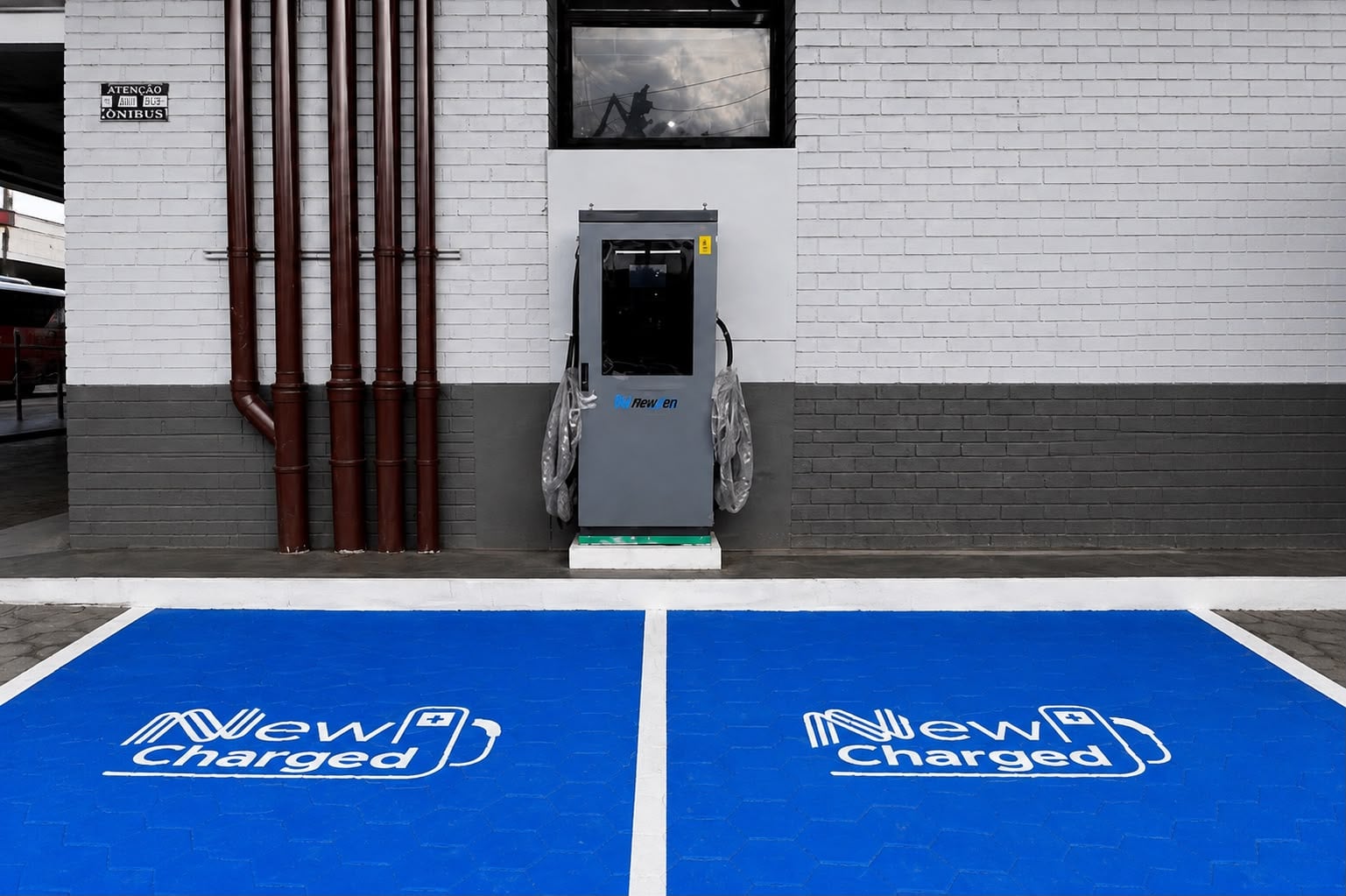
The Belo Horizonte Bus Station gains a fast charging station starting this Saturday (15), and the chosen location delivers the target audience: one of the chargers is exactly in the yard where app drivers already stop every day. The structure is the result of a partnership between Terminais BH, the terminal’s concessionaire, and the New Engineering and Energy Group, and will operate 24 hours a day, seven days a week.
There are two charging points, with the capacity to serve up to four vehicles at the same time. On the lower floor, the equipment is located in the east yard, the boarding area for vehicles from apps such as Uber and 99, which registers about 2,300 trips per day. On the upper floor, the charger is in the loading and unloading area, at the end of the entrance lane.
Photo: BH Terminals | Disclosure
“The strategic location of the Bus Station allows the driver to take advantage of a stop that is already part of his routine to perform a quick recharge, without having to travel to another point in the city”, says Breno Nazaré Lima, CEO of the New Group. According to him, the proposal is to serve those who depend on the electric car during work.
Rate is below the market average
Access to the charging station is free. The driver pays only for the energy consumed, by application, which also concentrates registration, payment and management of coupons. The regular tariff is R$ 1.89 per kWh and, during the inauguration period, drops to R$ 1.59 per kWh, for a limited time.
The values place the station in the lowest range of the fast charging market in the country, where the kWh usually varies between R$ 1.80 and R$ 2.50. The comparison with the home socket, however, remains unfavorable: the average residential tariff in Brazil is around R$ 0.85 per kWh in August – but in AC chargers, much longer. In practice, completing a 38 kWh battery, such as the one in the BYD Dolphin Mini, would cost around R$ 60 in the promotional rate and R$ 72 in the regular rate.
The company did not inform, however, whether the 60 kW is divided when two cars use the same charger simultaneously, a scenario in which the recharge time tends to increase.
Comments are the sole responsibility of their authors and do not represent the opinion of this site. Comments containing profanity or offensive language will not be published. If you identify anything that violates the terms of use, please report it.