

Can missing a tire cap get a fine? Understand the importance of the part and how it saves you from losses
The absence of the accessory generates doubts among drivers; understand the inspection rule, the function of the part and the safety risks
By
Julia Vargas
Published on 2026-08-31 at 04:00 PM
Published on 2026-08-31 at 04:00 PM
Be the first to comment.
Summarize with:
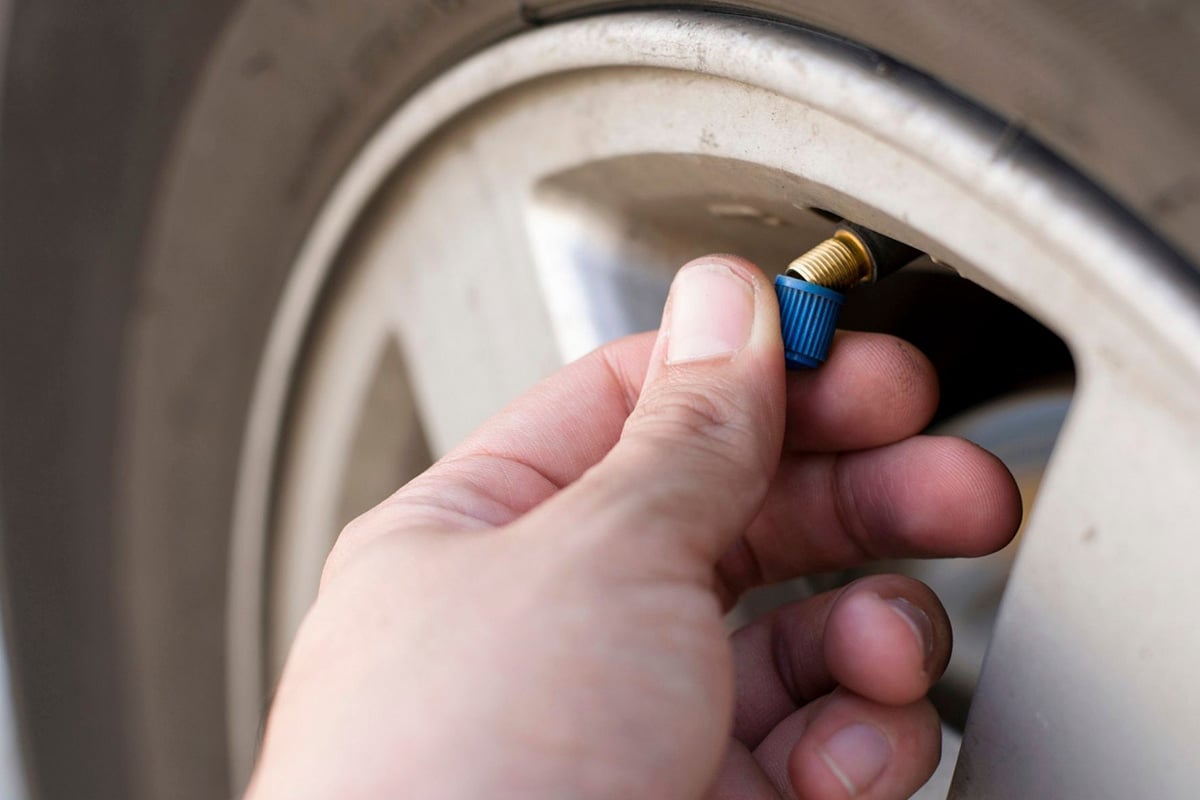
A question started to move groups of drivers on social networks: can driving with the tire without the valve cap result in a traffic fine? Contrary to what many fear, the direct answer is no. But, even if it is not an infraction, being without this little piece is not a good idea.
The Brazilian Traffic Code (CTB) does not have any specific rule that provides for a penalty for the absence of the component. But, the general state of conservation of tires and their components requires constant attention during inspection.
SEE ALSO:
- Tire: all types to never make a mistake again!
- Best tire for the car? Learn to make the right
- Cheap tires: what are the risks and how to choose a safe
choice
tire
What does the Brazilian Traffic Code (CTB) say?
Brazilian traffic legislation does not consider the absence of the valve cap, popularly known as “tcapinha do bico”, as an infraction. This does not fall under Article 230 of the CTB, as many drivers have speculated online, which deals with driving the vehicle in disagreement with safety conditions.
At the time of inspection, traffic agents evaluate the functionality and integrity of the system. If the valve is sealing the air correctly and without structural damage, the simple lack of a protective plastic or metal cover does not characterize an irregularity or motivate the application of a fine.
What is the tire valve cap used for?
Despite being a small and inexpensive part, the valve cap plays a preventive role in tire mechanics. The main functions of the accessory include:
- Residue protection: prevents dust, sand, dirt, mud and water from entering the valve core.
- Seal preservation: prevents debris from locking the internal air retention system.
- Prevention of small leaks: helps maintain tire pressure in case the internal valve shows natural wear.
Running without the cap does not make the tire deflate immediately, but increases the valve’s exposure to external agents, accelerating the degradation of the component. Therefore, although the accessory is not mandatory by law, the technical guidance is simple: if you lose the cover, replace it as soon as possible.
The item is very cheap and helps to extend the life of the valve, complementing essential care such as periodic calibration and vehicle alignment.
In what situations can the tire generate a fine?
If the absence of the cap does not generate an infraction, the same does not apply to the state of conservation of the tire. The legislation is severe with items that put road safety at risk.
The driver can be fined and have the vehicle detained when the tire presents:
- Worn tread: “bald” tires, with grooves below the legal limit of 1.6 mm (TWI indicators).
- Structural damage: presence of bubbles, cuts, deformations or exposed tarpaulins.
- Active leaks: defects in the valve or structure that cause continuous loss of pressure and compromise drivability.
SEE MORE ABOUT

0 Comments
Comments are the sole responsibility of their authors and do not represent the opinion of this site. Comments containing profanity or offensive language will not be published. If you identify anything that violates the terms of use, please report it.