


Armored Car Guide: How to Choose and Essential Care
Check out tips on hiring the service, necessary documents, preventive maintenance, and defensive driving
By
Julia Vargas
Published on 2026-08-23 at 01:00 PM
Published on 2026-08-23 at 01:00 PM
Be the first to comment.
Summarize with:
According to the Brazilian Armoring Association (Abrablin), automotive armor in Brazil moved around R$ 3.5 billion in 2025 alone, and the expectation is for growth in the coming years. Thus, with this market in full expansion and several options for armored cars, the search for traffic protection has turned this service into a strategic investment.
However, ensuring the efficiency of ballistic protection requires prior planning, attention to legal standards, and continuous care with the preventive maintenance of the car. In this article you can check out guidelines for purchase and essential care to maintain an armored car.
SEE ALSO:
- How much does it cost to armor a car? Is a used one worth it?
- Ram launches factory-approved armor for pickup trucks in Brazil
- Inclusion of municipality on the plaque serves no purpose, only to cause damage to the owner
Before and during: planning, costing and documentation
The decision to shield requires an evaluation of both the technical and financial aspects. In Brazil, three different levels of armor are allowed for civilian use. A heavier level is only allowed with authorization from the army, while levels IV and V are prohibited for civilian use.
- Level I-A: resists firearms with calibers between 22 and 38;
- Level II-A: resists 9 mm pistols and Magnum 35 revolvers;
- Tier III-A: Resists Magnum 44 revolvers and Uzi submachine guns.
Before closing the deal, it is essential to check the registration of the armored vehicle with the Army, research the company’s reputation and check if the structure of the vehicle supports the additional weight.
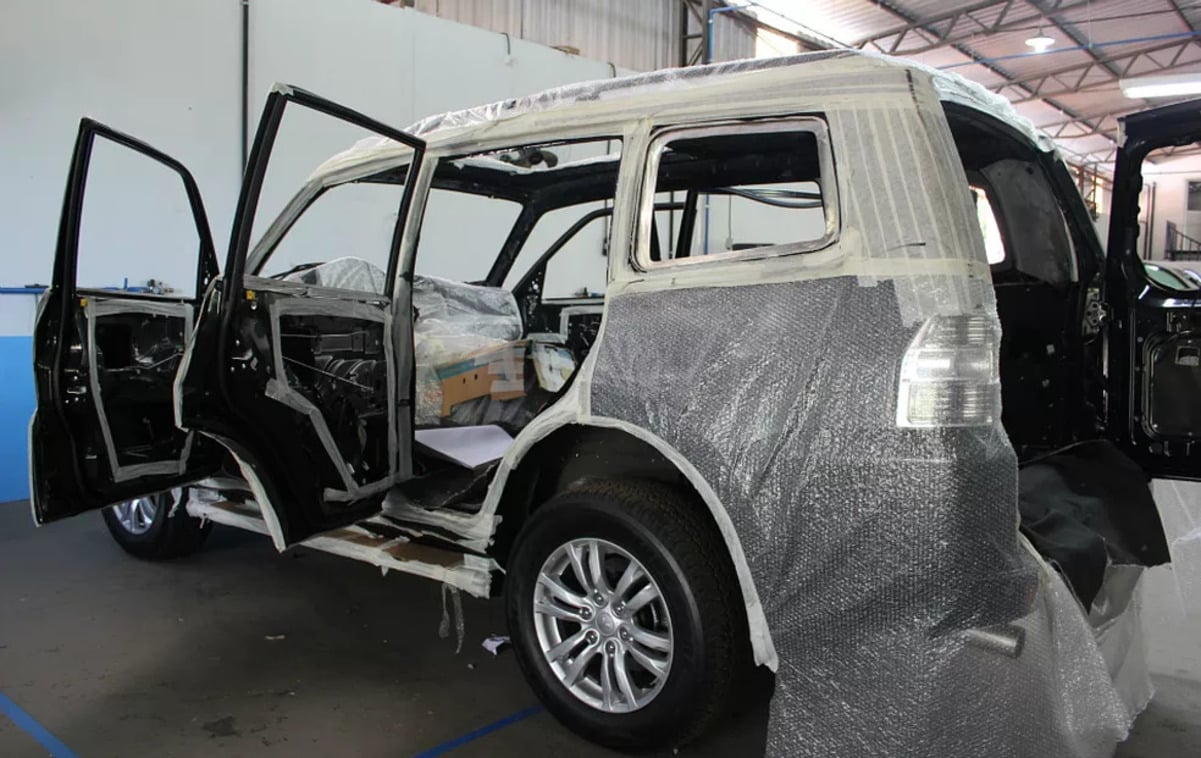
The installation process takes an average of 30 days and requires follow-up. At the end, the owner must receive the Shielding Responsibility Term, a document that specifies the level of protection, the materials used, the validity of the service and the manufacturer of the components.
Cost to Armor a Car
The value of the armor depends on the level chosen and also on the vehicle. For level I-A, the value is between R$ 50 and R$ 60 thousand. The most common level in Brazil is III-A, which can reach R$ 100 thousand. The value may increase depending on the extras chosen by the buyer.
An interesting option in the new car market is the armor certified by the automaker. The main brands installed in Brazil offer this service, where the customer can request protection at the time of purchase.
In this case, the shielding is made by a certified third-party company and the original warranty is maintained. There are also brands that offer factory shielding.
Periodic maintenance and vehicle
dynamicsThe increase in weight, which can vary between 150 kg and 250 kg, changes the car’s centre of gravity and dynamic behaviour:
- Brakes and suspension: the braking response becomes slower. Components such as shock absorbers, springs, tires and brakes suffer greater wear and require constant inspections.
- Routine check-ups: should take place annually or every 10,000 km. The service covers hinge lubrication, door alignment and overhaul of the electric window motors.
Glass conservation and prevention of delamination
Formed by interspersed layers of glass and polycarbonate, the transparent part of the vehicle is the most sensitive and requires daily care:
- Correct cleaning: on the inner side (polycarbonate), use only a soft and dry cloth. Chemicals can cause irreversible damage.
- Thermal shock: avoid washing the heated vehicle with cold water or turning on the air conditioning at maximum power after long exposure to the sun, preventing cracks.
- Replacement: small malfunctions can cause delamination (detachment of the layers and formation of bubbles). Damaged armored parts do not admit partial repairs and must be fully replaced.
Essential Care by Stage
| Step | Main Focus | Recommended Action |
|---|---|---|
| Before | Planning and Legality | Require registration with the Army and evaluate the structural capacity of the car |
| During | Service | Monitor the inspection and check the Term of Responsibility |
| After | Maintenance and Use | Respect periodic inspections and avoid thermal shock on the windows |
The armor reduces risks, but does not make the vehicle invulnerable. Keeping the doors locked, the windows closed, and adopting a defensive driving posture remain critical to driver and passenger safety.
SEE MORE ABOUT

0 Comments
Comments are the sole responsibility of their authors and do not represent the opinion of this site. Comments containing profanity or offensive language will not be published. If you identify anything that violates the terms of use, please report it.