Winter is coming, and your electric car will lose range because of it
Test in Norway under temperatures of -32°C exposes chemical limitations of batteries; in the south of the country, loss of range can reach 20% on frost days
Test revealed how susceptible electric cars are to cold (Photo: Volvo | Reproduction)
By
Júlia Haddad Published on 2026-05-11 at 09:00 AM
Updated on 2026-05-11 at 09:28 AM
The performance of electric cars (EVs) faces a critical bottleneck in icy weather, as the Norwegian Automobile Club (NAF) annual test revealed. The drop in autonomy occurs because cold inhibits chemical reactions within lithium-ion cells, increasing internal resistance and making the electrolyte more viscous. In addition, the absence of waste heat from the engine requires the high-voltage battery to power the cabin’s heating system, draining energy that would otherwise be used for travel.
In Brazil, where recent records in the Serra Catarinense reached -10.4 °C, the impact is less severe than the -32 °C recorded in Norway, but still relevant. Estimates based on technical data indicate that, at temperatures close to 0 °C – common in the southern winter – the loss of autonomy can vary between 10% and 20%. In more intense frosts, this rate can rise to 25% in models without advanced heat pump systems.
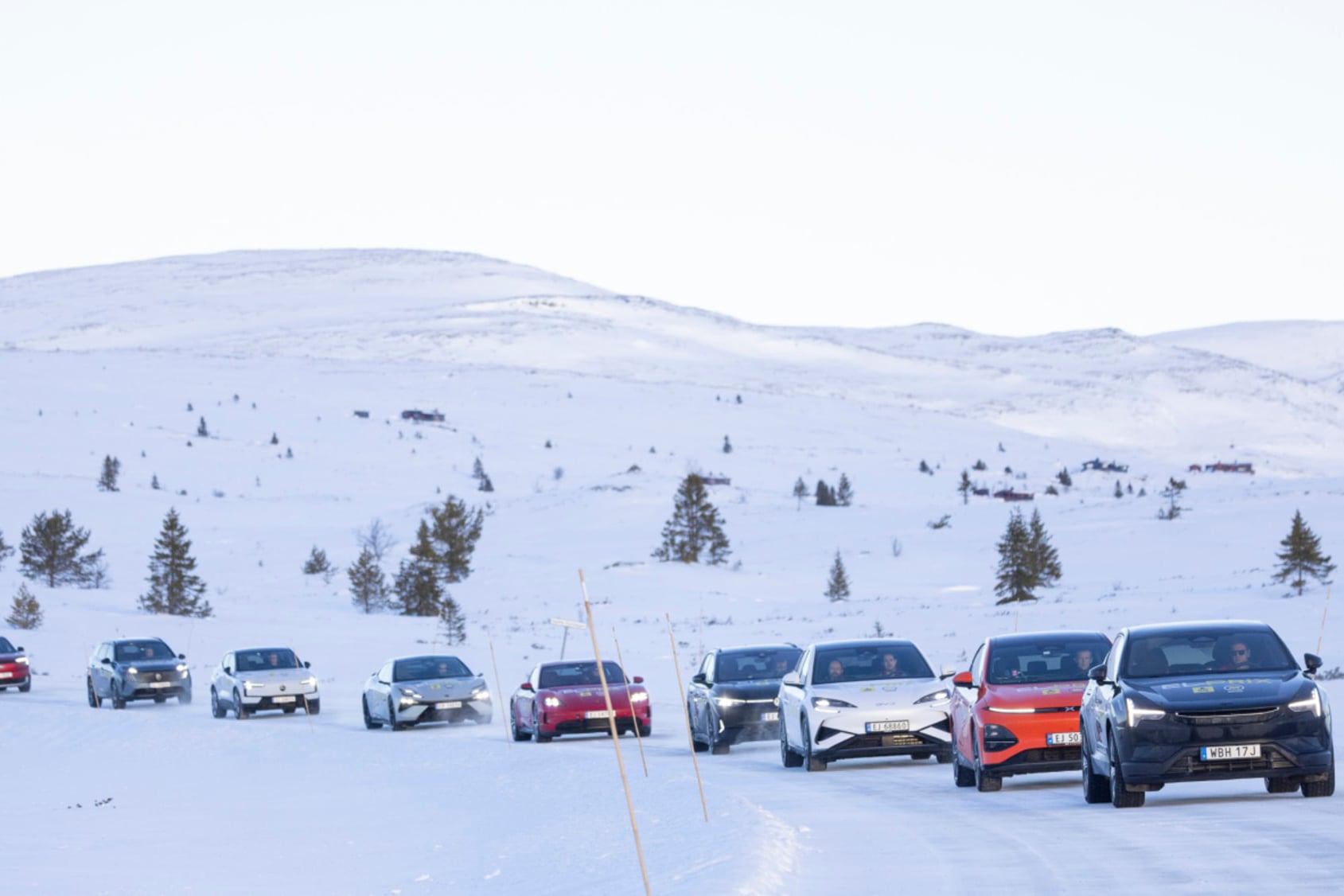
The Norwegian Automobile Club test took electric cars to the extreme (Photo: Jon Terje Hellgren Hansen / Motor)
The test conducted by the Norwegian Automobile Club (NAF) and Motor magazine was a real “torture” for the electric cars: 27 vehicles were driven in convoy from Oslo to the Dovrefjell mountains in temperatures of up to -32 °C. The protocol was strict, with the cars running until they came to a complete stop due to lack of cargo. The average loss was 38% compared to the WLTP cycle, but some premium models failed badly. The Mercedes-Benz CLA and Volvo EX90 lost 48% and 49% of their official range, respectively. The Tesla Model Y also fell short, delivering 359 km of the promised 629 km.
On the other hand, Chinese brands such as Xpeng and MG recorded the smallest drops, of about 29%, demonstrating superior thermal management. Another Asian company that did well was Hyundai, with about 39% of losses from the Hyundai Inster.
Comments are the sole responsibility of their authors and do not represent the opinion of this site. Comments containing profanity or offensive language will not be published. If you identify anything that violates the terms of use, please report it.