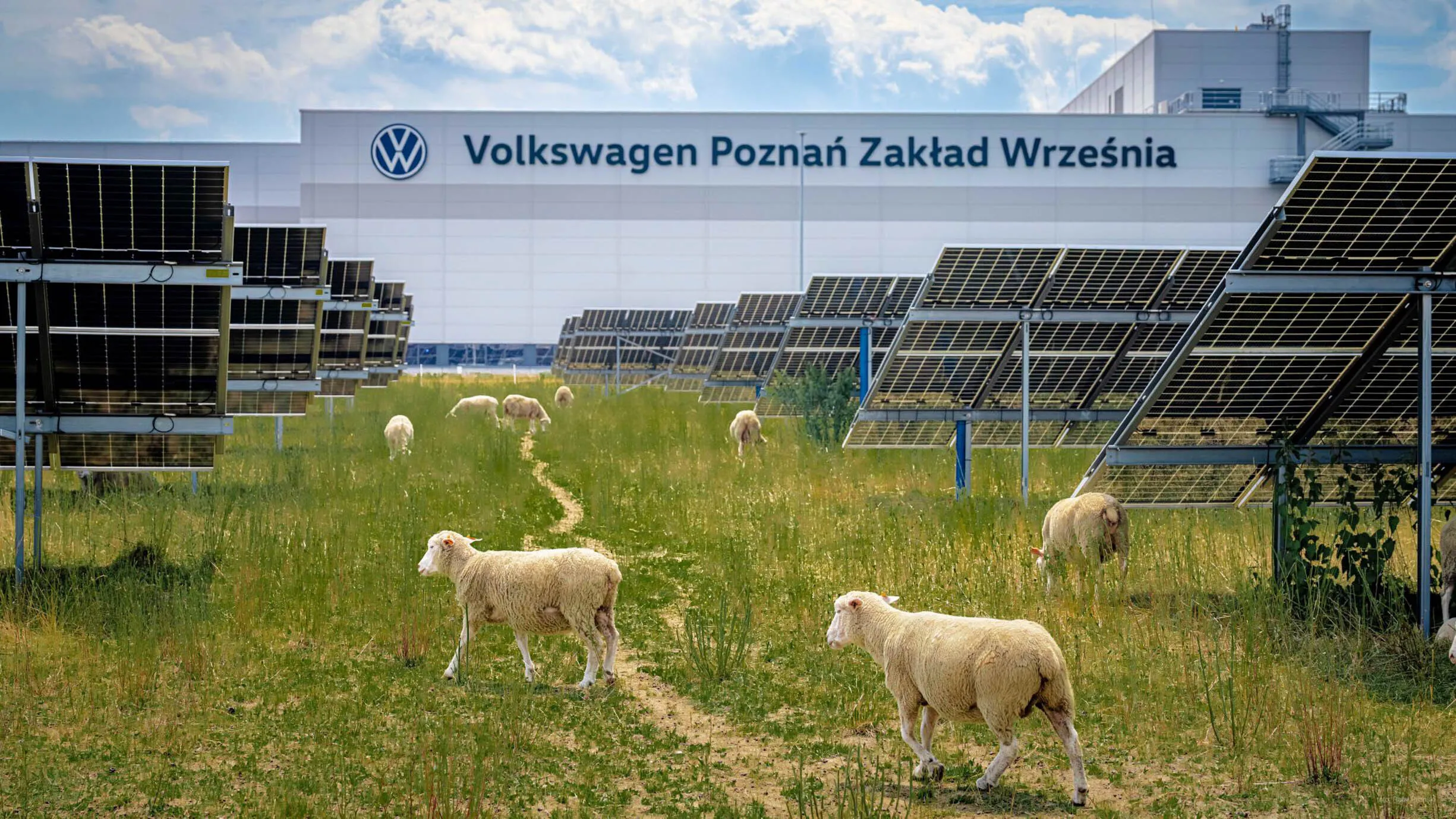
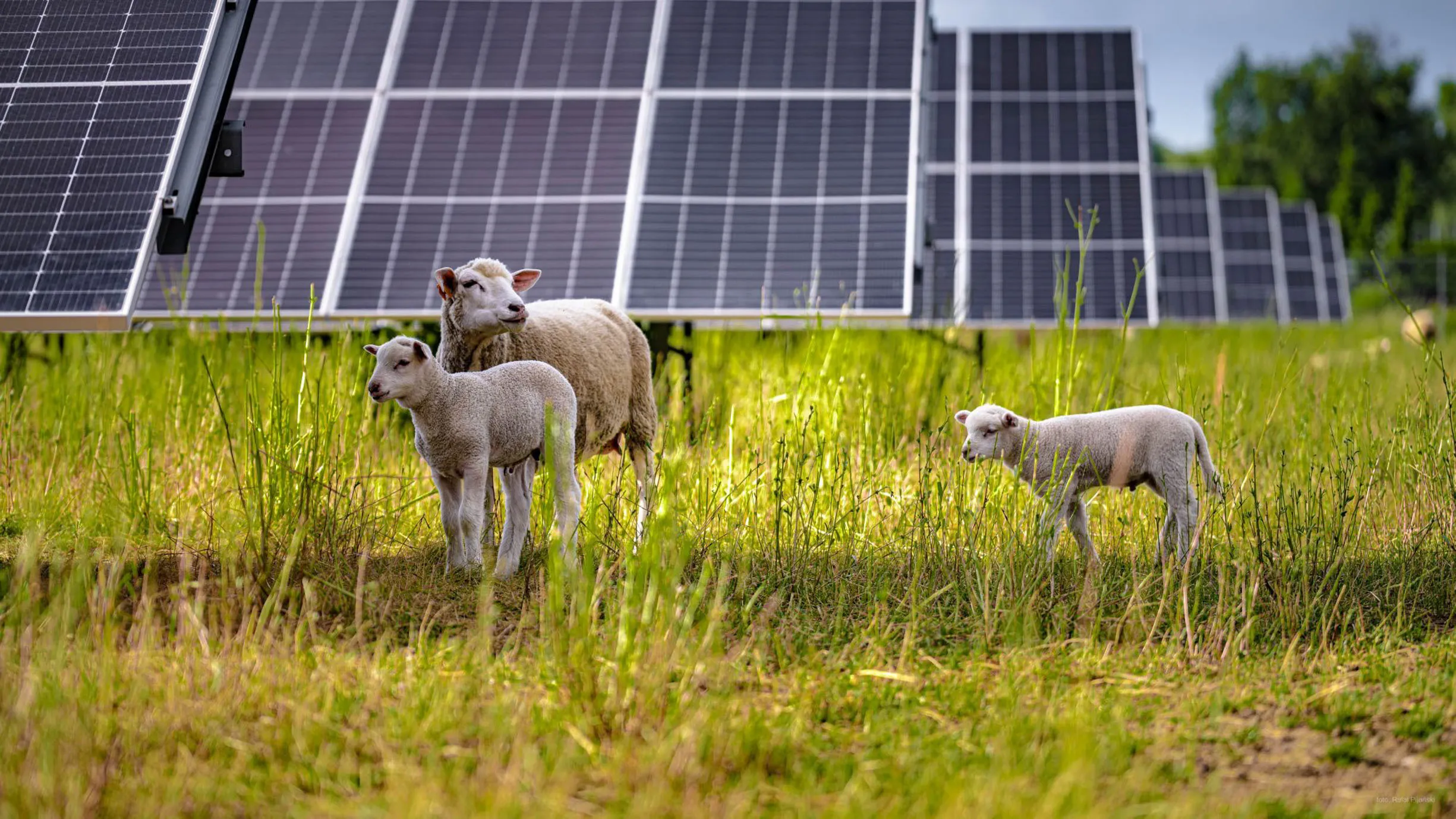
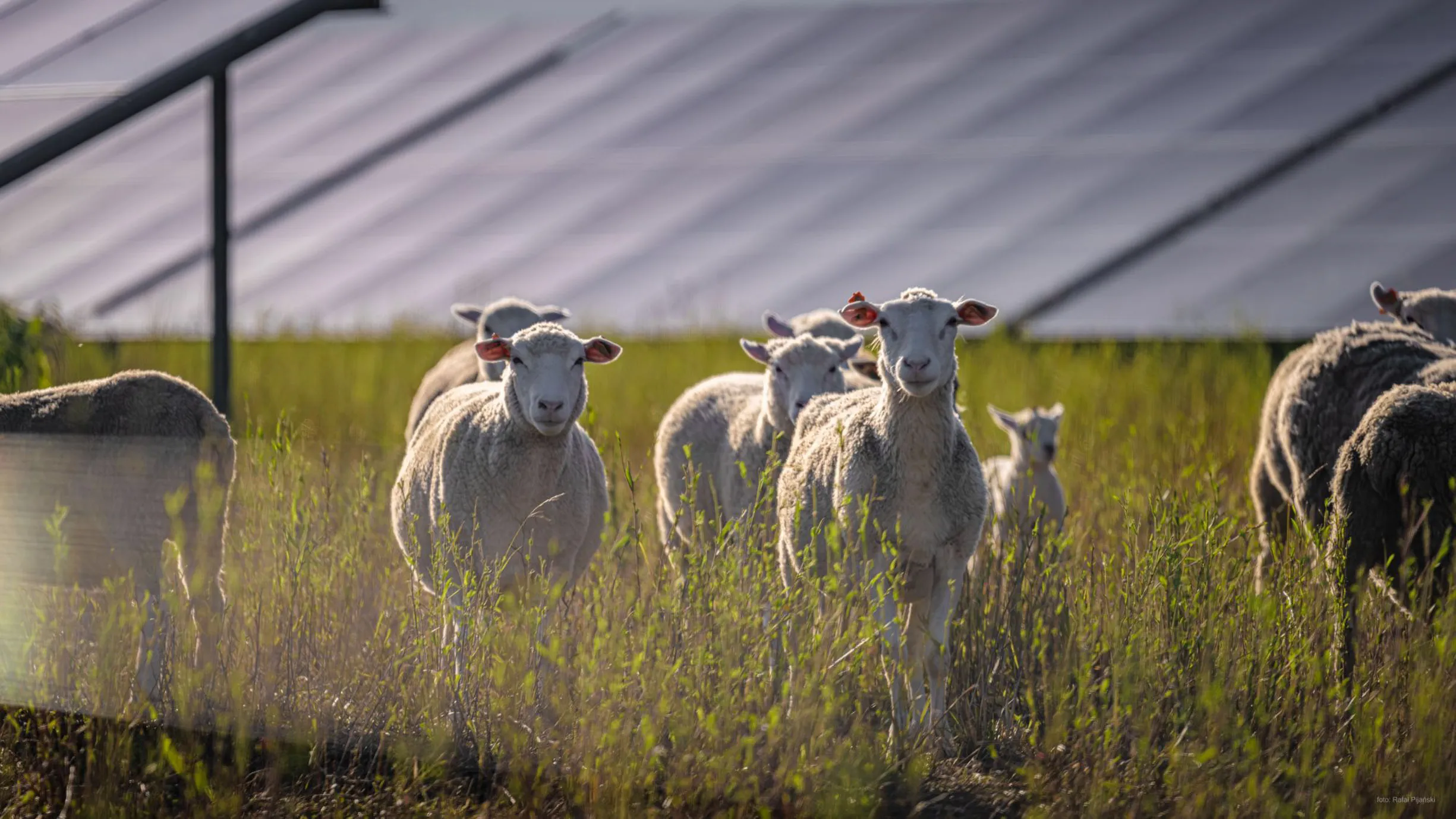
Volkswagen has adopted an unconventional solution to take care of the vegetation at the solar farm that supplies its plant in Poznań, Poland. In place of lawn mowers, the automaker placed about 100 sheep to graze between the photovoltaic panels.
The measure is not just an environmental marketing action. The herd is part of a research project on agrivoltaics, a concept that combines the generation of solar energy with agricultural or livestock activities on the same land. The idea is to make better use of the area occupied by the panels and, at the same time, study the effects of this shared use of the land.
The work is conducted by the Poznań University of Life Sciences. The researchers assess how grazing influences animal welfare, biodiversity, soil quality, vegetation, and the microclimate of the solar farm.
In practice, sheep help keep the grass under control without the need for fuel-powered machines or more frequent mechanical maintenance. In solar plants, excessive vegetation growth can make it difficult to access equipment, increase operating costs, and even shade part of the structures, depending on the configuration of the terrain.
According to Marzena Pillich-Grońska, director of Volkswagen Poznań, the project shows that industry can integrate energy production, research and environmental preservation in the same area. “Today, the photovoltaic farm offers much more than green energy. It has also become a place that supports biodiversity, local agriculture and scientific research,” he said.
The solar farm was built by Quanta Energy, which also released images of the sheep circling between the photovoltaic panels. The video shows the animals grazing freely in the space used for energy generation that serves the automaker’s plant.
Agrivoltaics has gained attention in the energy sector for allowing the same land to fulfill more than one function. Instead of reserving large areas only for solar panels, companies and researchers are testing ways to reconcile electricity generation with food cultivation, animal husbandry or environmental conservation.
In Volkswagen’s case, the use of sheep adds a practical layer to the experiment: they reduce the need for mechanical mowing of the lawn and help turn the plant into an open-air laboratory. For the automaker, the project also reinforces the attempt to associate its industrial operations with solutions with less environmental impact.
Comments are the sole responsibility of their authors and do not represent the opinion of this site. Comments containing profanity or offensive language will not be published. If you identify anything that violates the terms of use, please report it.