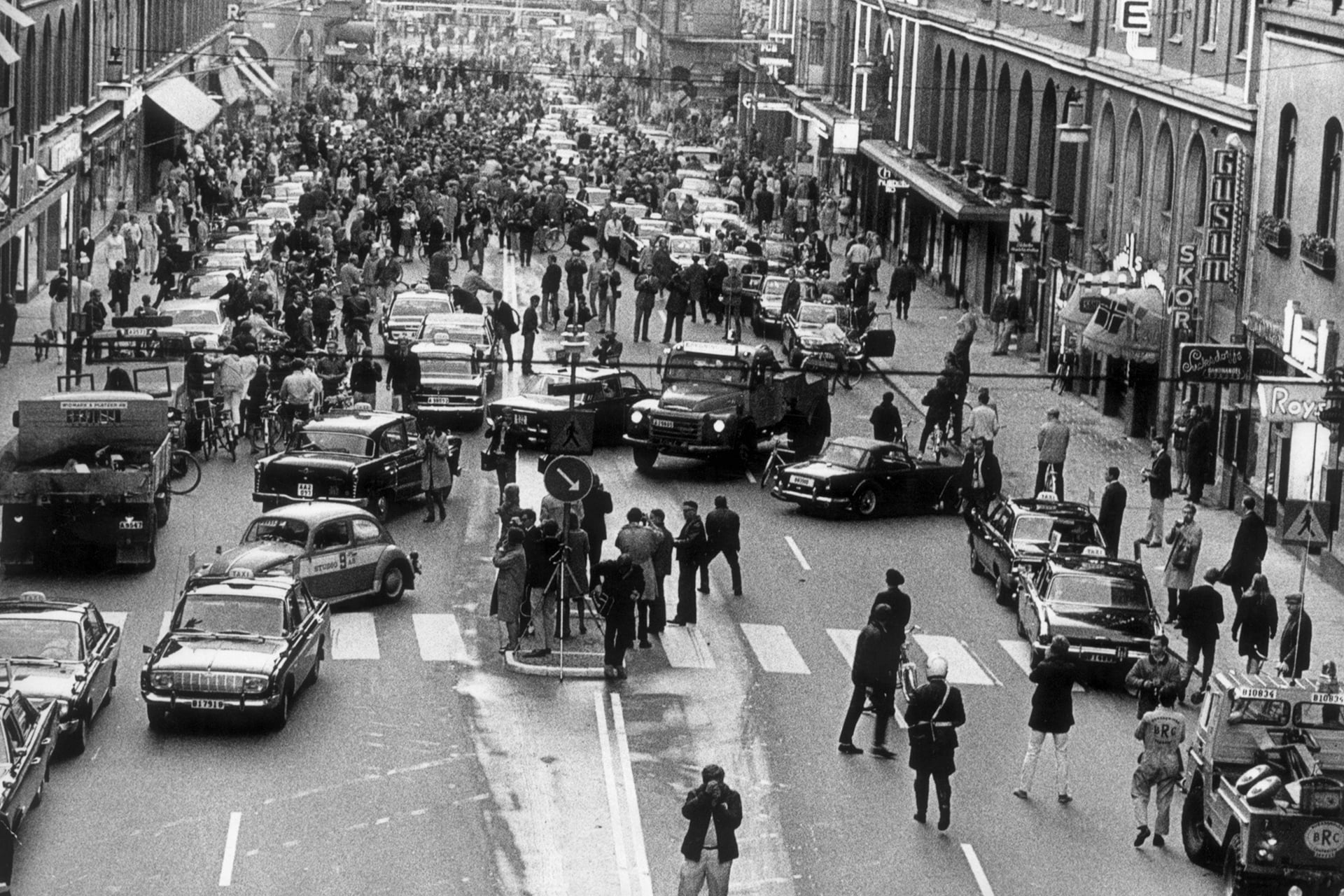
At 4:50 a.m. on Sunday, September 3, 1967, the whole of Sweden came to a standstill. Cars, buses, and bicycles stalled in the middle of the street, waited, and then—slowly, almost in slow motion—crossed to the other side of the asphalt. By the time the clocks struck 5 a.m., an entire country had changed hands: after centuries of driving on the left, the Swedes had switched to driving on the right. It was Dagen H, the H-Day, the largest logistics operation in the country’s history.
Why change?
The change was born of an almost comical contradiction. Swedes had been driving on the left since 1916, but about 90 percent of the country’s cars were left-hand drive—a heritage of imported American automobiles, from Ford to Chevrolet, designed for the reverse direction. The result was a nightmare on narrow roads: to overtake, the driver could barely see the opposite lane, and head-on collisions multiplied. Worse, all the neighbors, from Norway to Finland to Denmark, were already driving on the right, and millions of vehicles crossed the borders every year.
There was only one problem: the people did not want it. In a 1955 plebiscite, 83% of Swedes voted to remain on the left. The government of Tage Erlander listened, thanked and did the opposite. In 1963, Parliament approved the inversion, scheduled for 1967. The fleet had tripled, from 500,000 to 1.5 million cars in a few years, and delaying it would only make everything more expensive and more dangerous.
The Day H
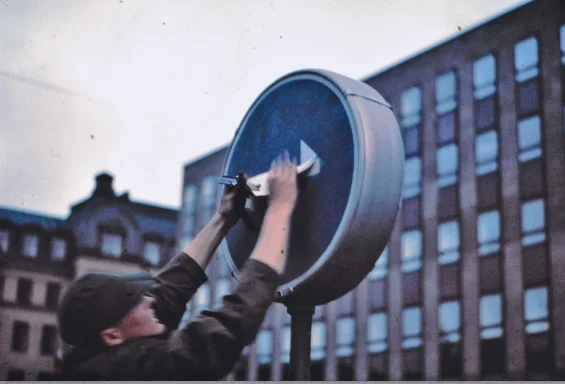
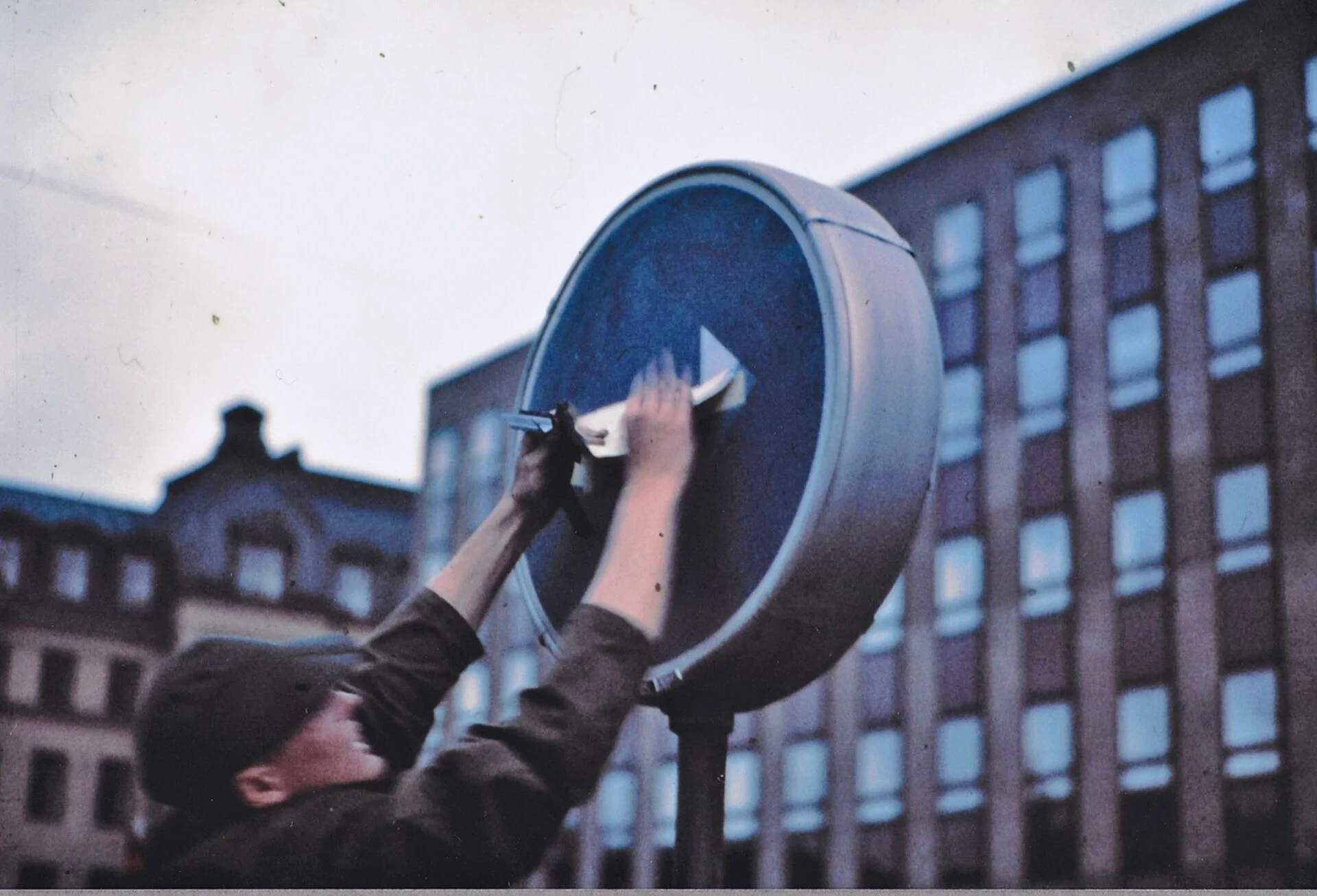
Suddenly, signs across the country had their commands reversed (Photo: Reproduction)
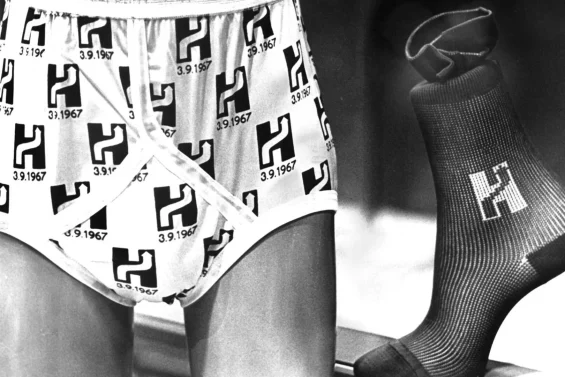
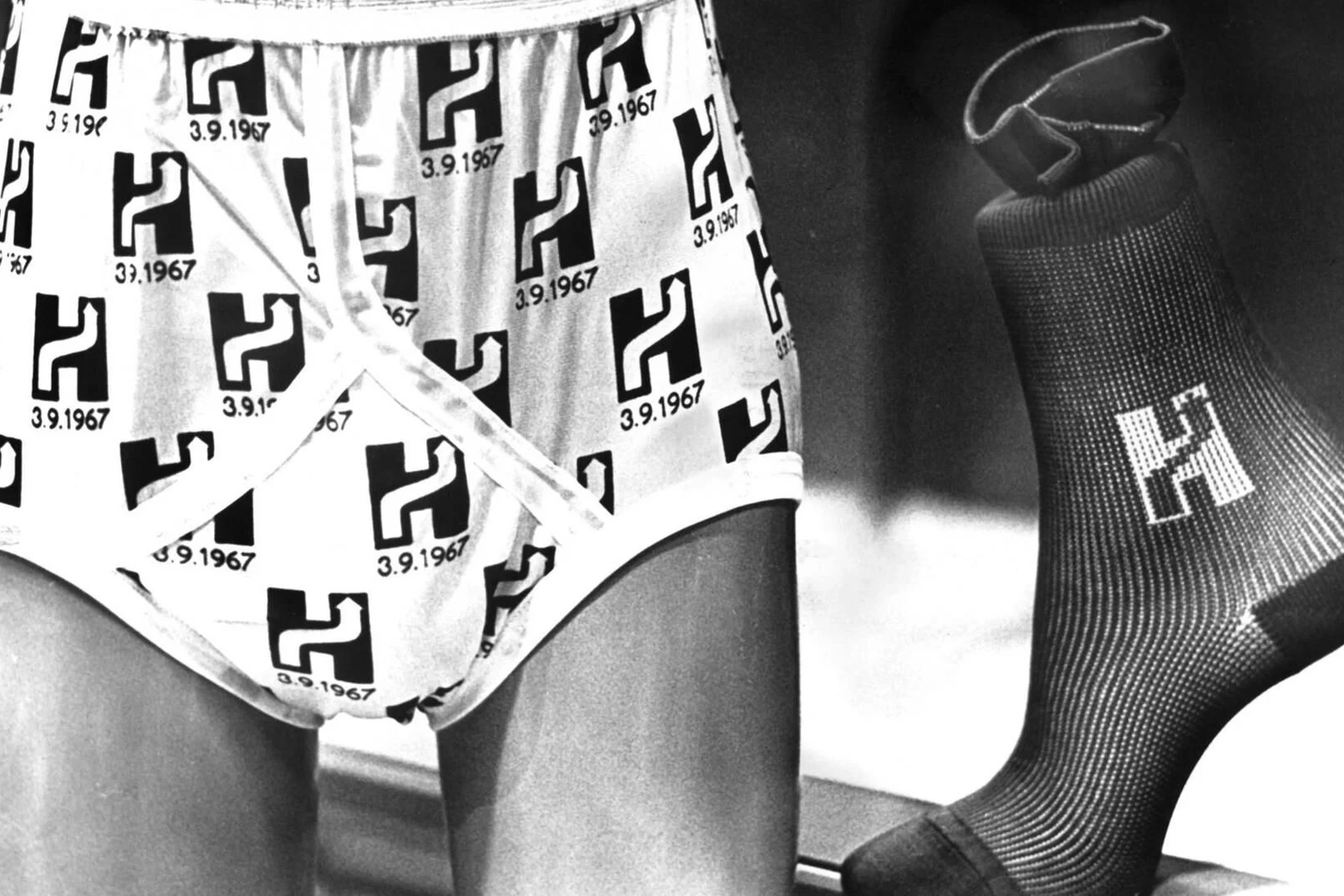
To convince and train a reluctant nation, a four-year campaign was set up, designed with the help of psychologists. The H-Day logo, a stylized H, was stamped on absolutely everything: billboards, stickers, gloves distributed to drivers, milk cartons and even underwear. About 360,000 license plates were replaced, and thousands of buses, which had doors only on the left side, gained new doors on the right — all at a cost of about 628 million kroner at the time, equivalent to about US$ 316 million today.
There was even a soundtrack. Håll dig till höger, Svensson (Keep to the right, Svensson), recorded by the band The Telstars, won a national contest and reached number five in the Swedish charts. The delightful detail is that the song almost didn’t talk about traffic: it was a mischievous ditty song about an unfaithful husband, in which going to the left became a metaphor for betrayal.
Even underwear with the Dagen H symbol was made to solidify the plane in the minds of the population (Photo: Reproduction)
On the big day, non-essential cars were prohibited from circulating since 1 am. Crowds formed in the dim light of dawn, with fireworks and singing, in a festive atmosphere. At 4:50 a.m., a horn sounded and a loudspeaker announced: it was time to switch sides. The signs, previously covered, were revealed, and traffic resumed, mirrored, at 5 am.
The result was surprising. On the following Monday, the first working day, the country recorded just over a hundred light accidents, below the average of a common Monday, and no one died. Terrified by the novelty, the Swedes began to drive with almost exaggerated caution, and traffic deaths, which had been rising with the increase in the fleet, plummeted. The effect, however, was psychological: by 1969, the rates had already returned to their previous levels. The prudence lasted the time of fright.
For those who lived through that, the memory remained. Traffic consultant Peter Kronborg, who years later would write a book about the episode, was 10 years old on H-Day and remembers cycling for the first time on the right side of the street, under the gaze of the press from all over the world gathered in Stockholm. It was, he says, Sweden’s most important event in 1967.
Comments are the sole responsibility of their authors and do not represent the opinion of this site. Comments containing profanity or offensive language will not be published. If you identify anything that violates the terms of use, please report it.