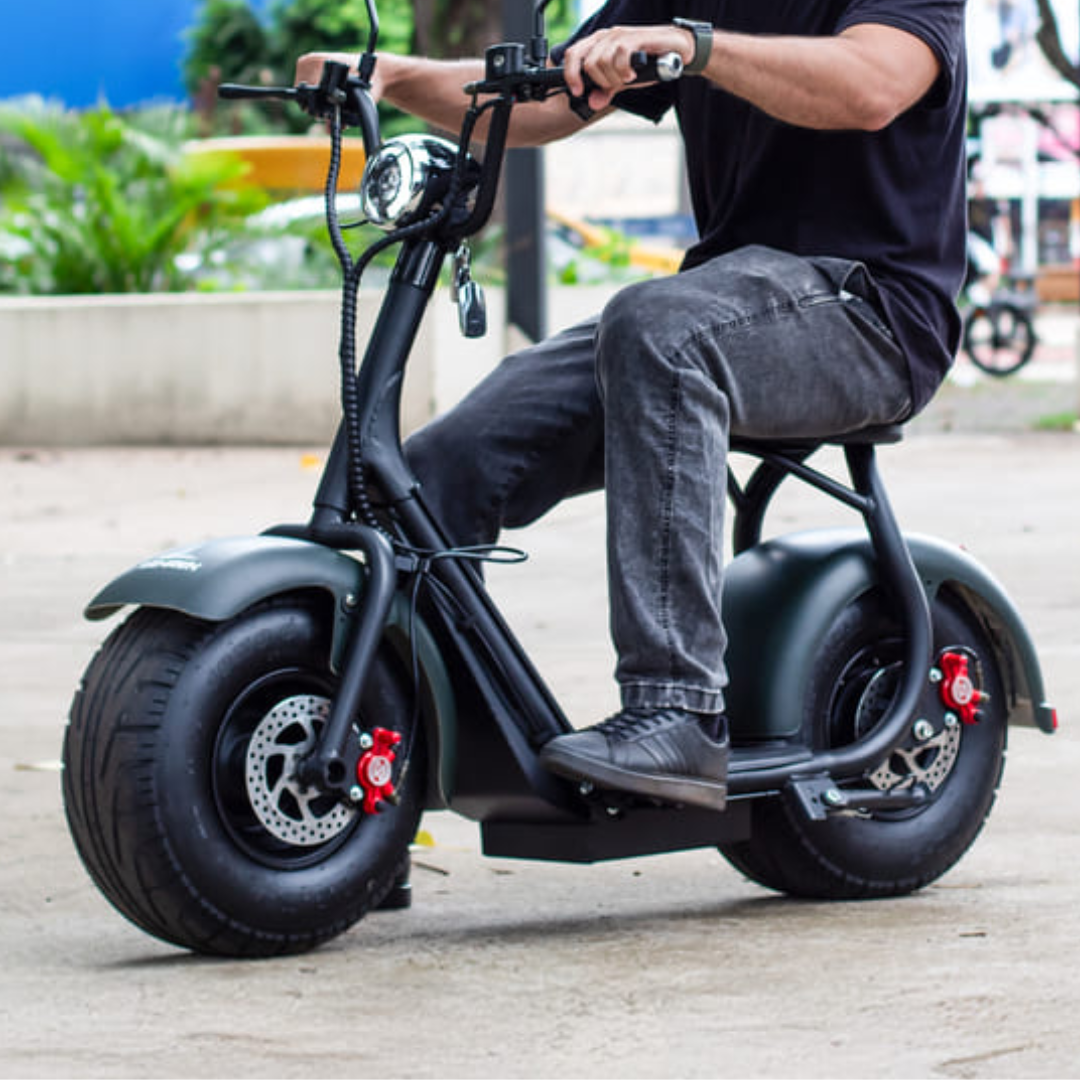
The Federal Revenue Service has tightened the inspection criteria for the entry into Brazil of motorcycles, scooters and other electric vehicles purchased in Paraguay, and the change could double the final cost of the equipment. According to the agency, an electric motorcycle purchased for about R$ 2.5 thousand in Paraguay can exceed R$ 5 thousand after regularization and payment of taxes.
The change, in force since Saturday (8), changes what the inspectors look at. Before, it was enough for the vehicle to be limited to 32 km/h to be classified as traveler’s luggage, a lighter taxation regime. Now, the inspection also verifies that the equipment was designed from the factory to exceed this speed, even if it leaves the store blocked.
“It is not enough that the equipment has a speed limitation of 32 km. The equipment cannot have the capacity to exceed 32 km/h,” said Federal Revenue auditor Vinicius Meireles to Portal Tri. According to him, some Paraguayan stores teach buyers how to unlock the limiter after entering Brazil, a practice that motivated the review of the criteria.
Photo: Disclosure
What the inspectors began to analyze
To identify vehicles with original capacity above the limit, the auditors evaluate technical characteristics such as power, robustness of the set, size of the wheels and brake system. When there are indications that the model was developed to go faster, it is no longer treated as baggage and needs to go through the common import process.
Since Saturday, the Federal Revenue unit in Foz do Iguaçu has registered 39 Simplified Import Declarations (DSI) for electric motorcycles, of which only two had been regularized.
The importation of this equipment is not prohibited and, by itself, the case does not constitute a crime, according to the Revenue. When the classification as baggage is refused, the vehicle can be seized and the owner has the option of completing the import by the regular route. In this way, Import Tax, IPI, ICMS, PIS and Cofins are levied, in addition to customs clearance costs. Depending on the classification, the model may still require registration, registration and qualification to circulate in the country.
The limits that guarantee entry as baggage
In the case of electric bicycles, the Revenue requires an auxiliary motor with a nominal power of up to 1,000 watts, activation only while the cyclist pedals, absence of accelerator or any other manual power control and maximum propulsion speed of 32 km/h.
Self-propelled electric scooters, unicycles and dicycles need to have a power of up to 1,000 watts, a maximum manufacturing speed of 32 km/h, a width of up to 70 cm and a wheelbase of up to 1.3 m. Equipment outside these parameters falls under the common import regime.
The general exemption quota also continues to apply: those who enter Brazil by land are entitled to US$ 500 every 30 days, according to the Federal Revenue Service. Even an electric vehicle classified as luggage needs to fit into this limit, at the risk of taxation of the excess value.
Comments are the sole responsibility of their authors and do not represent the opinion of this site. Comments containing profanity or offensive language will not be published. If you identify anything that violates the terms of use, please report it.