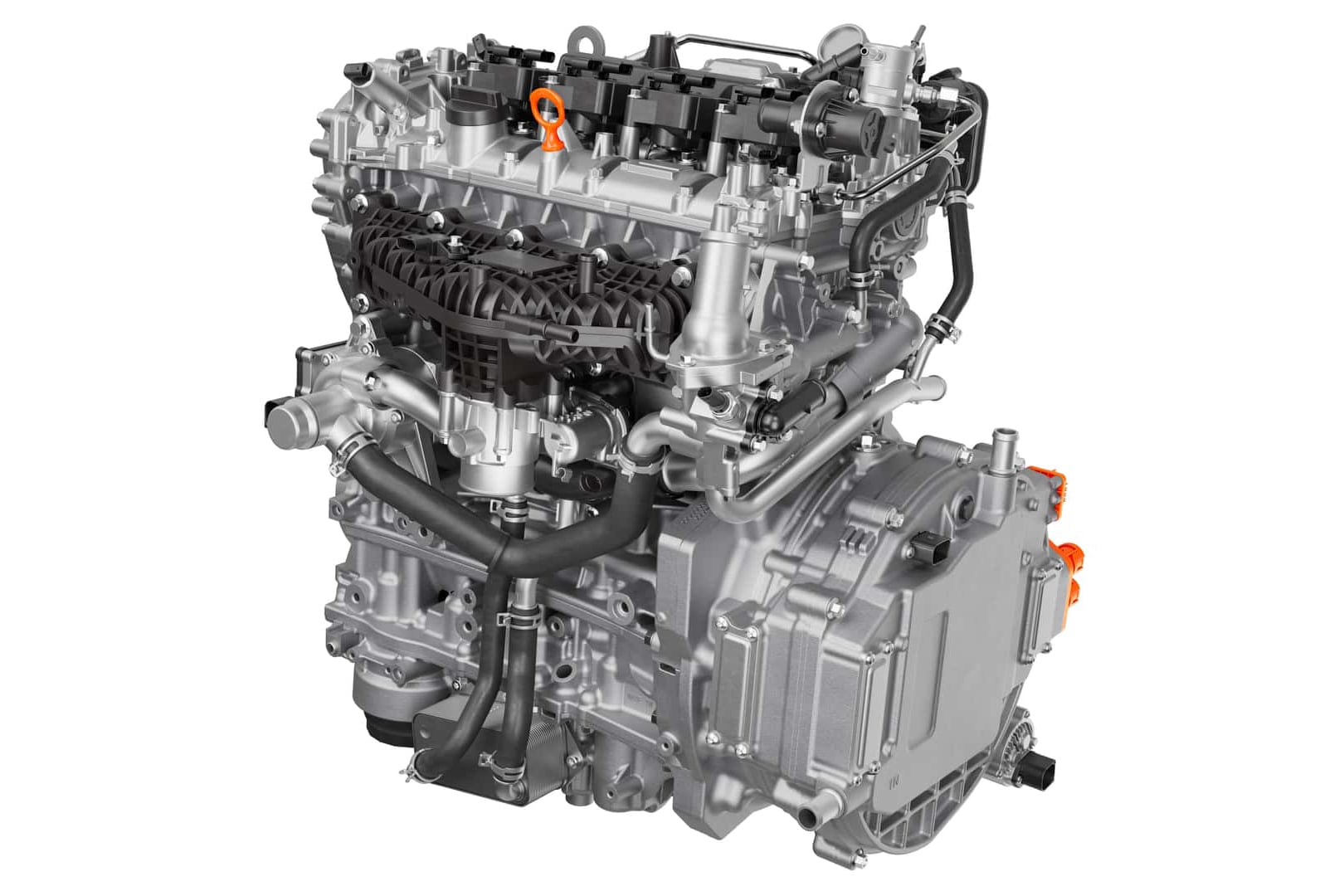
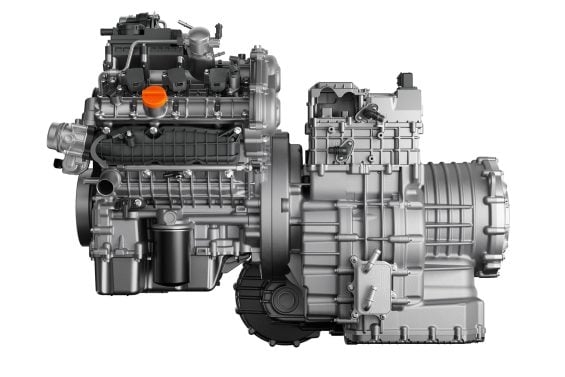
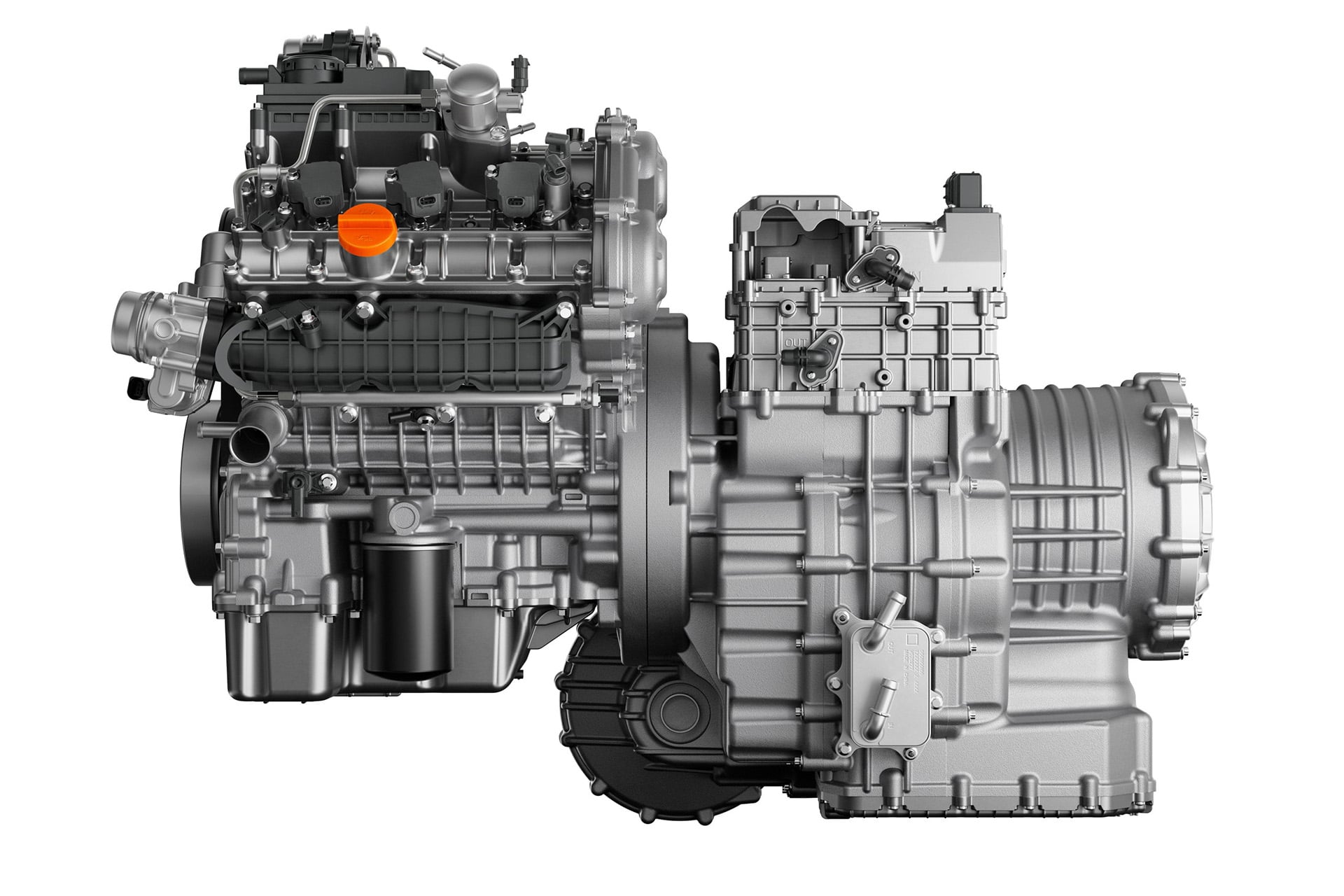
Horse Powertrain presented the D20 Methanol, a powertrain developed for electric cars with a range extender (REEV) that burns 100% methanol to generate energy and recharge the battery. The solution combines a combustion engine with axial-flow electric motors — technology used in super sports cars — and is designed to meet China’s emissions standards and the European Euro 7 standard. Developed by the joint venture between Groupe Renault and Geely, the novelty was unveiled on Tuesday (14) in London, after a first appearance at the Beijing Motor Show in April.
Unlike a conventional hybrid, in the REEV the combustion engine does not move the wheels: it works only as a generator, producing electricity to replenish the battery when necessary. In the D20, this role falls to a four-cylinder 2.0 turbo powered exclusively by methanol, capable of starting cold in temperatures of up to -35 °C. The complete set — engine, generator and power electronics — weighs about 170 kg and delivers up to 143 hp (105 kW).
The big news is in the architecture of the generator, which couples the axial-flow motors directly to the crankshaft of the combustion engine. While radial flow motors, with a cylindrical shape, stack rotor and stator around an axis, the axial design arranges these parts as overlapping discs – the so-called “pancake” shape – which yields a much more compact package.
According to the company, the solution is 46% shorter in the axial direction and offers 63% more power per unit volume than an equivalent radial motor, with the aid of a silicon carbide (SiC) module. The coreless design still allows for two rotors rotating around a single stator. It is the same family of engines used in hybrid super sports cars such as Ferrari 296 GTB and Lamborghini Temerario, here reused not for performance, but for compactness and efficiency.
The system converts 47% of the fuel’s energy into electricity, while the electric motors operate at an efficiency of 96.4%. In practice, about 2.1 kWh of methanol is needed to generate 1 kWh of electricity — which, according to Horse, allows a 40 kWh battery to be fully recharged with just 19.6 liters of fuel. Contributing to the result is a high-energy ignition of 240 mJ, capable of operating with an extremely lean mixture of methanol, which increases efficiency and reduces emissions.
For Fortune Zhao, Chief Technology Officer of Horse Powertrain, the D20 Methanol brings together several unprecedented technologies in a compact and high power density package, marking one of the first applications of axial flow motors in an automotive system aimed at large-scale production. The company, however, has not yet confirmed which markets or models will receive the engine — although the bet falls on brands linked to Geely itself, which has already been encouraging the use of methanol in taxi fleets in China.
Comments are the sole responsibility of their authors and do not represent the opinion of this site. Comments containing profanity or offensive language will not be published. If you identify anything that violates the terms of use, please report it.