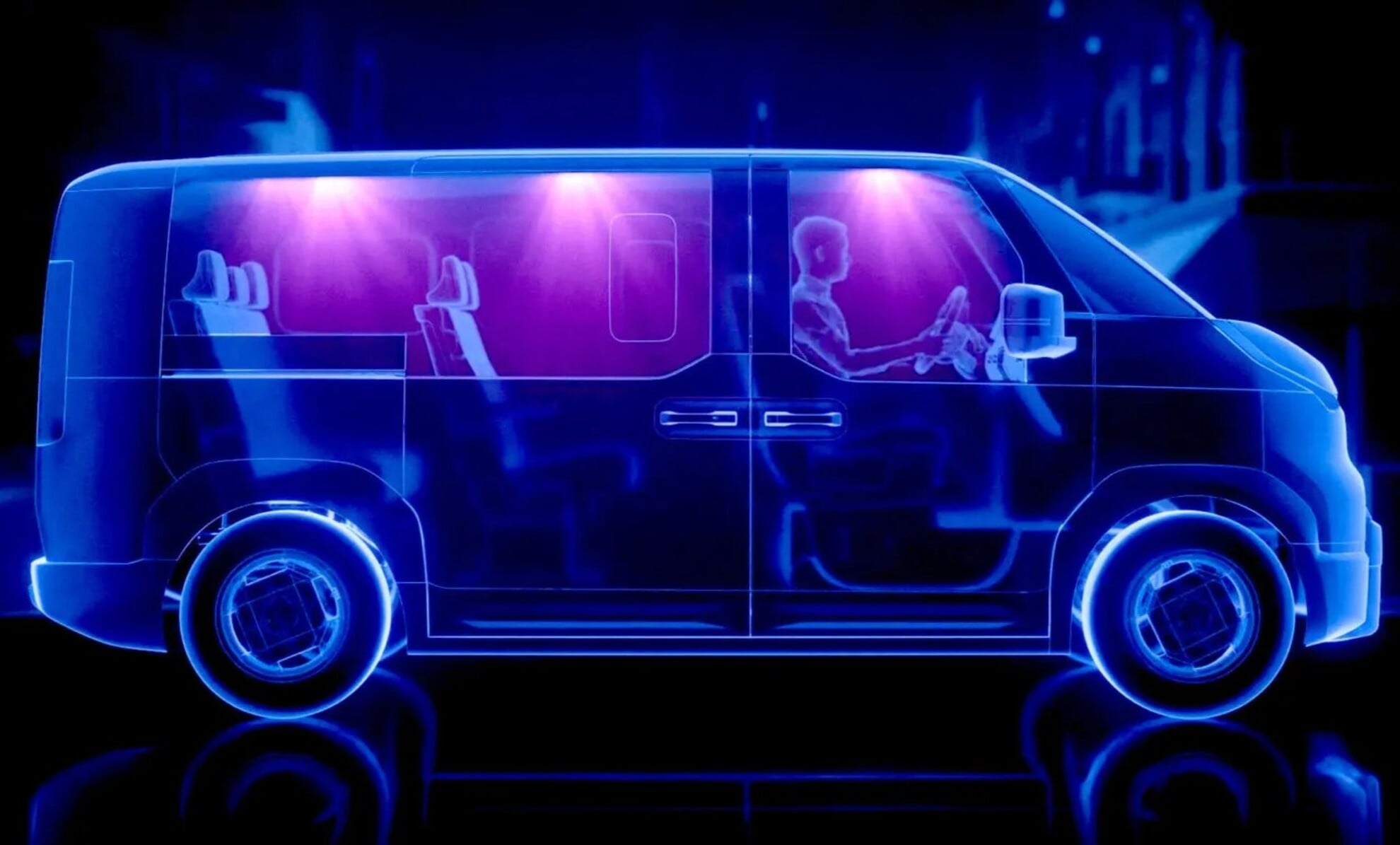
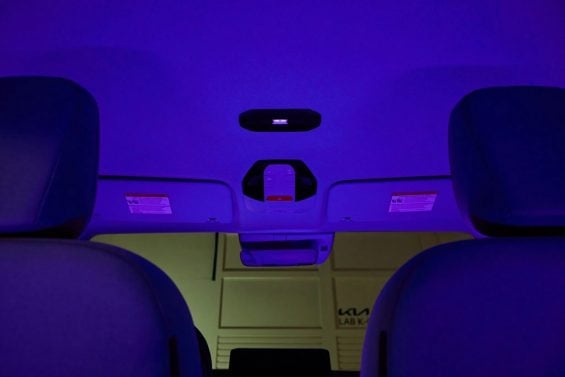
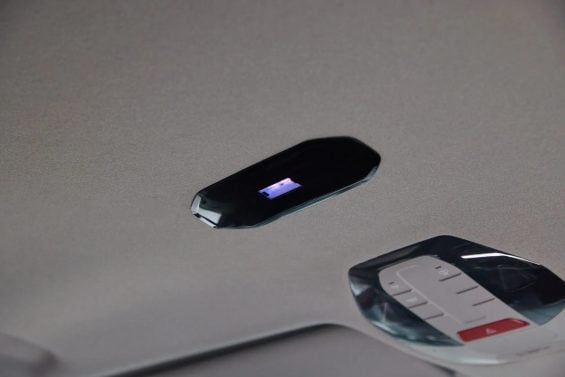
Hyundai Motor Company and Kia have unveiled Plasma Care UVC, a system that the Korean groups describe as the world’s first sanitizing technology capable of disinfecting the interior of the vehicle with passengers on board. Announced on June 24, the solution installs far-ultraviolet C (far-UVC) light lamps in the headliner to sanitize the air and cabin surfaces. For now, it is a project under development, with no date to reach production models.
The bet expands a front that the automaker was already exploring: models such as Santa Fe and Palisade bring compartments with UV-C light to disinfect personal objects, such as cell phones. The novelty now is to sanitize the entire cabin – something until now restricted to closed spaces, precisely because conventional UV-C, in the range of 255 to 280 nanometers, can cause damage to the skin and eyes in case of direct exposure.
To get around the risk, far-UVC operates between 200 and 230 nanometers. According to the manufacturers, this wavelength delivers enough energy to destroy the DNA of bacteria and viruses, but has limited penetration to the outer keratin layer of human skin, without reaching deeper tissues — which, in theory, allows safe use with people inside the car.
Laboratory tests are encouraging, even if conducted under controlled conditions. In research with Seoul National University, the system eliminated 99.9% of pneumonia-causing bacteria in 30 seconds, reaching 100% in one minute. The Korea Testing Laboratory, in turn, recorded a 96.8% reduction in viruses present in the air in 30 minutes. The elimination of 99.9% of the E. coli bacteria took 40 minutes, in an evaluation carried out with the Katech institute in a Kia PV5. The engineers also point out the degradation of compounds that cause bad odors, leaving the cabin with an appearance of freshness.
To make the application viable, Hyundai had to adapt a hospital technology to the car: the set uses a compact plasma lamp, with an optical filter that restricts the emission to the desired range, and was reinforced to withstand constant vibration, extreme temperature variations and efficient energy consumption.
The system is expected to debut first in so-called special purpose vehicles (PBVs), such as the Kia PV5, as well as school transport, food logistics vans, taxis and robotaxis. Neither Hyundai nor Kia have confirmed in which series models the technology will be offered, and the company itself points out that the commercialization depends on new stages of validation, certification and regulatory approval.
Comments are the sole responsibility of their authors and do not represent the opinion of this site. Comments containing profanity or offensive language will not be published. If you identify anything that violates the terms of use, please report it.