With a recharge of 10% to 70% in just over 4 minutes, the Chinese manufacturer challenges physical limits and opens a dispute with eastern rivals
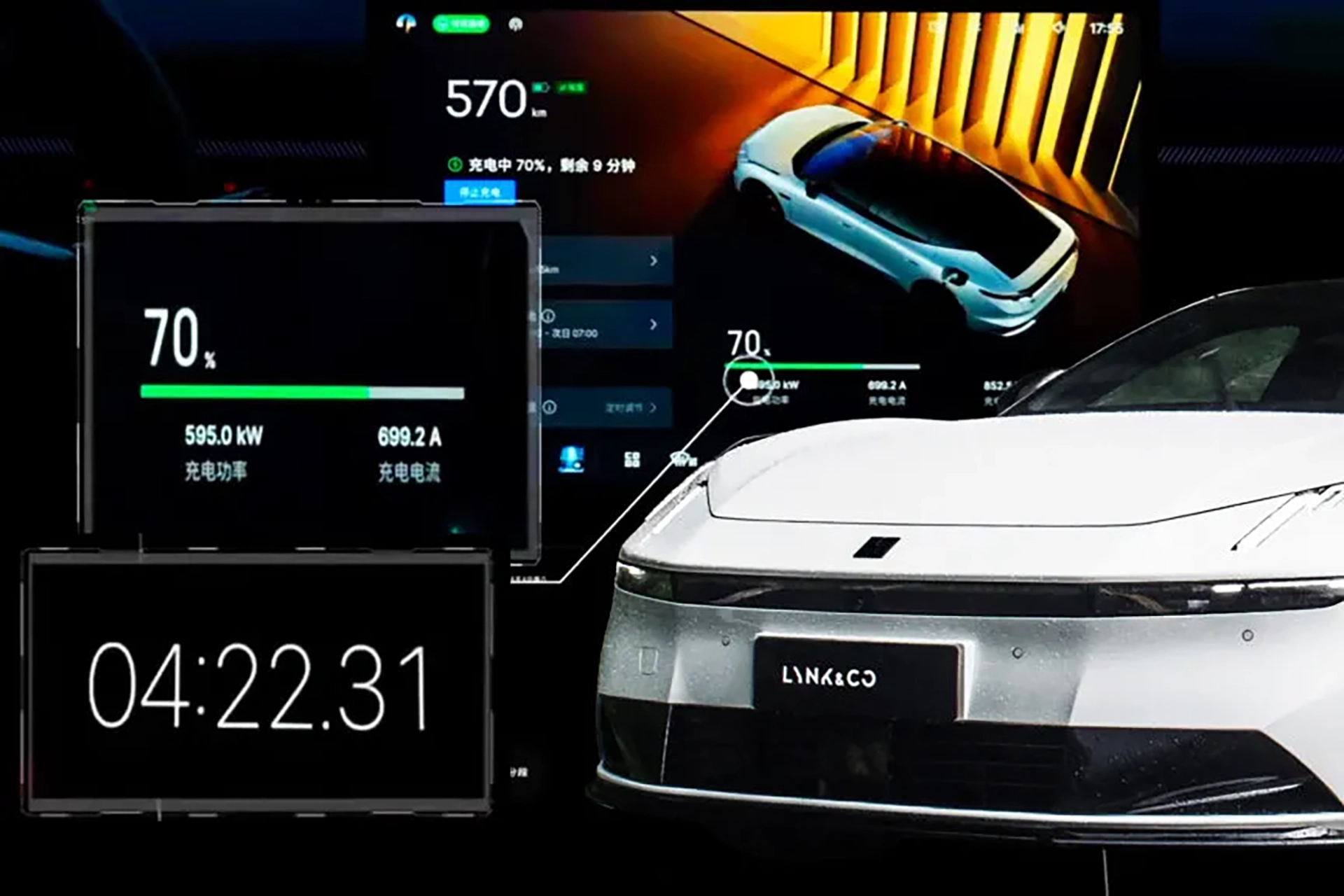
Chinese manufacturer Geely claims to have set a new global charging speed record for electric vehicles with its 900V technology called “Energee Golden Brick”. Implemented in the Lynk & Co Z10 luxury sedan, the innovation has made it possible to surpass the marks of direct competitor BYD, recording charging times that defy current global market standards.
In performance tests, Geely’s 95 kWh battery demonstrated a superior energy absorption capacity compared to competitor blade technology. The system completed the range from 10% to 70% charge in just 4 minutes and 22 seconds, while BYD’s second-generation “Blade” battery required approximately 5 minutes for the same volume. In the 10% to 80% cycle, the model recorded 5 minutes and 42 seconds, reaching 97% of total capacity in less than nine minutes.
SEE ALSO:
Geely’s technical differential lies in the maintenance of high input powers even in advanced stages of cell filling. The system recorded a peak charging of 1,100 kW and maintained constant flows of 350 kW until the end of the process, a rate rarely achieved by Western models. However, the practical feasibility of the technology depends on ultra-fast stations; although the brand is expanding its 800V network, the current coverage is still inferior to BYD’s.
The obsession with extreme speed, however, is accompanied by questions about the long-term integrity of the components. Markus Fallböhmer, head of battery production at BMW, expressed caution about prioritizing speed over other pillars of the industry. According to the executive, optimizing batteries exclusively for fast recharges can compromise the longevity of the cells, increase costs and reduce energy density, which would directly impact the autonomy and safety of vehicles.



