


Free bus to visit the cemetery: the new law that has just advanced in the Chamber
Text changes the National Policy on Urban Mobility and authorizes cities to zero the passage for those who visit cemeteries on All Souls' Day
By
Júlia Haddad
Published on 2026-07-06 at 01:00 PM
Published on 2026-07-06 at 01:00 PM
Be the first to comment.
Summarize with:
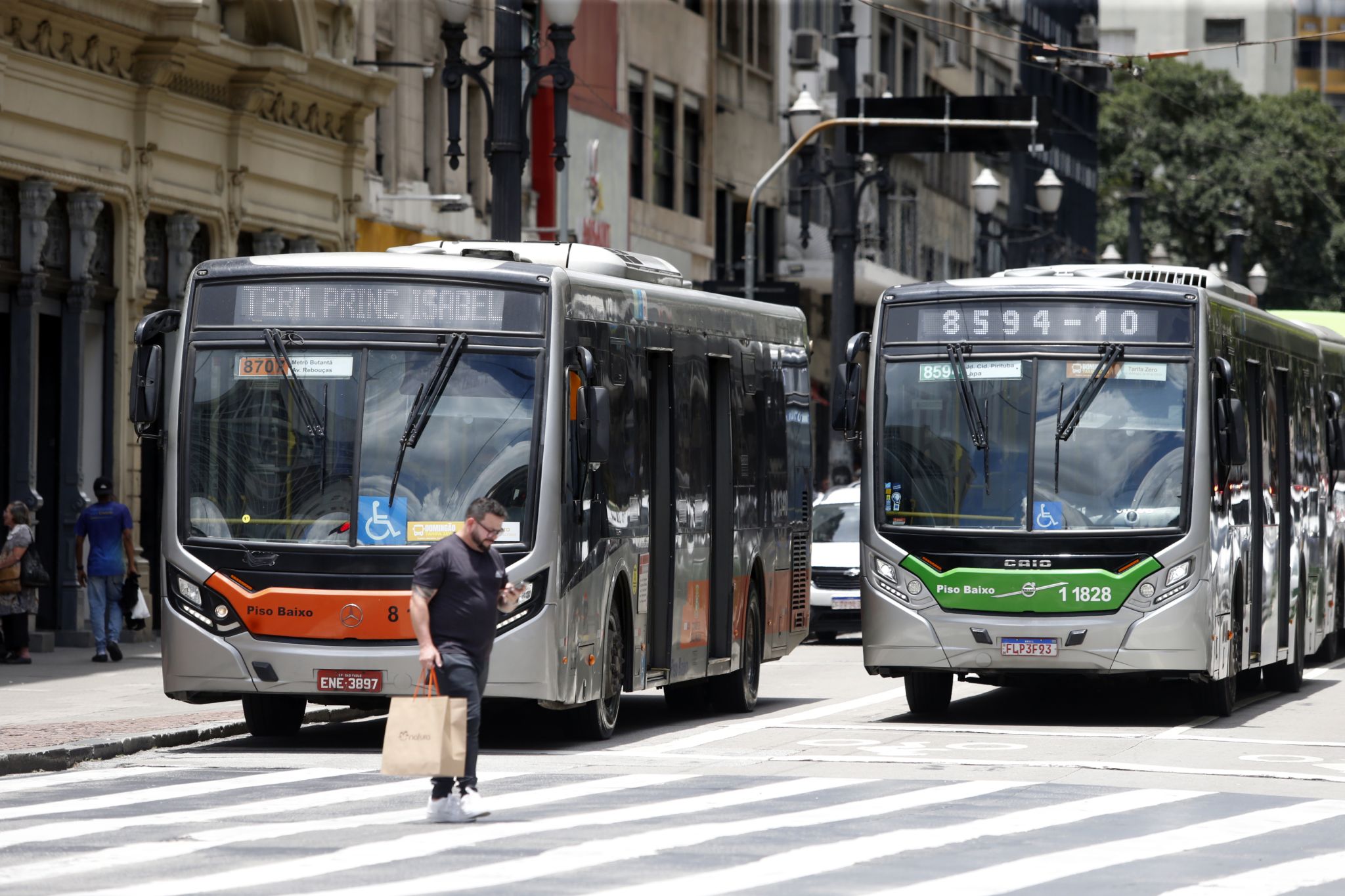
The Traffic and Transport Commission of the Chamber of Deputies approved a bill that establishes free public transport on All Souls’ Day, celebrated on November 2, as a guideline of the National Urban Mobility Policy (Law 12.587/2012). In practice, the measure paves the way for city halls to suspend the collection of fares on the date, facilitating the movement of the population to the cemeteries.
The approved text is the substitute of the rapporteur, Deputy Ricardo Ayres (Republicanos-TO), to Bill 4301/24, authored by Deputy Rafael Brito (MDB-AL).
In the original version, the free pass would be guaranteed throughout the national territory, in urban and rural areas, to serve those who intend to honor deceased relatives and friends. The proposal imposed gratuity as a federal obligation.
The rapporteur, however, reformulated the text by considering that the management of public transport is the responsibility of the municipalities and the Federal District. With the change, the proposal no longer creates a national obligation and now authorizes local administrations to adopt free of charge in an exceptional way – as long as the measure does not compromise the provision of the service or the financial balance of the system.
In defending the changes, Ayres highlighted the symbolic weight of the date for Brazilians. “The fare cannot, on such a relevant day, become an obstacle to the exercise of the right to honor those who have already passed away,” said the rapporteur.
The discussion reaches Congress in the midst of the expansion of the so-called Zero Tariff across the country. A survey by the National Association of Urban Transport Companies (NTU) released in October 2025 pointed out that about 170 municipalities already offered total or partial free bus transport – a number that would have approached 180 in early 2026, according to industry estimates. Most of the experiments focus on small and medium-sized cities, where operating costs tend to be more predictable.
The Traffic and Transport Commission itself had already approved, at the beginning of the year, a proposal that gives legal certainty to the Zero Fare policies adopted by city halls, a sign that the topic has gained space in the urban mobility agenda.
As it is being processed in a conclusive manner, the project does not normally require a vote in the Plenary of the Chamber. Before that, however, it will still be analyzed by the Finance and Taxation and Constitution and Justice and Citizenship committees. To become law, the text needs to be approved by deputies and senators.
With information from the Câmara de Notícias Agency
SEE MORE ABOUT

0 Comments
Comments are the sole responsibility of their authors and do not represent the opinion of this site. Comments containing profanity or offensive language will not be published. If you identify anything that violates the terms of use, please report it.