


Ethanol will change color and gain a bitter taste to avoid fraud in beverages
Dye would be applied in the mills; the bitter additive, pointed out as the definitive solution, still depends on tests on engines and emissions
By
João Paulo Profeta
Published on 2026-09-10 at 07:00 PM
Published on 2026-09-10 at 07:00 PM
Be the first to comment.
Summarize with:
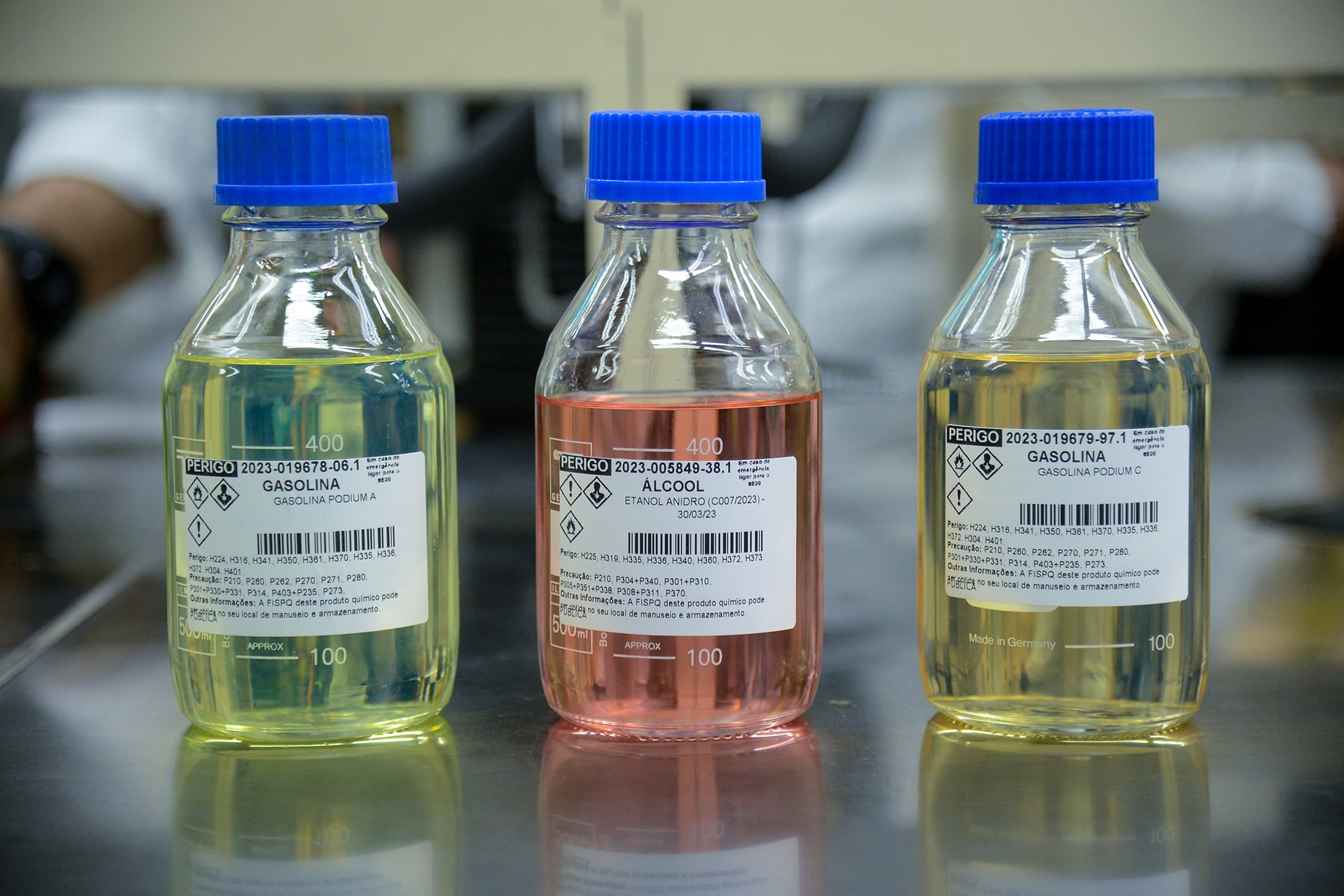
The National Agency of Petroleum, Natural Gas and Biofuels (ANP) approved a study that proposes to paint hydrous ethanol sold at Brazilian gas stations green from 2027 and, in a second stage, leave the fuel with a bitter taste. The objective is to make it difficult to divert the product to the clandestine manufacture of alcoholic beverages.
The report was approved by the agency’s board of directors on September 2 and sent three days later to the Ministry of Mines and Energy, which chairs the National Council for Energy Policy (CNPE), and to the Federal Court of Accounts (TCU).
The work responds to CNPE guidelines and TCU recommendations, formulated after the outbreak of methanol poisoning caused by adulterated distilled beverages at the end of 2025. The addition of green dye is treated by the ANP as a temporary solution and would be done at the producing plants, to facilitate the visual identification of the fuel in fraud investigations.
The requirement depends on the revision of ANP Resolution No. 907, of 2022, which will undergo regulatory impact analysis, public consultation and hearing, and a vote by the collegiate board. The forecast for implementation in 2027 also considers a transition period for mills, distributors, and other agents in the sector.
Bitter taste is the definitive
solution The measure pointed out as definitive is the mandatory addition of denatonium benzoate, a substance with an extremely bitter taste already used in cleaning and hygiene products to prevent accidental ingestion. According to the agency’s assessment, the flavor would reveal fraud to the consumer in the first contact with the adulterated drink.
For this stage, however, there is no defined deadline. As there is no precedent for the use of the compound in fuel intended for engines, the ANP conditioned the obligation to mechanical and emission tests, to prove that the additive does not compromise the operation of vehicles, the quality of the product or the control of pollutants.
Industry asks for validation
program Contacted by g1, the National Association of Automotive Vehicle Manufacturers (Anfavea) said in a note that it does not have a technical basis to assess the impact of the substance on the fuel and exhaust systems of combustion engines, as there is no representative history of application in fuel ethanol.
The entity defended a validation program with durability and emissions tests and asked that both the denaturant and the dye be free of metals, to avoid contamination of the catalyst.
Before concluding the study, the ANP listened to ethanol producers, distributors, dye suppliers, quality inspection companies, representatives of the automobile industry and the cachaça sector, in addition to carrying out physical-chemical tests at its Center for Research and Technological Analysis.
SEE MORE ABOUT

0 Comments
Comments are the sole responsibility of their authors and do not represent the opinion of this site. Comments containing profanity or offensive language will not be published. If you identify anything that violates the terms of use, please report it.