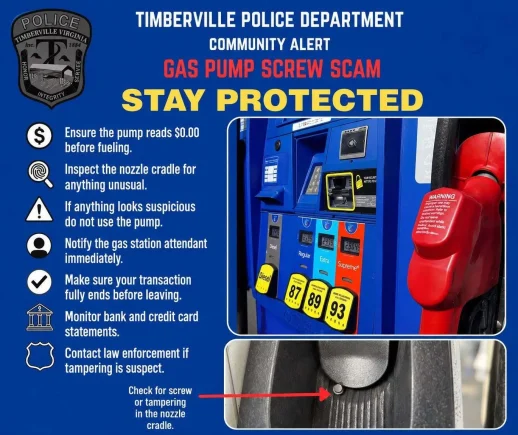
Police in Timberville, Virginia (USA), have warned drivers about an alleged scam at the fuel pumps, but the case is surrounded by doubts. According to the department, criminals would place a screw or other object in the socket of the pump lever, preventing the equipment from ending the sale at the end of the supply.
With the pump still active, the next vehicle could refuel at the expense of the previous customer. Therefore, the corporation recommended inspecting the equipment before and after using it, checking that the display is reset before filling up and confirming that the transaction was completed before leaving the station. In the face of any sign of tampering, the guidance is not to use the pump and to warn the gas station attendant.
The warning, however, is disputed. In May, the fact-checking website Snopes classified the story as a “hoax”, pointing out that those who disseminated the warning did not present reliable reports or proven cases of criminals using screws to harm consumers. When contacted, Shell said it was unaware of such occurrences and recalled that its pumps have automatic shutdown, which ends the transaction after a period of inactivity.
Still, the city of Timberville maintained that there was an incident and that a gas station attendant found a screw while inspecting the pumps. There is, however, no record of a credit card used to fuel other vehicles. There are still those who raise another hypothesis: the screw could have been placed during a repair, and not to defraud.
The topic gained traction on social networks amid high fuel prices in the US, where the average gasoline is equivalent to about R$ 5.50 per liter (US$ 4.13 per gallon). With no evidence of harm to consumers, authorities say that the purpose of the warning is to encourage basic care in supply.
Comments are the sole responsibility of their authors and do not represent the opinion of this site. Comments containing profanity or offensive language will not be published. If you identify anything that violates the terms of use, please report it.